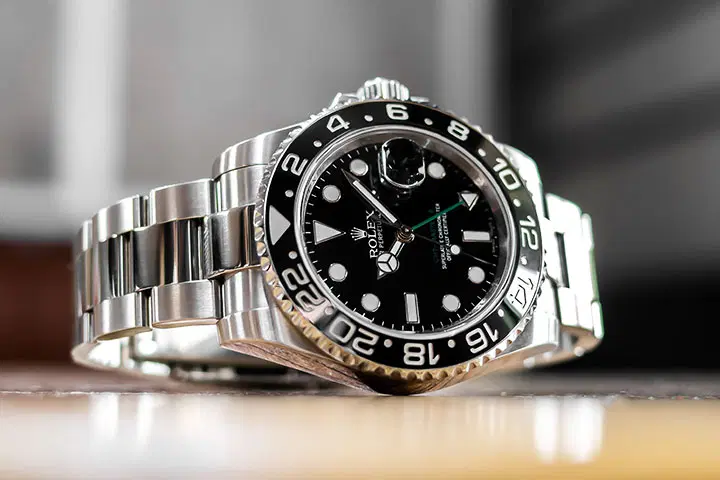
rolex
Rolex is more than a name—it's a study in engineering, materials science, and precision timekeeping. At the core of every Rolex is an in-house mechanical movement designed for reliability and chronometric performance. These calibres are crafted, assembled, and regulated to meet or exceed COSC chronometer standards, with many models featuring Rolex’s proprietary Parachrom hairspring for improved magnetic and shock resistance. Oyster case construction is another hallmark. Machined from a solid block of corrosion-resistant Oystersteel or precious metals, the case is hermetically sealed to protect the movement from dust, moisture, and pressure. Rolex’s patented Twinlock and Triplock crown systems ensure water resistance ratings that suit each model’s purpose—from everyday wear to professional diving depths. Materials innovation sets Rolex apart. Cerachrom ceramic bezels resist fading and scratching, while Rolesor combines steel and gold for durability with a refined aesthetic. The brand’s use of 904L/318L stainless steel (marketed as Oystersteel) increases corrosion resistance and yields a unique, long-lasting polish that distinguishes Rolex finishes. Bracelet and clasp engineering focuses on comfort and adjustment. The Oyster, Jubilee, and President bracelets use solid links and precision end links for stability. Clasps like the Oysterlock and Crownclasp incorporate micro-adjustments—Easylink or Glidelock systems—allowing wearers to fine-tune fit without tools, accommodating thermal expansion or activity. Performance features vary by model to match intended use. The Submariner and Sea‑Dweller emphasize diving credentials with helium escape valves and high depth ratings. The GMT-Master II uses an independently adjustable hour hand and a bidirectional bezel for dual-time functionality. The Daytona’s column-wheel chronograph movement offers rapid, accurate timing with minimal wear. Serviceability and longevity are practical considerations. Regular servicing—typically every 5–10 years—replaces lubricants, checks water resistance, and recalibrates timing. Rolex’s modular movement architecture and use of robust components reduce wear and simplify maintenance compared with some haute-horlogerie alternatives. If you’re evaluating a purchase, consider factors beyond aesthetics: intended use, movement features (chronometer vs. chronograph vs. GMT), case size, material, and long-term serviceability. Authenticity matters—buy from authorized dealers or trusted secondary-market specialists who provide documentation and service history to protect your investment. Ready to own a piece of horological engineering? Buy from an authorized Rolex dealer or a reputable reseller to ensure authenticity, warranty support, and aftercare—investing in a Rolex is as much about technical performance as it is about enduring value.