The truth about why you should or shouldn’t, and what first-time builders often get wrong, before you spend a dollar.
Visit my website at: sherwoodmarinedesign.com
If you're reading this, you've probably had the thought. Maybe you've seen a mate's finished build sitting on the trailer and thought: I could do that. Maybe you've had a production or custom build priced up and decided there has to be a better way. Maybe you just love making things with your own two hands, have an interest in boating, and wondered what’s involved.
All of those are good reasons to build a boat. But before you commit I want to share a few common pitfalls from observing home boat builds over many years, both from our own kits and others we’ve seen, that may just help those thinking of taking the plunge. Because the gap between a great home boat-build and a half-finished project sitting under a tarp for three years is rarely about skill as the main issue; it's about homework and planning.
Mistake 1: Not knowing what you're actually signing up for.
A quality aluminium kit build in the 6-7 meter range will typically take around 300 hours to do all of the ali fabrication work. At that stage you’ll have what’s called a “hot works hull”, with all welding complete and ready to start fit out. That figure above can vary significantly depending on working style and skill level, but it’s a reasonable number based on experience.
Estimating the remainder through to the finish is a bit more difficult because there are so many variables in how you equip and finish your boat off. Main items are plumbing, fitout and deck gear, glass, engine and electrical/electronics, and of course painting if you want to go down that path. Lots or even all of that work can be done by subcontractors but there’s still quite a bit of work in planning and organising.
Be honest with yourself about how much time you actually have, and plan accordingly. Before you buy a single sheet of aluminium, have a realistic timeline and share it with the people in your life who will be a part of the fun!
Mistake 2: Not thinking enough about how you go boating
This is mostly about the overall size and configuration of what you choose to build. Think about what you’d actually like to do on the boat; who’s on board, what sort of activities you like to do, and especially the waterways you normally go out on. Ride comfort is key in bays and offshore, but can mean compromises if what you really need it’s a light-weight creek boat.
It’s easy to be adventurous when you’re looking at the price of a kit and think about just squeezing up to the next model (or 2!). That initial investment may not be much, but it can be easy to get carried away and end up with something that’s harder to manage than what it needed to be.
Annoying practical stuff gets in the road sometimes! Think about where you’re going to launch and with what help, how you’re going to tow it, and most importantly, how it fits in the driveway or carport.
Mistake 3: Not being informed about Design
You can’t build a Ferrari using plans for a Trabant.
Once you’ve decided on overall size and layout, the hull design is the most consequential decision you will make. Everything downstream, how your boat rides in sloppy conditions, how it handles crossing a coastal bar, how stable it is at rest - flows from that.
Do your homework into the sort of design features that match with how you’re going to use the boat. After spending all those hours building your pride and joy, don’t be stuck with a jarring ride or dodgy handling downwind, and spend 10 years wishing you’d built something else.
Look for people or organisations who actually have some skills in the field, and a reputation to go with it. As with any research, query why you should trust their guidance, and always get more than one opinion.
Mistake 4: Buying the cheapest plans (or kit) available.
Cheap anything in life is usually cheap for a reason, and that applies as much or more to design as to anything else. While design is a relatively small proportion of the total cost of a build, everything that you are about to do is based on it. Mistakes or just plain ordinary design are multiplied, and will be paid for many times over the quality of the final product and in resale value.
Cheap design can also mean poor documentation and or support. This adds to the build time in just simply understanding the drawings, but can also lead to fabrication mistakes which can be costly and time-consuming to correct.
Mistake 5: Not asking for help.
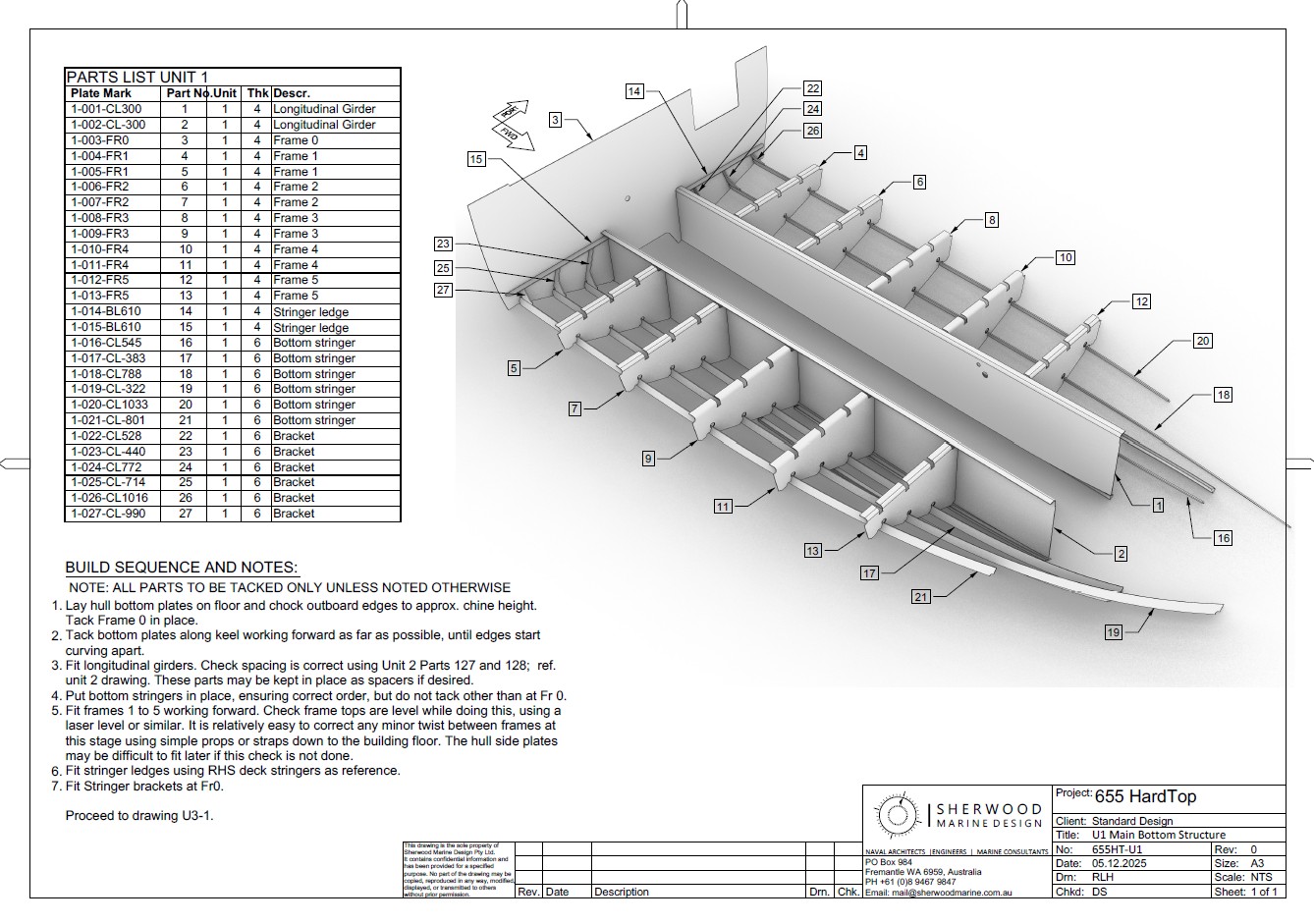
If you don’t understand something in your construction drawings, don't hazard a guess and keep blazing away with that torch! Contact your designer and ask them to clarify. In boat building, errors have a way of compounding quickly, and some can be hard to undo.
For reference, our drawing packs typically include 20+ A3 detailed drawing sheets, workflow charts, terminology explainers, and NC-referenced parts lists. Step #1 in design communication is to include everything a home boatbuilder would reasonably and logically need. Step #2 is to provide support for that, and questions are expected.
Mistake 6: Not being aware of build options.
Not everyone is a qualified welder, or has a trade behind them, or even just general skills with tools. If you’re unsure whether you’re up to taking on a full build, whether it’s a skills or time issue, there are lots of different ways to structure the build including:
Mistake 7: Poor planning of fit-out
Decisions made in the early hull construction stages directly affect what's possible later. Its easy to circumvent one of those “oh no” moments that can’t be unwound, with some straightforward planning.
Builders who do this end up with a result they're genuinely proud of and will be easy to maintain. Those who don't can spend years quietly regretting those little details that are annoying to the eye or a pain to look after.
So, should you do it?
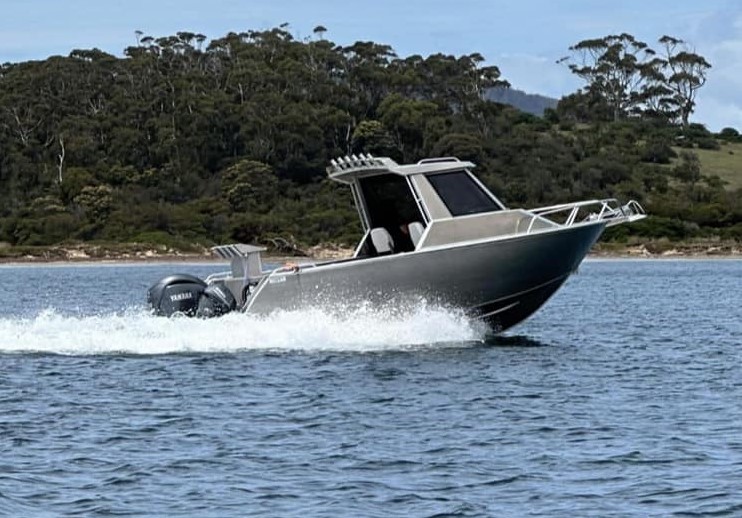
Yes - absolutely. With open eyes and a plan. Building or creating anything yourself is incredibly satisfying. That, and a love of boats and the water is why I became a naval architect in the first place. Even after 30+ years in the game I still get a big kick out of every new design, but the best part is seeing it being built, and then on the water doing what it’s supposed to do.
So yes; if you have that above-mentioned plan I can’t think of anything better. You don’t have to build the entire boat yourself; even the planning and organising of the details is a lot of fun, and you can get it finished-off just how you want it. A well-designed kit boat, properly built, and finished with attention to detail can be equal or better than almost anything you could buy off the shelf. We're here to help you get there: from choosing the right model in our range, through every question that comes up during the build, through to launch day.
If you're thinking about a build, start with a conversation.