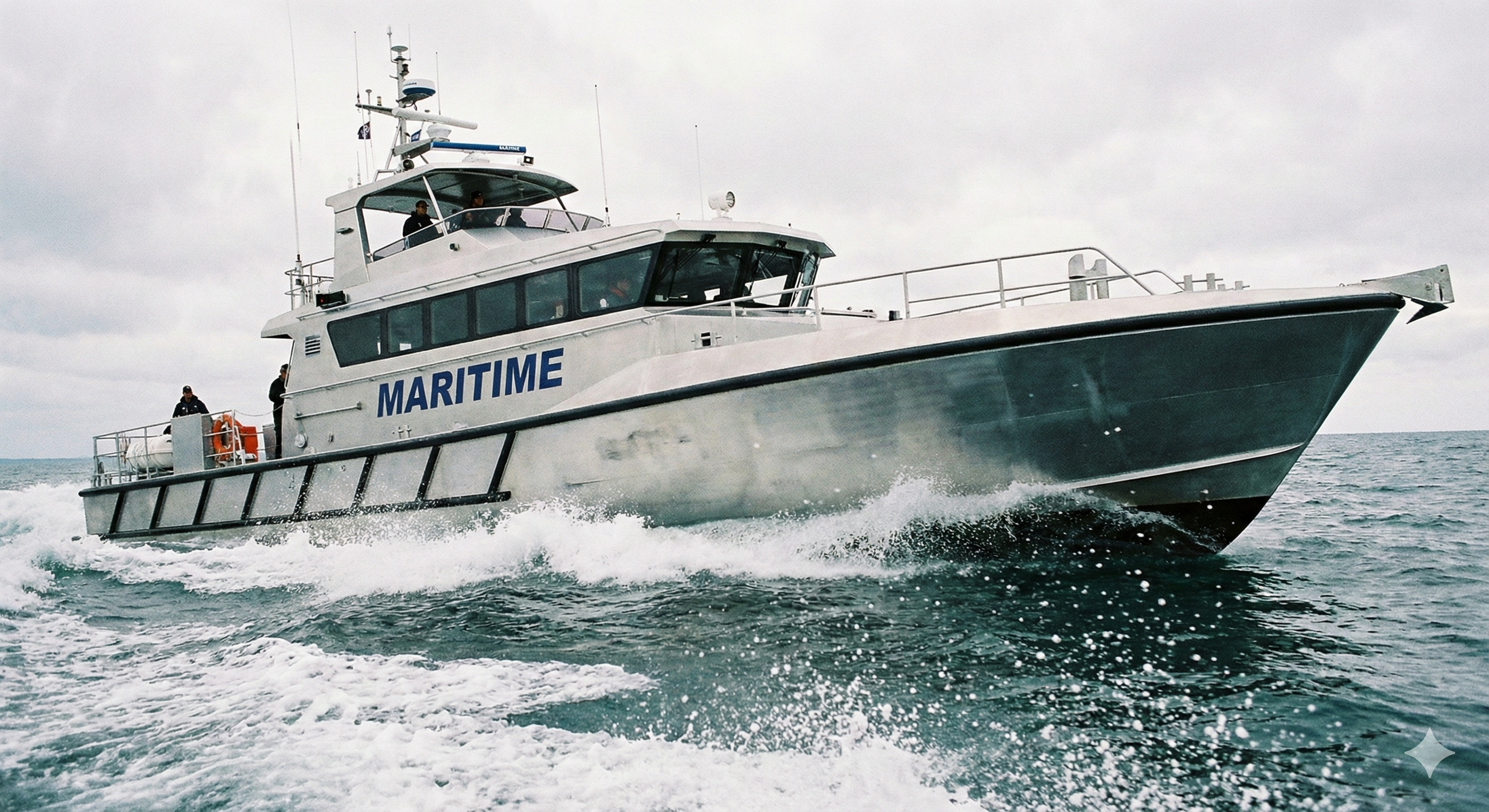
Vessel Hull Types and Selection: Why “Best” Depends on Your Boat’s Mission
Choosing the right vessel hull type isn’t about finding a single “best” shape, it’s about matching hull form to your boat’s mission. Whether you value ride comfort, stability, speed, or load capacity, each hull type strikes a unique balance. Read on to learn how to weigh those trade-offs and pick the hull that fits your operational needs.
- Why asking “Which hull is best?” misses the point
- How ride comfort and seakeeping affect safety and fatigue
- What stability curves reveal about load-carrying and capsizing risk
- Speed-to-power trade-offs for different hull shapes
- A step-by-step approach to vessel hull types and selection
Why “Best Hull” Is the Wrong Question There’s no one-size-fits-all hull selection hinges on your unique requirements.
- Define your mission profile: patrol, rescue, passenger ferry, cargo barge
- Identify operating environment: protected bay, open ocean, heavy seas
- List performance priorities: top speed, fuel efficiency, comfort, load capacity As naval architects, we start here, not with hull shapes. Once requirements are clear, you can compare monohull, RIB, catamaran, and tri-hull on equal terms.
Ride Comfort and Seakeeping: How Smooth Do You Need to Be? Vertical impacts and wave handling shape crew fatigue and passenger comfort.
- Effective deadrise angle and chine beam control slams
- RIB sponsons cushion impacts; catamarans narrow landing footprint
- Tri-hulls soften light chop but struggle in heavy slams Ask yourself: will your crew or passengers face head seas often? A 25% difference in vertical acceleration isn’t a rounding error—you’ll feel it.
Stability and Load Carrying: How Steady Do You Need to Stay? Static stability (righting arm curve) tells you how stiff your boat feels at rest; dynamic range shows how it warns you before tipping.
- Catamarans offer steep initial stability but peak early
- Monohulls roll more progressively over a wider angle
- Tri-hulls tune initial stability with angled sponsons High initial stiffness helps deck-cargo and lifting work, but too-stiff boats can be uncomfortable. Consider both initial and range-of-stability curves against your deck layout and payload.
Power and Efficiency: Speed, Fuel, and Performance Trade-Offs Each hull form demands different power to achieve planing or displacement speeds.
- Monohulls deliver top speed with moderate fuel use above 20 knots
- RIBs shine at moderate speeds but carry sponson weight
- Catamarans need ~25% more power for similar speed but plane easily
- Tri-hulls get on plane at low speeds, then suffer drag at high speed Balance your speed requirements with fuel budgets and engine room limits before picking a hull.
Bringing It All Together: Matching Hull to Mission Your mission defines the trade-offs you’re willing to make.
Step-by-step:
- Clarify mission and operating conditions
- Rank priorities: comfort, stability, speed, load
- Compare hull-type traits against each priority
- Consult a naval architect to refine technical details
Every hull form:- monohull, RIB, catamaran, tri-hull, strikes its own balance between ride comfort, seakeeping, stability, and power. The “best” hull is simply the one that matches your boat’s mission and commercial requirements. At Sherwoodmarinedesign.com, we specialize in tailoring vessel hull types and selection to your exact needs.
Contact Us to discuss your next project.