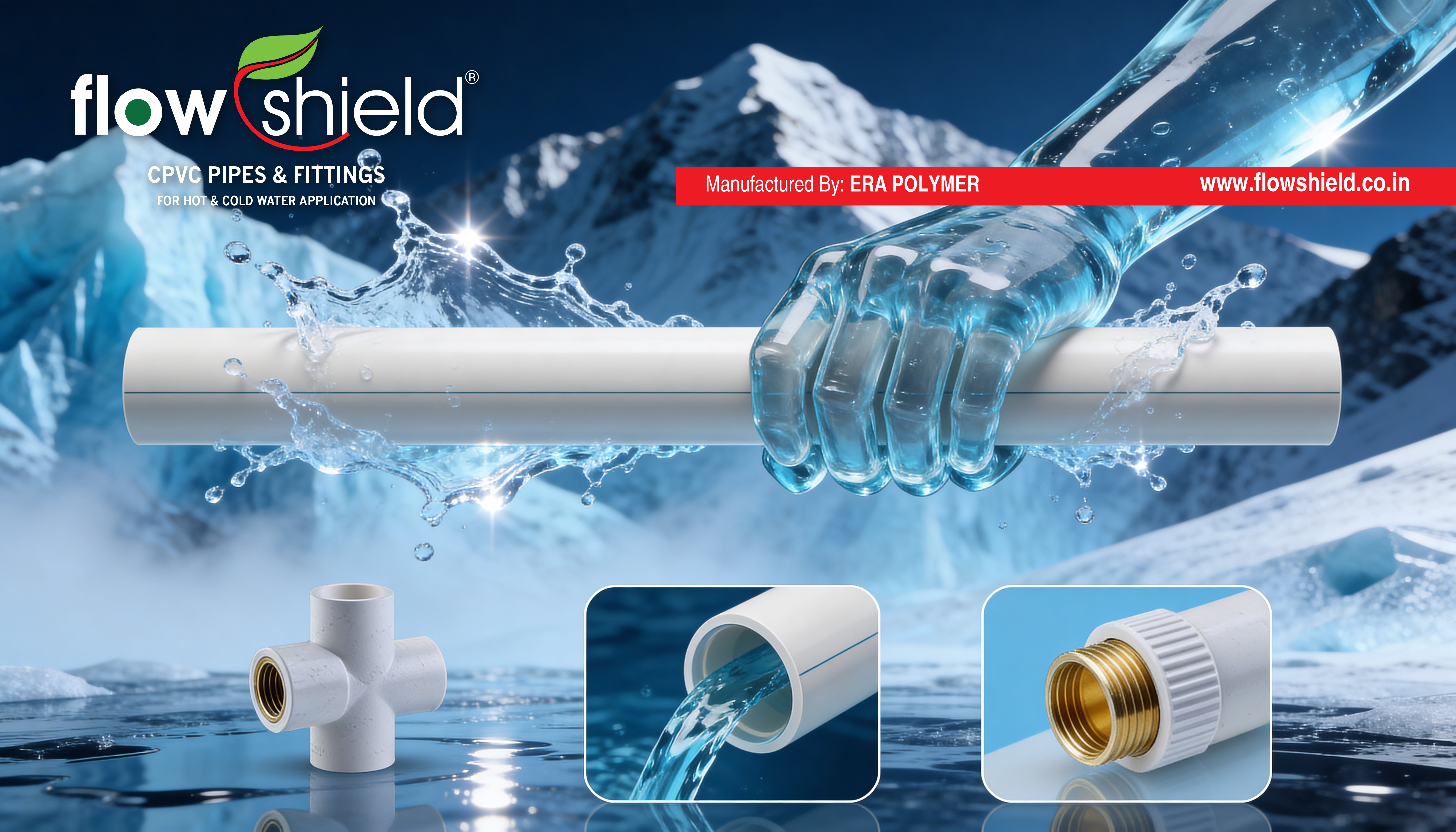
CPVC PIPES & FITTINGS FOR HOT & COLD WATER APPLICATION
What is CPVC and why it matters for plumbing systems Chlorinated polyvinyl chloride (CPVC) is a thermoplastic produced by chlorinating PVC. That higher chlorine content increases heat resistance and chemical stability, making CPVC suitable for both hot and cold potable water distribution. Unlike metal pipes, CPVC resists corrosion, scaling and many common waterborne chemicals, which extends system life and reduces maintenance costs. Key advantages of CPVC pipes and fittings High temperature performance: CPVC handles continuous operating temperatures up to about 200°F (93°C) and short-term excursions higher than that, making it a reliable choice for hot water lines. Corrosion and chemical resistance: Non-metallic composition eliminates rust and scale; CPVC withstands most water chemistries found in residential, commercial and light industrial systems. Smooth bore for hydraulic efficiency: Low friction loss improves flow and reduces pumping energy compared with roughened metal pipes. Lightweight and easy to install: Lower weight speeds installation and reduces labor; solvent-weld and threaded joining options simplify connections. Cost-effective lifecycle: Lower material and maintenance costs versus many metals; long expected service life when installed per recommended practices. Typical applications Residential and multi-family hot/cold potable water distribution. Domestic hot water recirculation systems. Commercial buildings — hotels, hospitals, office towers — where corrosion resistance and predictable hydraulic performance are required. Light industrial process lines carrying compatible fluids at moderate temperatures and pressures. Solar domestic hot water and hydronic heating loops (check compatibility with temperature cycles and UV exposure). Design and selection criteria Temperature and pressure ratings: Select pipe and fitting classes matched to expected maximum temperature and working pressure. Remember that allowable pressure decreases as temperature rises; consult manufacturer pressure–temperature charts. Code and standard compliance: Specify products meeting relevant standards such as ASTM F441 / F442, ASTM D2846, CSA B137.6 and ISO 15874 (where applicable). Use certified potable-water rated CPVC for drinking-water systems. Pipe schedule and sizing: Use manufacturer-specific sizing charts; CPVC’s smooth interior often allows sizing comparable to copper for the same flow, but confirm for long runs and recirculation systems. Fitting selection: Use compatible CPVC fittings (solvent-weld, threaded, or mechanical) from the same system family to avoid solvent/chemical incompatibilities and ensure joint integrity. Installation best practices Cutting and preparation: Use a proper tubing cutter or fine-tooth saw for clean, square cuts. Deburr and chamfer the inside edge slightly to ease assembly and prevent cement pooling. Solvent welding: Follow manufacturer’s instructions for primer and cement application: proper application, dwell times and joint insertion depth are critical for full fusion and strength. Work in well-ventilated areas and avoid excess cement inside the bore. Thermal expansion: CPVC expands more than metal. Provide calculated expansion loops or adequately spaced guides and anchors. Typical linear expansion is in the order of 0.0002 in/in/°F — factor this into long runs and exposed piping. Support spacing: Use manufacturer-recommended hanger spacing to prevent sagging, reduce stress on joints and avoid noise. Allow for free movement at expansion points. Avoiding UV and solvents: CPVC degrades under prolonged UV exposure — paint or wrap exposed runs. Keep away from incompatible chemicals (strong oxidizers, some solvents) that can damage the polymer. Testing and commissioning Pressure testing: Perform hydrostatic tests at the pressure and duration specified by code and manufacturer (commonly 1.5× working pressure for a defined period). Monitor for slow leaks that indicate joint issues or damaged sections. Temperature cycling: For hot-water systems, simulate operating temperature cycles where practical to check for expansion-related movement and joint integrity. Maintenance and long-term performance Routine inspection: Check visible runs for discoloration, deformation or leakage signs. Monitor hot-water temperatures and pressures to ensure operating limits aren’t exceeded. Repair practices: Small damaged sections are typically cut out and replaced with new CPVC fittings; solvent-weld repair couplings are widely available. Avoid adhesive/electrofusion methods unless manufacturer-approved. Life expectancy: When installed per guidelines and protected from UV and incompatible chemicals, CPVC systems commonly deliver decades of reliable service — often 25–50 years depending on application and water quality. Common problems and troubleshooting Leaky joints after welding: Causes include insufficient primer/cement, improper insertion depth, or debris in the joint. Cut out the joint and reassemble following correct solvent-welding procedure. Brittleness or cracking: May indicate exposure to incompatible chemicals, excessive UV, or prolonged high-temperature exposure. Replace affected sections and investigate root cause. Excessive thermal movement: Symptoms include noisy piping or stressed hangers. Add expansion loops/offsets or increase anchor spacing per design calculations. Regulatory, health and environmental considerations Potable water safety: Use CPVC rated for drinking water (lead-free formulations where required). Confirm compliance with NSF/ANSI 61 and applicable local plumbing codes. Fire performance: CPVC can burn if exposed to open flame; many formulations include flame retardants. Follow local fire and building code requirements for concealment, insulation and penetration details. Disposal and recycling: CPVC is a thermoplastic; recycling options exist but vary regionally. Dispose of waste per local regulations and consider manufacturer take-back or recycling programs where available. Choosing the right supplier and system Specify components from reputable manufacturers that provide pressure–temperature charts, installation guides, and technical support. Prefer systems with documented third-party certifications and readily available fittings to simplify repairs and future expansion. Conclusion CPVC pipes and fittings offer a technically strong, cost-effective solution for hot and cold water systems when selected and installed correctly. Their resistance to corrosion, reliable high-temperature performance, and ease of installation make them a top choice for modern plumbing applications — from single-family homes to commercial buildings. Learn more about CPVC system selection, manufacturer guidelines, and installation checklists to ensure your project meets code and performance expectations.
Quick practical checklist for specification and install - Verify system requirements: maximum operating temperature, peak and continuous pressure, water chemistry (pH, chlorides, disinfectant residuals) and exposure conditions (UV, sunlight, mechanical wear). - Select materials certified for potable water (NSF/ANSI 61) and matching standards (ASTM F441/F442, D2846, CSA B137.6 or ISO 15874). - Use manufacturer pressure–temperature curves to size pipe class and confirm allowable working pressure at expected temperatures. - Confirm compatibility: source pipe, fittings, solvent cement and primers from the same system family or manufacturer-approved combinations. - Plan for thermal expansion: calculate expected movement and include loops, offsets or slip joints; locate anchors and guides per manufacturer spacing. - Detail hanger spacing on drawings and specify vibration/noise control for long runs near living spaces. - Specify protective measures for exposed runs: UV protection (paint or wrap), mechanical guards, and firestopping at penetrations. - Include commissioning tests: hydrostatic test at required test pressure and duration, and a thermal cycling check for hot-water recirculation systems. Simple example — sizing sanity check For a 1-inch CPVC line carrying domestic hot water at 3 gpm over a 50 ft run, friction losses are typically similar to copper of the same diameter because of CPVC’s smooth bore. Confirm with the manufacturer’s chart, but expect comparable pump sizing to copper for moderate flows — often eliminating the need for upsizing. Short troubleshooting guide - Low flow or high pressure drop: check for debris in lines, incorrect pipe diameter selection, or excessive long-run friction. - Persistent leak at joint: disassemble and inspect for proper chamfering, full insertion depth, and correct cementing procedure; replace fitting if deformed. - Brittle or crazed pipe surface: inspect for chemical exposure or UV damage; remove and replace affected sections and identify source of exposure. - Noisy system: look for insufficient support or blocked expansion movement; add hangers or expansion offsets as required. Lifecycle and sustainability notes CPVC’s long life and low maintenance reduce the environmental impact compared with frequent metal pipe replacement due to corrosion. Recycling streams for CPVC are limited regionally — ask manufacturers about take-back or recycling programs and minimize waste during installation. Frequently asked questions (brief) - Can CPVC be used outdoors? Short-term yes if UV is limited, but for prolonged exposure coat or wrap the pipe to prevent degradation. - Is CPVC safe for drinking water? Yes when certified to NSF/ANSI 61 and installed per local code using potable-grade CPVC. - How does CPVC compare to PEX? CPVC offers higher continuous temperature resistance and solvent-weld joints; PEX is more flexible and easier for long continuous runs. Choose based on system layout, temperature cycles, and installer familiarity. Final recommendations Work with manufacturers and experienced contractors early in design to ensure system compatibility, seamless installation, and reliable long-term performance. Document material selections, installation details and commissioning results for future maintenance and troubleshooting. Learn more about CPVC system selection, installation checklists and manufacturer best practices by contacting certified suppliers or downloading technical guides from leading manufacturers — a small investment up front avoids costly rework and extends system life.