3-Minute Read
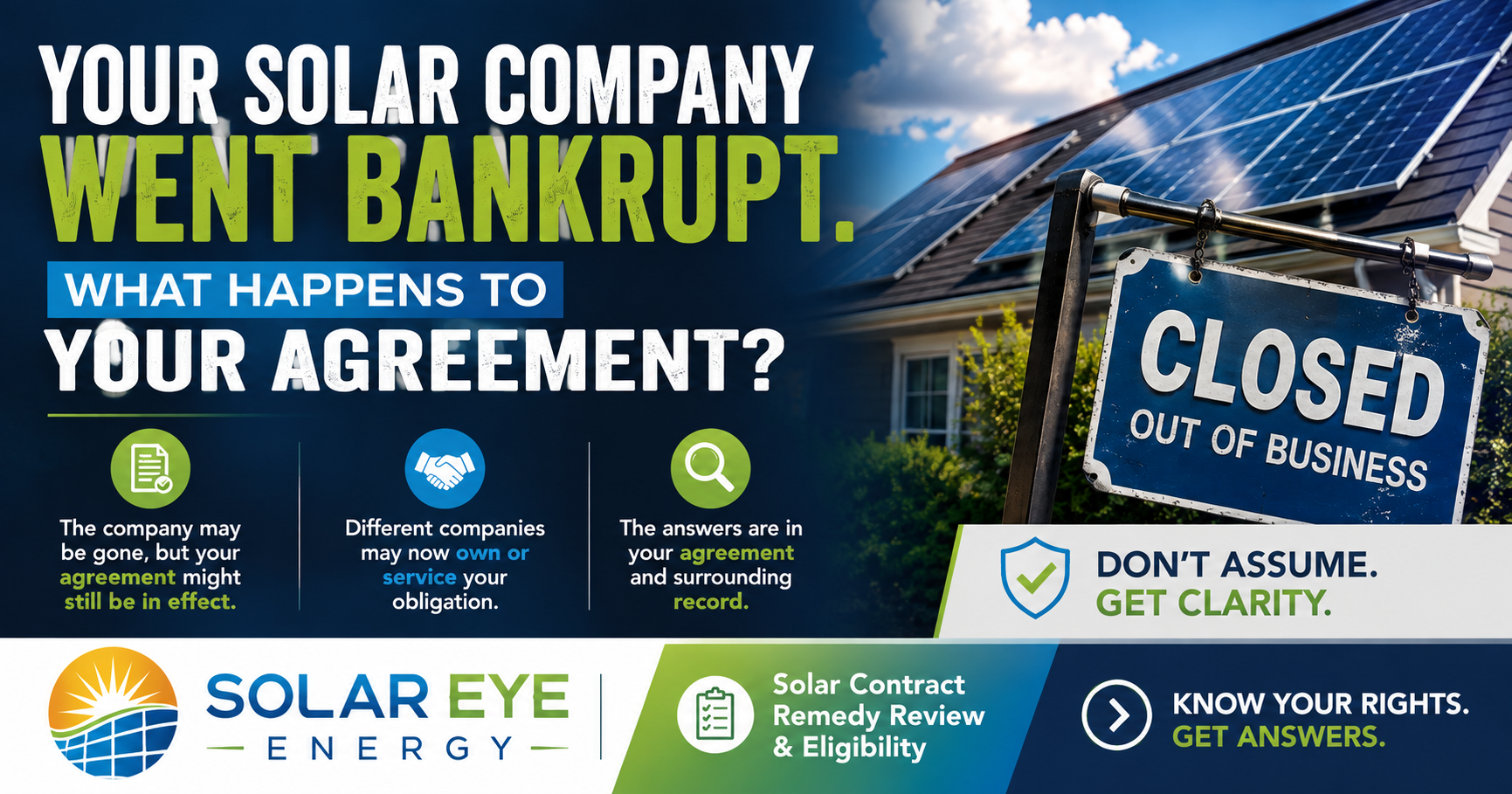
The company disappearing doesn’t necessarily mean your solar agreement disappeared.
For homeowners, the news that a solar company has filed bankruptcy or shut down can create immediate confusion.
You may have purchased a system from one company, had it installed by another, financed it through a separate lender, and now receive bills or notices from an organization you never dealt with when you originally went solar.
So the obvious question becomes:
If the solar company is gone, what happens to my agreement?
The answer starts with understanding exactly who is connected to your solar transaction and what role each company actually plays.
One of the biggest sources of confusion is treating every company involved in a solar transaction as though they are the same entity.
They aren't necessarily.
Depending on how your system was purchased, several different parties may be involved:
That distinction becomes extremely important when one of those companies files bankruptcy.
If the installer disappears, for example, that does not automatically establish that a separate financing obligation disappeared with it.
A company's bankruptcy can affect its operations, warranties, servicing responsibilities, assets and contractual relationships.
But “the company went bankrupt” and “my agreement is canceled” are not the same conclusion.
Depending on the circumstances, contractual rights may remain with another party, become part of a bankruptcy proceeding, be transferred, sold, assigned, or continue to be administered by another company.
That's why homeowners should be careful about relying on broad statements such as:
“They went bankrupt, so you don't have to pay anymore.”
The actual documents matter.
The bankruptcy itself is only part of the story.
A meaningful review should also examine what happened afterward.
Who is currently billing you?
Who claims the right to collect?
Did servicing change?
Were contractual rights transferred or assigned?
What happened to warranties or promised services?
Is the system operating as represented?
Are you still receiving the benefits you were told you would receive?
And most importantly:
Does the current situation match what your original agreement says was supposed to happen?
Those questions can reveal a very different picture than simply looking at the name of the company that originally sold the system.
Homeowners should also distinguish between what they remember being told during the sale and what appears in the documents they signed.
Solar transactions can involve representations concerning savings, utility bills, tax incentives, system performance, warranties, ownership and financing.
When problems arise later, those representations may become important—but they need to be compared against the actual agreement and supporting record.
That means reviewing more than a monthly solar bill.
The contract, financing documents, disclosures, communications, installation records, payment history and subsequent notices can all help establish what actually occurred.
Finding out that your solar company went bankrupt can feel like it should immediately answer the question of what happens next.
Usually, it doesn't.
The better starting point is:
Who were the parties?
What did each party agree to do?
Who currently claims rights under the agreement?
What changed?
What does the documentation show?
Only after those questions are answered can the homeowner begin evaluating whether the agreement is simply continuing as written—or whether circumstances exist that deserve closer review.
The company may be gone. The agreement may still be there. The record tells you what you're actually dealing with.
Solar Eye Energy
Solar Contract Remedy Review & Eligibility