Your landlord ignored your repair request for two weeks. Or sent you a curt, dismissive email. Or scheduled construction that's loud and annoying. Or took forever to respond to your complaint about a leaky faucet. You're frustrated, but you're also wondering: "Is this just a difficult landlord I have to deal with? Or has this crossed the line into illegal harassment I can actually do something about?"
This question—where exactly the line falls between "annoying landlord behavior I should tolerate" and "illegal harassment I have legal remedies for"—is one of the most common sources of confusion for New York tenants. You don't want to overreact and make accusations about normal friction, but you also don't want to tolerate illegal conduct because you assumed it was just part of renting.
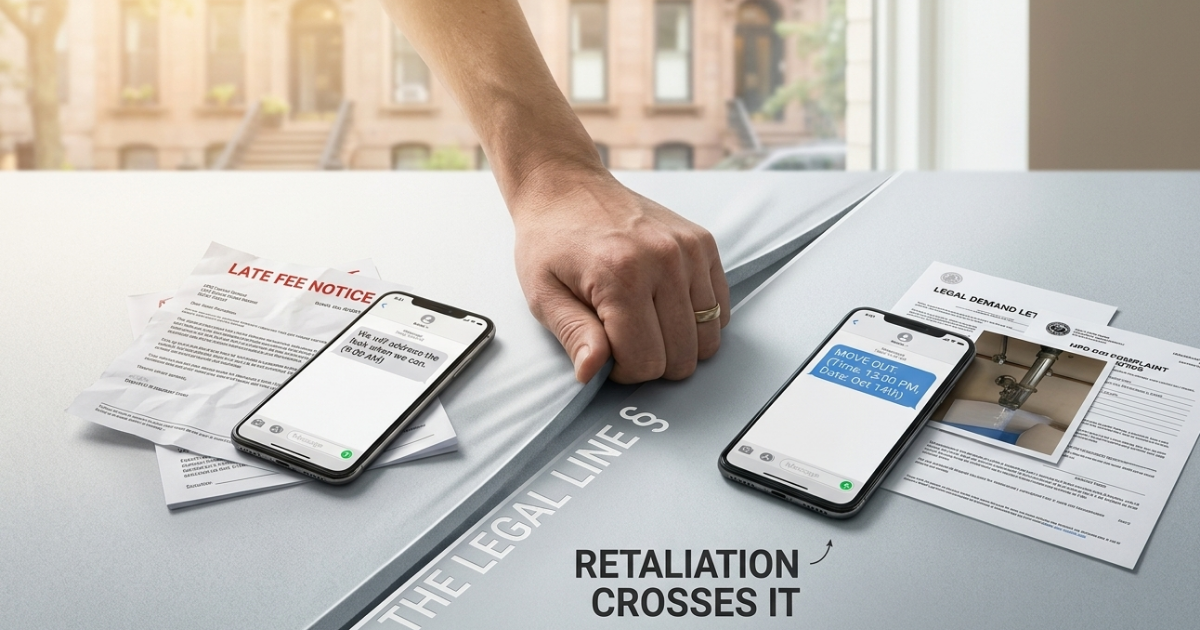
Here's the truth: New York law draws a specific line, and it's clearer than you think. The line isn't about whether your landlord is pleasant or difficult, nice or mean, responsive or slow. The line is about intent and impact: does your landlord's conduct—whether actions they take or things they fail to do—appear designed to force you out or make you surrender your tenant rights?
Difficult landlords are frustrating. Harassing landlords are breaking the law. Let me show you exactly where that line is, how to tell which side of it you're on, and what to do when your landlord crosses it.
Before we define the legal standard, let's acknowledge why this feels so confusing:
Some landlord behavior could be either:
Genuinely incompetent management: Landlord is disorganized, forgetful, poorly staffed, or inexperienced. They're bad at their job, but not actively trying to force you out.
Strategic harassment disguised as incompetence: Landlord deliberately "loses" your repair requests, "forgets" to restore services, or creates administrative chaos specifically to frustrate you into leaving.
From your perspective, the impact is the same: repairs don't get done, services are unreliable, communication is terrible. But the legal classification is different. One is negligence. The other is harassment.
What determines which it is? Pattern and targeting. If landlord is equally incompetent with all tenants, probably negligence. If landlord is selectively "incompetent" with you after you refused a buyout or complained to HPD, probably harassment.
Landlords can harass you using technically legal tools:
Construction that's permitted and legal can still be harassment if it's designed to make your life unbearable rather than accomplish legitimate building improvements.
Buyout offers aren't illegal but become harassment when combined with threats, lies, or aggressive pressure tactics.
Eviction proceedings are legal processes but become harassment when filed repeatedly without merit as a weapon to intimidate you.
You think: "They have permits for this construction, so how can it be harassment?" or "They're allowed to offer buyouts, so this must be legal."
Reality: The legality of the tool doesn't determine if its USE constitutes harassment. Courts look at HOW and WHY landlords use these tools.
Landlords engaging in harassment often gaslight tenants:
"This is how apartment buildings work."
"All landlords do this."
"You're being unreasonable."
"Other tenants don't complain."
You internalize doubt: "Maybe I am expecting too much? Maybe this is normal and I'm the problem?"
This deliberate confusion benefits landlords. If you can't identify the line, you can't know when they've crossed it, so you tolerate illegal harassment.
Let's start with the actual legal definition so you have a clear standard:
New York State law and NYC's Housing Maintenance Code define harassment as:
"Acts or omissions by a landlord (or someone acting on their behalf) that:
When done with the intent or purpose of:
Breaking this down:
"Acts or omissions" = Things landlord DOES (shutting off heat, threatening you, doing disruptive construction) OR things landlord FAILS to do (refusing repairs, ignoring hazardous conditions).
"Disturb comfort, peace, quiet OR interfere with use" = The conduct makes your apartment less habitable, less peaceful, or harder to live in normally.
"Intent or purpose" = This is the key dividing line. Is landlord acting with the GOAL of making you leave or give up rights? Or are they just negligent/difficult without that motive?
"Vacate OR waive rights" = Harassment includes forcing you to physically move out AND pressuring you to surrender rights (like accepting inadequate buyouts, agreeing not to renew, dropping repair complaints, waiving rent stabilization protections).
The law specifically excludes certain landlord actions from harassment classification:
Properly terminating a lease at the end of its term through correct legal procedures (proper notice, valid grounds if Good Cause applies) is NOT harassment by itself, even if you don't want to leave.
Enforcing legitimate lease rules through normal legal channels (filing eviction for genuine nonpayment or substantial lease violations, following proper procedures) is NOT harassment just because it's stressful for you.
Making repairs or improvements with proper permits during legal hours is NOT harassment just because it's inconvenient or noisy, unless it's being used as a tool to force you out.
The line: Landlords can do these things legally. But if they do them in bad faith, with harassment intent, or combined with other harassing conduct, they cross the line into illegal harassment.
One incident usually isn't harassment. Courts and enforcement agencies look for:
Pattern of behavior: Multiple incidents over time, or ongoing sustained conduct.
Escalation: Behavior that gets worse or more frequent.
Coordination: Multiple types of harassment happening together (service interruptions + buyout pressure + construction abuse).
Single severe incidents CAN be harassment (like an illegal lockout or violent threat), but usually harassment involves a pattern of conduct over weeks or months.
Let's categorize landlord behavior into three buckets to help you identify where you fall:
These behaviors are frustrating and may violate other laws or lease terms, but typically don't meet the legal harassment standard by themselves:
What this looks like:
Why this usually isn't harassment: Slowness on minor issues, while annoying, doesn't show intent to force you out. It's negligence or poor management.
When it CROSSES the line: If landlord is deliberately slow only with YOUR repairs while being responsive to others, if delays coincide with buyout pressure, if pattern of slowness is clearly designed to frustrate you specifically.
What this looks like:
Why this usually isn't harassment: People have different communication styles and bad days. Rudeness alone, without threats or a pattern of intimidation, isn't harassment.
When it CROSSES the line: If "rudeness" includes veiled threats, if it's part of campaign of intimidation, if arguments involve aggressive confrontations designed to frighten you, if pattern is clearly meant to make you uncomfortable enough to leave.
What this looks like:
Why this usually isn't harassment: Landlords have the right and duty to maintain buildings. Permitted construction following rules is legal even if annoying.
When it CROSSES the line: If construction is pretextual (no real purpose), if it violates permits or safety rules, if it's targeted at your unit to pressure you, if landlord combines construction with explicit or implicit pressure to move, if work is unnecessarily disruptive or prolonged.
What this looks like:
Why this usually isn't harassment: Some scheduling friction is normal when coordinating access for repairs or inspections.
When it CROSSES the line: If landlord demands entry at unreasonable hours repeatedly, enters without permission as power play, uses access as excuse for surveillance or intimidation, pattern clearly designed to disturb your peace.
Key point about Bucket 1: These behaviors can be violations of other laws (warranty of habitability, lease terms, entry laws) and you may have remedies. But they usually don't constitute harassment unless they're part of a larger pattern combined with evidence of intent to force you out.
These behaviors clearly cross the line into illegal harassment, particularly when part of a pattern:
What this looks like:
Why this is harassment: Essential services are fundamental to habitability. Deliberately interrupting them or dragging feet on restoration shows intent to make conditions unbearable so you'll leave. This is one of the clearest harassment patterns.
Legal standard clearly met: Interferes with use of apartment, disturbs comfort and peace, pattern shows intent to force you out.
What this looks like:
Why this is harassment: All landlords must maintain habitability. When landlord deliberately refuses to address hazards WHILE pressuring you to leave, the refusal becomes a harassment weapon.
Legal standard clearly met: Impairs habitability and safety with intent to force you out.
What this looks like:
Why this is harassment: Threats and intimidation serve no legitimate landlord purpose. They exist only to frighten tenants into compliance or moving.
Legal standard clearly met: Disturbs peace and quiet, interferes with comfortable use of apartment, clear intent to coerce you into leaving or surrendering rights.
What this looks like:
Why this is harassment: Illegal lockouts are absolutely prohibited. Landlords must use legal eviction process through courts. Physical lockouts are per se harassment.
Legal standard clearly met: Completely interferes with use of apartment, clear intent to force immediate departure without legal process.
What this looks like:
Why this is harassment: Eviction proceedings are stressful and can damage your record. Using them as weapons when there's no legitimate basis is harassment designed to wear you down.
Legal standard clearly met: Disturbs peace and comfort, pattern shows intent to pressure you into leaving or accepting unfavorable terms.
What this looks like:
Why this is harassment: Excessive monitoring and unauthorized entries violate your right to privacy and peaceful enjoyment. Pattern shows intent to intimidate and make you uncomfortable.
Legal standard clearly met: Disturbs peace, quiet, and privacy, interferes with comfortable use of apartment, intent to pressure you through intimidation.
Key point about Bucket 2: If you're experiencing behaviors from this bucket, especially repeatedly or in combination, you're almost certainly experiencing illegal harassment. The legal standard is clearly met.
These behaviors could be either negligence/difficulty OR harassment depending on context, pattern, and timing:
What this looks like:
Could be negligence if: Landlord is genuinely disorganized and treats all tenants poorly.
Is harassment if: Pattern of selective neglect coincides with you asserting rights, timing reveals retaliatory motive, other tenants aren't experiencing same problems.
How to tell the difference: Timing, targeting, and landlord's own statements. If landlord says or implies "you're making things difficult so don't expect quick service," that reveals harassment intent.
What this looks like:
Could be legitimate if: Work is necessary building improvement, safety measures are followed despite some disruption, duration is reasonable, affects all tenants equally.
Is harassment if: Work is pretextual or unnecessary, targets your unit or adjacent areas specifically, combined with buyout pressure, ignores safety rules endangering your health, excessive duration suggests intent to frustrate you into leaving.
How to tell the difference: Permits + actual necessity of work + equal treatment + landlord's response to your complaints. If landlord uses construction problems as reason to suggest you'd be "happier somewhere else," that reveals harassment intent.
What this looks like:
Could be coincidence if: Building-wide deterioration affects all tenants equally, timing is genuinely unrelated to buyout refusal, landlord is making good faith repair efforts.
Is harassment if: Deterioration is selective to your unit, timing immediately follows buyout refusal, landlord explicitly or implicitly connects conditions to buyout ("these problems wouldn't be your concern if you took the offer"), pattern reveals strategic pressure campaign.
How to tell the difference: Timing relative to buyout refusal, selective vs. building-wide impact, landlord's communications connecting conditions to buyout pressure.
Key point about Bucket 3: Context matters. Look at the full pattern, the timing relative to when you asserted rights, whether you're being targeted specifically, and what landlord says about their intent. These factors determine which side of the harassment line you're on.
Still unsure which bucket you're in? Apply this four-question test:
Ask yourself:
Why this matters: One bad incident usually isn't harassment. Pattern of conduct over time is what courts look for.
What it means:
Ask yourself:
Why this matters: Timing reveals motive. If bad behavior coincides with you exercising tenant rights, that suggests retaliatory harassment intent.
What it means:
Ask yourself:
Why this matters: Harassment law protects against conduct that meaningfully impairs habitability, safety, or peaceful enjoyment. Serious impact suggests harassment, not mere annoyance.
What it means:
Ask yourself:
Why this matters: Selective targeting reveals intent to force YOU specifically out, which is harassment. General poor management affecting everyone equally is negligence.
What it means:
If you answer YES to Questions 1 (Pattern), 2 (Motive), and 3 (Impact), you're very likely experiencing illegal harassment, not just dealing with a difficult landlord.
Even if you're unsure about Question 4 (Targeting), three yeses on Pattern, Motive, and Impact strongly suggest Bucket 2 (clear harassment territory).
Example application:
Scenario: Landlord was generally responsive to repairs. You refused a buyout offer in January. Since February, your repair requests go unanswered while other tenants' repairs get done. Your heat has been interrupted three times. Landlord keeps mentioning "maybe you'd prefer to live somewhere else."
Question 1 (Pattern): YES—multiple repair refusals + service interruptions over months
Question 2 (Motive): YES—timing coincides with buyout refusal, landlord explicitly suggests you leave
Question 3 (Impact): YES—no heat in winter, repairs not done
Question 4 (Targeting): YES—other tenants getting repairs, you're not
Conclusion: This is clearly Bucket 2 harassment. Four yeses = illegal harassment.
When you report harassment or bring a case, enforcement agencies and courts evaluate:
They look for:
They discount:
What this means for you: Document the pattern. Show multiple incidents across time. One instance usually isn't enough—show the course of conduct.
They ask:
They consider:
What this means for you: Present the facts that reveal intent. Show the timing, the targeting, the statements landlord made. Help authorities see that harassment is the only reasonable explanation for the pattern.
They weigh:
What this means for you: Document the impact. Photos of conditions, medical records if health affected, testimony about how conduct affects your daily life. Show it's not just annoying—it's seriously impairing your ability to live.
If your self-check suggests you're experiencing harassment (especially if you're clearly in Bucket 2, or in Bucket 3 with strong Pattern + Motive + Impact indicators):
Create comprehensive records:
Timeline document: Every incident with dates, times, detailed descriptions, what was said, who was present.
Photos and videos: Conditions in apartment, construction, lack of services, anything showing harassment impact.
Save all communications: Texts, emails, letters, notices. Screenshot before they can be deleted. Save voicemails.
Witness information: Names and contact info of neighbors or others who witnessed incidents.
Your complaints and landlord's responses: 311 records, HPD complaints, emails to landlord, landlord's responses (or non-responses).
Why this matters: Harassment claims require proving pattern and intent. Your contemporaneous documentation is the evidence that proves both.
In NYC:
Call 311 and say "I want to report tenant harassment." You'll be connected to HPD (Housing Preservation and Development) which investigates harassment.
For construction harassment: Report to DOB (Department of Buildings) about permit violations, unsafe conditions, prohibited hours.
Outside NYC:
Contact local code enforcement or housing agency to report violations.
Contact NY Attorney General's office (ag.ny.gov) for serious harassment, especially if it involves threats or multiple violations.
Why reporting matters: Creates official record, triggers investigations, can result in violations and penalties against landlord, provides documentation if you later bring court case.
Contact legal services:
NYC: Legal Services NYC (917-661-4500), Legal Aid Society (212-577-3300), Housing Court Answers (212-962-4795)
Outside NYC: Use LawHelpNY.org to find legal services in your county
Tell intake: "I'm experiencing tenant harassment and need legal advice or representation."
What lawyers can do:
Options for legal action:
HP (Housing Part) Harassment Proceeding in Housing Court (NYC):
Supreme Court Injunction (Statewide):
Criminal Complaint:
Which remedy to pursue depends on severity, your location, and available evidence. Discuss with legal services lawyer.
Remember the goal of harassment:
Landlords harass to make you:
By recognizing harassment and taking action, you're refusing to give landlord what they want.
You have the right to:
These rights are legally protected. Asserting them isn't being difficult—it's exercising legal rights.
The line between "difficult landlord" and "illegal harassment" isn't always perfectly clear in every case. That's why Bucket 3 (gray area) exists.
But in most cases, the line is clearer than you think:
Bucket 1 behaviors (slow minor repairs, occasional rudeness, normal permitted construction) are usually NOT harassment unless part of larger pattern with clear harassment intent.
Bucket 2 behaviors (service interruptions, hazard refusals, threats, illegal lockouts, serial baseless evictions, surveillance) are almost ALWAYS harassment, especially when repeated.
Bucket 3 behaviors (selective treatment, construction that violates safety rules, deteriorating conditions after buyout refusal) are harassment when Pattern + Motive + Impact indicators are present.
When in doubt, apply the four-question test:
Three or four yeses = very likely harassment.
If you're experiencing Bucket 2 behaviors or Bucket 3 with multiple yes answers, you're not just dealing with a difficult landlord. You're experiencing illegal harassment.
Document it. Report it. Get legal help. Fight back.
The law is on your side. Use it.