When you receive eviction papers with a court date two weeks away and you're not ready to defend yourself, your first instinct might be panic followed by either showing up unprepared or not showing up at all. Both choices lose you the case. The right move—the one that dramatically improves your chances of winning—is understanding exactly when and how to delay the hearing to prepare a real defense.
New York law gives you specific rights to delay eviction hearings, but only if you know when to use them and what reasons judges will accept. Use delays strategically and you get time to find a lawyer, gather evidence, and build the wrongful eviction defense that keeps you in your home. Misuse them or wait too long, and you hand your landlord an easy win. Here's exactly when delaying makes sense, how to do it right, and when pushing for more time starts working against you.
The single most important thing to understand about eviction timing: you are entitled to at least one adjournment of at least 14 days in any eviction case, even if your landlord objects, even if the judge thinks your case is weak, even if you have no particular reason other than "I'm not ready."
This isn't a favor the judge grants if they're feeling generous. It's your legal right under New York court rules governing Housing Court proceedings. The law recognizes that tenants facing eviction often receive papers with minimal notice, struggle to understand legal procedures, and need time to prepare meaningful defenses.
At your first court appearance, when the judge calls your case, you have the right to say: "Your Honor, I am not ready to proceed today. I request an adjournment to prepare my defense."
The judge must grant this request and must give you at least 14 days before the next court date. Some judges routinely give longer—three weeks or a month, depending on court calendar congestion. But the minimum is 14 days, and it's automatic.
You don't need to prove anything. You don't need to explain why you're not ready. You don't need documentation showing you tried to get a lawyer or that you're gathering evidence. Simply stating you're not prepared triggers the right.
Your landlord's lawyer will often object: "Your Honor, we've already waited X days since serving the petition. Tenant is just stalling. We ask that the case proceed today." The judge will note the objection and grant your adjournment anyway, because the law requires it.
This protection exists precisely because landlords and their lawyers are always ready at first appearances—they filed the case, they have all the documents, they know their arguments. Tenants, by contrast, often just received papers they barely understand and haven't had time to investigate defenses, find lawyers, or organize evidence.
Unless you walk into court on your first appearance with a lawyer already representing you, or you're absolutely certain you're prepared to defend yourself that day with all evidence organized and all defenses clear in your mind, request the adjournment.
Even if you think your case is straightforward, even if you're confident you can explain your defenses, even if the judge seems friendly and the landlord's lawyer says they're "willing to work something out"—get the adjournment. Here's why:
You may not know all your defenses yet. Many tenants discover stronger defenses after they have time to review documents carefully, research the law, and consult with legal services. What seems like a simple nonpayment case turns out to have retaliation issues once you realize the timing of your 311 complaint. What looks like a legitimate lease violation case reveals itself as discriminatory once you compare how your landlord treats other tenants.
Settlement pressure at first appearance is maximum. Landlord lawyers know unrepresented tenants are confused and scared at first appearances. They offer seemingly reasonable settlements that actually waive valuable rights or lock you into payment plans you can't maintain. After an adjournment and consultation with legal aid, those same "reasonable" settlements often look terrible.
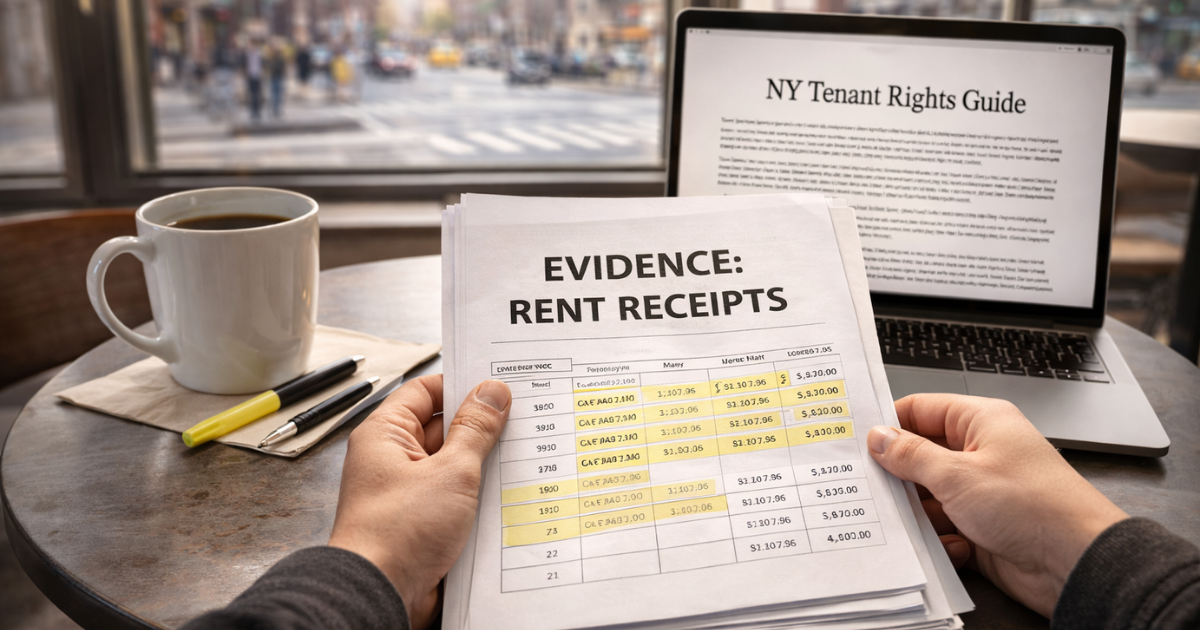
Evidence you need may not be immediately accessible. You might not have your rent receipts organized, your photos of apartment conditions downloaded, your repair request emails printed, or your 311 complaint numbers documented. Fourteen days gives you time to gather everything that proves your wrongful eviction defenses.
Legal services intake takes time. Even in NYC with Right to Counsel, connecting with a lawyer can take several days to two weeks depending on provider capacity and your responsiveness to intake calls. That first automatic adjournment gives you time to complete intake and get assigned representation.
The cost of using your first adjournment is minimal—you wait two more weeks. The benefit is potentially keeping your home instead of losing it because you rushed into a hearing unprepared.
You should strongly consider—really, you should almost always—ask for the first-appearance adjournment when any of these circumstances apply:
If you're walking into Housing Court without legal representation, you need the adjournment. Period. The statistics are stark: represented tenants avoid eviction or achieve favorable outcomes in approximately 85% of cases, while unrepresented tenants lose approximately 70% of the time.
Those numbers mean representation is often the difference between staying and leaving. If you don't have a lawyer at first appearance, use your automatic adjournment to get one:
In NYC: Call 311 immediately after court and request connection to the Tenant Helpline for Right to Counsel intake. Explain you have a court date in 14 days and need a lawyer assigned before then. Follow up on any intake calls or appointments they schedule.
Outside NYC: Call your county's legal services organization (found via LawHelpNY.org) the same day as your first appearance. Explain you have an eviction case, you just got a 14-day adjournment, and you need representation by the next court date. Responsive intake increases chances of assignment.
Even if you can't get full representation, many legal aid organizations offer limited-scope assistance—helping you draft an Answer, reviewing your defenses, coaching you for the next appearance. Fourteen days is enough time to at least get that consultation if you act immediately.
Wrongful eviction defenses require proof, not just allegations. If your landlord is retaliating against you for complaints, discriminating based on protected characteristics, or violating procedures, you need documentation proving those claims.
The first adjournment gives you time to assemble that proof:
For retaliation defenses:
For discrimination defenses:
For procedural defenses:
For waiver defenses:
Assembling this evidence in one day is nearly impossible. With 14 days, you can systematically gather documentation that transforms vague defenses into proven facts.
New York law requires landlords to serve eviction petitions at least 10-17 days before the court date (depending on service method and case type). But many tenants receive service right at the deadline or even improperly late, leaving minimal time to understand what they're facing.
If you received your petition less than a week before the court date, or if you received it with adequate notice but haven't had time to carefully review it and prepare a response, use the adjournment.
During those 14 days, systematically review every document:
Read the petition completely. Understand exactly what your landlord claims: Are they seeking eviction for nonpayment, and if so, for which months? Are they claiming lease violations, and if so, which specific provisions allegedly violated? Are they claiming owner occupancy, substantial renovation, or other holdover grounds?
Check the predicate notices. Did they attach the notices they claim they served? Do the dates match their timeline? Did they wait the required notice periods (14 days for nonpayment rent demands, 30 days for lease termination notices in many cases, 10 days for cure notices under Good Cause)?
Verify service claims. How does the petition claim you were served? Does their description match what actually happened? If they claim personal service but you were never served in person, that's grounds for dismissal.
Draft a complete Answer. Using Help Center assistance or legal aid consultation, prepare an Answer that lists every applicable defense. Don't just check boxes—explain your defenses with specific facts.
Organize your evidence. Create a folder (physical or digital) with all documents supporting your defenses, organized by category and labeled clearly.
This review process done thoroughly takes time. Rushing through it at the courthouse on your first appearance while trying to understand what the judge is saying and what your landlord's lawyer is proposing is a recipe for missing critical defenses.
If your landlord is evicting you for lease violations—unauthorized occupant, pet, subletting, business use, whatever—and you can actually cure those violations, the first adjournment gives you time to do so.
New York's Good Cause Eviction Law requires landlords to give tenants 10 days to cure lease violations before proceeding with eviction. If you cure within that period and your landlord proceeds anyway, you have a complete defense.
But even without Good Cause protections, curing violations before trial strengthens your position:
Remove the unauthorized occupant if that's the claim. Get documentation showing the person moved out (forwarding address confirmation, statement from the person, witness statements).
Rehome the unauthorized pet or get your landlord's retroactive permission by providing proper pet documentation and paying any required pet deposits.
Stop the prohibited business activity and document cessation (close home business accounts, stop advertising, remove business equipment).
Remedy any physical alterations you made without permission (repaint walls to original color, remove unauthorized fixtures, repair any damage from installations).
If you show up at the next court date having cured the violation and with proof of cure, many judges will dismiss the case or pressure your landlord to dismiss, especially if the cure was completed within the original cure period. Your landlord's stated reason for eviction no longer exists.
The 14-day adjournment is often exactly the time you need to arrange cures you couldn't accomplish in the original 10-day notice period.
After you've used your automatic first adjournment, any additional delays are discretionary—the judge decides whether to grant them based on whether you have good cause for more time. "I'm not ready" doesn't work the second time. You need specific, concrete reasons why more time directly strengthens your defense.
If you used the first adjournment to start the legal services intake process but your lawyer assignment isn't complete yet, judges will usually grant one more adjournment to allow representation to finalize.
When requesting this second adjournment, be specific:
"Your Honor, I am working with [Legal Services organization name]. I completed intake and have an appointment with an attorney scheduled for [specific date]. I request an adjournment to [date after your appointment] so my lawyer can appear with me."
Or if you've been assigned but your lawyer needs time to prepare:
"Your Honor, I was assigned counsel on [date]. My attorney from [organization] requests this adjournment to review the case file and prepare defenses. [Attorney name] will be ready to proceed on [specific date]."
Judges understand that legal services organizations are stretched thin and case preparation takes time. What they won't tolerate is vague claims that you're "trying to get a lawyer" with no evidence you've actually started the process or that representation is imminent.
Bring documentation of your intake appointment, emails from the legal services provider, or have your assigned lawyer (even if not fully prepared) call the court to request the adjournment on your behalf.
Some evidence critical to wrongful eviction defenses isn't immediately accessible—it requires formal requests to government agencies, landlords, or third parties, and those requests take time to process.
Judges will grant adjournments to wait for these documents if you can prove you've actually requested them and they're genuinely necessary:
HPD or Code Enforcement records showing violations issued after your complaints, proving retaliation timing. If you submitted a FOIL (Freedom of Information Law) request and have the confirmation, show it to the judge. "Your Honor, I requested my complaint and violation history from HPD on [date] to prove retaliation. FOIL responses take up to 20 business days. I should receive these records by [date] and request an adjournment until then."
Rent ledgers or lease copies from your landlord. If your landlord claims you owe rent you believe you paid, or if you need your lease to prove terms your landlord is mischaracterizing, you may have requested these documents through court-ordered discovery or direct requests. "Your Honor, I served a discovery demand requesting my complete rent ledger on [date]. Responses are due [date]. I need this ledger to prove I paid the months landlord claims are arrears."
Medical records or disability documentation if you're raising disability discrimination or requesting reasonable accommodations. "Your Honor, I requested my medical records from [provider] on [date] to document my disability and the reasonable accommodation I requested that landlord denied. These records should arrive by [date]."
ERAP or subsidy payment confirmations showing your landlord received payments covering disputed months. "Your Honor, I requested payment records from [administering agency] showing ERAP covered the months landlord claims I owe. The agency confirmed they'll provide records by [date]."
The key is proving you've taken action—showing request confirmations, FOIL acknowledgments, discovery demands—and explaining why the documents directly affect your defenses. You're not stalling; you're waiting for evidence that's been requested and is coming.
Some defenses rely on witness testimony, and if that witness is temporarily unavailable but can appear on a specific later date, judges often grant brief adjournments.
Examples of valid unavailability:
Building inspector who issued violations after your complaints and can testify about conditions and timing, but is on vacation or assigned to training. Contact the agency to confirm when the inspector can appear.
Neighbor who witnessed discriminatory statements by the landlord or can testify about differential treatment, but is scheduled for surgery or traveling for work with confirmed return date.
Expert witness (housing code expert, reasonable accommodation specialist) your lawyer wants to use but who has scheduling conflicts for the current trial date.
When requesting adjournment for witness availability, be specific:
"Your Honor, my defense includes testimony from [witness name], who [explain relevance—witnessed landlord's discriminatory statements, can testify about differential treatment, etc.]. This witness is unavailable on [current date] due to [specific reason] but will be available starting [specific date]. I request adjournment to [date witness is available]."
Vague claims about "needing to talk to witnesses" without naming them or explaining their unavailability won't work. Judges know the difference between genuine witness scheduling issues and manufactured delays.
Sometimes wrongful eviction defenses overlap with other legal proceedings, and outcomes in those proceedings directly impact the eviction case. Judges may grant adjournments to allow related matters to resolve first.
HP (Housing Part) actions for repairs. If you filed an HP action seeking court orders forcing your landlord to make repairs, and your eviction defense includes breach of warranty of habitability or retaliation for requesting repairs, the HP case outcome is relevant. "Your Honor, I have a pending HP action, case number [X], seeking repairs to address violations. The court's findings in that case directly relate to my habitability and retaliation defenses here. Trial in HP is scheduled for [date], and I request this case be adjourned until after that trial."
Discrimination complaints filed with civil rights agencies. If you filed with NYS Division of Human Rights, NYC Commission on Human Rights, or HUD alleging housing discrimination, and those agencies are investigating, judges sometimes stay eviction cases pending agency findings. "Your Honor, I filed a discrimination complaint with [agency] on [date] alleging [type of discrimination]. The agency has opened an investigation. I request a stay of this proceeding pending the agency's probable cause determination, which should issue within [timeframe]."
ERAP or rental assistance applications pending. If you applied for rental assistance that would cover disputed rent arrears, judges often adjourn to allow the application to process. "Your Honor, I applied for ERAP on [date]. The application is under review and a determination should be made by [date]. If approved, ERAP will cover the months landlord claims I owe, potentially resolving this case."
Repair escrow proceedings or rent reduction orders. If you have an active rent reduction order or repair escrow from DHCR (Division of Housing and Community Renewal), those affect how much rent you actually owe and may defeat a nonpayment claim.
The key is showing concrete connection between the other proceeding and your eviction defense, and providing specific timelines for when the other matter will resolve.
While strategic adjournments strengthen your defense, excessive delays or delays without clear purpose hurt your case and can lead to worse outcomes than if you'd proceeded earlier.
After your first automatic adjournment, every subsequent request is discretionary. If the judge believes you're stalling, that your reasons are insufficient, or that you've had adequate time to prepare, they can deny the adjournment and force the case to trial that day.
If you're not ready when they deny your adjournment request, you face terrible options:
Proceed to trial unprepared. You present whatever weak defense you can cobble together on the spot, likely losing because you don't have evidence organized, witnesses present, or legal arguments polished.
Request a brief recess to prepare. The judge might give you an hour or two in the courthouse to pull yourself together, but that's not enough time to gather missing evidence or contact witnesses who aren't there.
Default. If you simply can't proceed and the judge won't give you more time, you can be defaulted—meaning you lose the case without trial. Your landlord gets a judgment and warrant of eviction without you ever presenting defenses.
The possibility of denied adjournments means every delay request must be justified. Don't assume the judge will keep granting time indefinitely.
When cases drag on through multiple adjournments, judges often order tenants to pay "use and occupancy"—essentially ongoing rent—into court while the case is pending. This protects landlords from tenants who stall for months while living rent-free.
Use and occupancy orders require you to deposit the monthly rent amount (or sometimes current fair market rent if your lease rent is below market) with the court clerk by specific dates. If you don't comply, your case can be dismissed and you lose.
For tenants living paycheck to paycheck, scraping together current rent plus catching up on arrears is impossible. Use and occupancy orders add severe financial pressure that can force settlements on unfavorable terms or lead to case dismissal for non-compliance.
The longer your case drags on, the more likely a use and occupancy order becomes. Judges use these orders specifically to prevent indefinite stalling.
The first time you request an adjournment, the judge accepts it as reasonable—you need time to prepare. The second time, if you have a good reason (getting a lawyer, waiting for documents), the judge likely grants it.
By the third or fourth adjournment request, judicial skepticism sets in. The judge starts questioning whether your defenses are genuine or whether you're manufacturing reasons to delay because you know you'll eventually lose.
This skepticism affects more than just adjournment rulings. When your case finally goes to trial, a judge who's watched you delay multiple times approaches your defenses with doubt: "Are these real retaliation claims, or is this tenant just throwing up obstacles to avoid paying rent they clearly owe?"
Even if your defenses are legitimate and well-supported, you're fighting uphill against the credibility damage from excessive delays.
The longer the case drags on, the more motivated your landlord becomes to win and the less willing to settle reasonably. Landlords losing rental income month after month become less flexible about payment plans, less willing to dismiss in exchange for your move-out, and more determined to push through to judgment regardless of cost.
Early settlement opportunities—where your landlord might have dismissed the case if you paid two months' arrears or cured a lease violation—disappear after months of delays and mounting lost rent. Your landlord hardens into a "I'm seeing this through to eviction" position that makes any settlement impossible.
Strategic delays are valuable. Endless delays turn into tactical disasters.
Here's the concrete action plan that optimizes use of adjournments while avoiding the pitfalls of excessive delay:
Arrive early. Get to the courthouse when it opens. Visit the Help Center immediately and ask for assistance reviewing your papers and understanding what defenses you might have. Even a brief Help Center consultation before court starts helps you understand your situation better.
Check in properly. Follow courthouse procedures for checking in—sometimes there are sign-in sheets, sometimes you tell court officers your name, procedures vary by location. Make sure the court knows you're present.
When your case is called, request the adjournment immediately. Stand when the judge calls your case, approach the bench if instructed, and clearly state: "Your Honor, I am not ready to proceed today. I request a 14-day adjournment to prepare my defense and seek legal representation."
Don't negotiate or discuss the case yet. Your landlord's lawyer may try to engage you in settlement discussions right there in the courtroom. Politely decline: "I'm not prepared to discuss settlement until I've consulted with legal services. That's why I'm requesting the adjournment." Don't commit to anything or provide information about your situation.
Clarify what your landlord is claiming. If it's not clear from the petition, you can ask the judge or your landlord's lawyer: "Can you clarify whether this is a nonpayment case or a holdover? What specific grounds is landlord claiming?" Understanding the allegations helps you prepare during the adjournment period. But keep this brief—you're not litigating the case today.
Get the new court date in writing. Make sure you receive a written notice of your next court date before you leave. Some courts provide printed notices, others write it on your papers. Confirm the date, time, and courtroom location. If you're unsure, ask court staff before leaving.
Don't leave without clarity on the adjourned date. Missing your next appearance because you didn't write down the date correctly results in default. Confirm it twice.
Use every day of this period strategically:
Day 1 (the same day as first appearance): Call legal services intake. NYC tenants call 311 and request Tenant Helpline. Outside NYC, call the legal services organization for your county found through LawHelpNY.org. Start the intake process immediately.
Days 1-3: Gather all documents you have at home: lease, rent receipts, repair request emails, photos, previous notices from landlord, 311 complaint confirmations, anything relevant. Organize into a folder (physical or digital) labeled by category.
Days 3-7: Request documents you don't have but need: Submit FOIL requests to HPD for your complaint and violation history. Email or write your landlord requesting copies of notices they claim they served, your rent ledger, or your lease if you don't have a copy. Send these requests via methods that create proof (certified mail, email with read receipt).
Days 7-10: Follow up on legal services intake. If you haven't heard back, call again. Be responsive to any callbacks or email requests for information. Missing intake callbacks delays assignment.
Days 10-14: If you have a lawyer assigned, meet with them or have phone consultations to review your case and discuss strategy. If you don't have a lawyer yet but have gathered evidence, organize it into a timeline showing exactly what happened when, especially timing between protected activity and eviction filing.
Day 14 or before next court date: Prepare your Answer if you haven't already filed one. Use Help Center assistance or sample forms from LawHelpNY. List every defense you've identified. File the Answer with the court and serve a copy on your landlord's lawyer before the next court date if possible.
This structured approach ensures you're not wasting the adjournment period. Every day has purpose directed toward either getting representation or building your defense.
If you have a lawyer: Your lawyer handles the appearance. You attend and follow their instructions. Your lawyer will either proceed with defenses, negotiate settlement, or request additional adjournment if needed for specific documented reasons.
If you don't have a lawyer but have a scheduled intake or assignment pending: Request one more adjournment with specific information: "Your Honor, I contacted [legal services organization] on [date]. I have an intake appointment on [date] and expect assignment shortly after. I request adjournment to [date] to allow counsel to be assigned and prepare."
If you couldn't get a lawyer but have gathered evidence and prepared your Answer: You can proceed. Tell the judge you're ready to defend yourself. Present your Answer, explain your defenses briefly, and either proceed to trial if the judge schedules it, or negotiate if settlement opportunities exist.
If you need more time for specific documents: Request adjournment with proof of your requests: "Your Honor, I need records from [agency] that I requested on [date] to support my retaliation defense. The agency confirmed response by [date]. I request adjournment until [specific date after document arrival]."
Be extremely judicious. Request only when absolutely necessary and with concrete justifications:
Never request adjournment just because you "need more time" generally. Have a specific explanation of what you're waiting for, when it will be available, and why it's essential to your defense.
Some situations call for proceeding immediately rather than delaying:
If you have a slam-dunk defense—your landlord failed to provide required notices, you have proof you paid the rent they claim you owe, you have documentation showing clear retaliation or discrimination—and you have all that evidence organized and ready to present, you might choose to proceed immediately instead of delaying.
Advantages of proceeding when ready:
This is most applicable when you have legal representation from the start and your lawyer advises you're ready to proceed, or when your defenses are so clear-cut that even a non-lawyer can present them effectively.
Some wrongful eviction defenses are based on landlord procedural errors that can be cured if you give them too much time. For example:
Improper service: If your landlord served you improperly (wrong method, wrong person, didn't follow procedures), that's grounds for dismissal. But if you delay, your landlord might re-serve you properly during the adjournment period and fix the defect.
Missing predicate notices: If your landlord never served the required 14-day rent demand or 30-day termination notice, that's grounds for dismissal. But if you adjourn for weeks, they might serve proper notices during the delay and then refile, and you've just postponed the inevitable.
Defective petition: If the petition has fatal defects (wrong information, missing required allegations, improper format), immediate dismissal might be available. But adjournment gives your landlord time to file an amended petition curing the defects.
When your defense is "landlord screwed up procedure and the case should be dismissed now," proceeding immediately often makes more sense than delaying and allowing them to fix it.
If you're in such severe financial distress that you cannot pay anything—not current rent, not use and occupancy into court, nothing—excessive delays only dig the hole deeper.
Use and occupancy orders that you can't comply with lead to case dismissal for non-compliance. Months of accruing unpaid rent while you delay turns a potentially defensible arrears case into an insurmountable debt.
In these situations, sometimes the strategic move is proceeding quickly, presenting your defenses, and if you lose, negotiating the best move-out agreement you can get rather than dragging out a case you'll ultimately lose while accumulating more debt.
Adjournments are powerful tools when used strategically. Your first automatic 14-day adjournment should almost always be used if you're not fully ready—it costs you nothing and buys you time to prepare properly, find a lawyer, and gather evidence.
After that first adjournment, additional delays make sense only when they serve specific, concrete purposes: waiting for lawyer assignment, receiving requested documents, accommodating witness availability, or allowing related proceedings to resolve. Each additional delay must be justified with specifics.
What doesn't work is aimless delaying—requesting adjournments just to postpone the inevitable without using the time productively. Judges see through it, credibility suffers, use and occupancy orders get issued, and outcomes worsen.
The winning strategy is simple: Request that first adjournment unless you're genuinely ready to proceed. Use every day of the adjournment period to strengthen your defense. Request additional delays only when absolutely necessary and justified. Then proceed when ready with evidence organized, defenses clear, and either a lawyer representing you or a solid understanding of how to present your case.
Time is your ally when you use it to build a stronger defense. Time becomes your enemy when you waste it hoping the problem goes away or when you delay without purpose.
Use your adjournments wisely. Prepare thoroughly. Then fight to win.