Fighting an eviction without help feels impossible when you're staring at court papers you don't understand, deadlines you're afraid to miss, and a landlord who has lawyers while you have nothing. The truth most tenants don't know: New York has built an entire infrastructure of free legal representation, hotlines, court-based assistance, and online tools specifically designed to help you defend against wrongful eviction.
These resources exist because the state recognized that unrepresented tenants lose their homes at catastrophically high rates—not because they don't have defenses, but because they don't know how to raise them. Here's exactly what help is available, how to access it immediately, and how to use these resources to build a winning defense even if you've never seen the inside of a courtroom before.
The single most important thing to understand about eviction defense in New York: if you're low-income and facing eviction in New York City, you have a legal right to free representation. Not just advice, not just forms—an actual lawyer who will appear in court with you, file papers on your behalf, and fight your case.
New York City's Right to Counsel law, administered through the Office of Civil Justice, guarantees free legal representation to income-eligible tenants facing eviction in Housing Court and NYCHA (public housing) termination hearings. This isn't legal aid that might help if they have capacity—it's a legal right the city must fulfill.
Who qualifies: Tenants whose household income is at or below 200% of the federal poverty level automatically qualify. That's approximately $60,000 for a family of four, $43,000 for a family of two, $29,000 for an individual (these thresholds adjust annually). If you're facing eviction and your income is anywhere near these levels, you likely qualify.
What you get: A lawyer or legal team from organizations like Legal Services NYC, The Legal Aid Society, Mobilization for Justice, New York Legal Assistance Group (NYLAG), BronxWorks Legal Services, Brooklyn A, Queens Legal Services, or other Office of Civil Justice providers. These lawyers handle your entire case from Answer through trial, negotiate with landlords, raise all applicable defenses, and represent you at every court appearance.
How to connect: Three main pathways get you to Right to Counsel services:
Call 311 and ask for the Tenant Helpline. Tell the operator you're facing eviction and need legal help. They'll screen you for eligibility and connect you to a provider, often scheduling an intake appointment within days.
Email [email protected] with your case information: your name, address, the landlord's name, case number if you have one, and contact information. Explain briefly that you're facing eviction and need representation. The Office of Civil Justice will assign you to a provider.
Show up in Housing Court on your first appearance date. Right to Counsel providers have staff in the courthouses specifically to connect with tenants who arrive without lawyers. When you check in at court, tell court staff you need a lawyer. In most boroughs, you'll be connected to a provider representative that same day.
The system prioritizes tenants with imminent court dates. If your hearing is next week, you'll likely get connected to a lawyer within days. If your case is further out, intake might take slightly longer, but providers are required to reach tenants before their court dates.
Understanding what representation means helps you appreciate why this resource is so powerful:
Draft and file your Answer. Your lawyer prepares a formal Answer to the eviction petition listing every defense you have: improper service, defective notices, retaliation, discrimination, waiver, payment of rent, Good Cause protections—everything applicable to your case. This Answer gets filed with the court and served on your landlord, putting your defenses on the record.
Appear with you at every court date. You're never alone in the courtroom. Your lawyer handles all communications with the judge, responds to your landlord's arguments, makes legal arguments on your behalf, and ensures proper procedures are followed.
Negotiate settlements. Many eviction cases settle. Your lawyer negotiates payment plans if you owe rent, cure agreements if there are lease violations, or dismissals if your landlord's case is weak. They ensure settlement terms are fair and legally enforceable.
Raise technical and substantive defenses. Lawyers spot defects in predicate notices, service problems, and procedural violations that non-lawyers miss. They know how to phrase retaliation and discrimination defenses to meet legal standards. They understand what evidence judges need to see.
File motions and Orders to Show Cause. If you need emergency relief (restoring illegally shut-off utilities, stopping an illegal lockout, getting immediate repairs), your lawyer files emergency motions seeking court orders within days.
Represent you at trial. If your case goes to trial, your lawyer presents evidence, examines witnesses, cross-examines your landlord and their witnesses, and makes legal arguments about why the eviction should be dismissed.
Appeal if necessary. If you lose at trial and there are grounds for appeal, Right to Counsel providers can handle appeals to preserve your rights.
The difference in outcomes is stark. Represented tenants avoid eviction or get favorable settlements in approximately 85% of cases. Unrepresented tenants lose in approximately 70% of cases. Representation isn't just helpful—it's often the difference between keeping and losing your home.
While Right to Counsel connects you to whichever provider serves your area, understanding the major organizations helps if you need to reach out directly:
Legal Services NYC operates borough-based offices with dedicated housing units. Main housing intake: 917-661-4500. They handle thousands of eviction defenses annually across all five boroughs, with specialized experience in rent-regulated housing, NYCHA cases, and subsidy issues.
The Legal Aid Society has a Civil Practice housing team covering all boroughs. Main housing intake: 212-577-3300. They're one of the oldest and largest providers, with deep expertise in complex eviction defenses, discrimination claims, and cases involving vulnerable populations.
Mobilization for Justice serves all five boroughs with housing attorneys experienced in senior housing, disability accommodations, and harassment-based eviction defenses. Intake: 212-417-3700.
New York Legal Assistance Group (NYLAG) provides housing representation with particular strength in cases involving domestic violence, immigration issues affecting housing, and tenants with disabilities. Intake: 212-613-5000.
Brooklyn A (formerly Brooklyn Legal Services Corp. A) serves Brooklyn with housing attorneys handling complex rent-regulation issues, foreclosure-related evictions, and tenant organizing support. Intake: 718-237-5500.
Queens Legal Services serves Queens with multilingual staff and expertise in cases involving immigrant tenants, language access issues, and outer-borough housing court procedures. Intake: 718-286-9400.
Each organization takes referrals through the Right to Counsel system, but if you're having trouble getting connected or need specialized help, calling their direct intake lines can expedite the process.
Tenants outside New York City face eviction without the same guaranteed right to counsel, but significant free legal help still exists through regional legal services organizations:
Legal Services of the Hudson Valley covers Westchester, Putnam, Dutchess, Orange, Rockland, Sullivan, and Ulster counties. Housing hotline: 877-574-8529. They handle eviction defense, illegal lockouts, and housing conditions cases.
LawNY (formerly Legal Assistance of Western New York) covers Buffalo and Western New York. Intake: 716-855-0203 or apply online at lawny.org. Strong housing practice defending evictions and pursuing affirmative claims for tenants.
Legal Services of Central New York serves Syracuse and surrounding counties. Housing intake: 315-475-2571. They handle eviction defense, subsidized housing terminations, and mobile home park issues.
Empire Justice Center provides direct services in Rochester and advocates statewide on housing policy. Intake: 585-295-5740. They handle complex evictions involving benefits, disability issues, and systemic landlord misconduct.
Legal Services of the Southern Tier covers Binghamton and surrounding area. Intake: 607-273-3010. Eviction defense and housing conditions work.
Albany County Bar Association Volunteer Lawyers Project provides pro bono eviction defense in Albany. Hotline: 518-445-7691.
Many of these organizations received expanded funding through New York State's Eviction Prevention Legal Services and ERAP (Emergency Rental Assistance Program) initiatives, allowing them to serve more tenants. While representation isn't guaranteed statewide like it is in NYC, these organizations prioritize eviction cases and serve thousands of tenants annually.
How to access outside NYC: Use LawHelpNY.org (discussed below) to find the legal services office covering your county, then call their intake line immediately when you receive eviction papers. Explain your situation, your income level, and your court date. Most organizations triage based on urgency—tenants with imminent hearings get priority intake appointments.
When you first receive eviction papers or a termination notice, you need answers fast: What do these papers mean? What's the deadline? What should I do first? Hotlines provide immediate guidance even before you connect with a lawyer.
Housing Court Answers is a nonprofit that runs information tables at all five NYC Housing Court locations and operates a telephone hotline providing crucial information about eviction procedures and defenses.
Hotline: 212-962-4795, Tuesday through Thursday, 9 a.m. to 5 p.m. Call when you receive court papers you don't understand, when you're unsure what defenses you might have, or when you need to know what to expect at your first court appearance.
What they provide: Housing Court Answers staff are not lawyers and cannot represent you, but they explain in plain language what your court papers mean, what the various sections of a petition or notice state, what deadlines you're facing, and what general defenses might apply to your situation. They can explain how the court process works, what happens at different hearing types, and what documents you should bring.
Information tables at courthouses: If you're at Housing Court for your appearance, look for Housing Court Answers tables in the lobby or intake areas. Staff can review your papers on the spot, help you understand what's happening, and direct you to the appropriate services (legal aid representatives, Help Centers, or specific court parts).
Housing Court Answers fills the gap between receiving confusing legal papers and connecting with actual representation. Their explanations help you understand enough to take the right initial steps: filing an Answer, requesting an adjournment to get a lawyer, or knowing what defenses to raise.
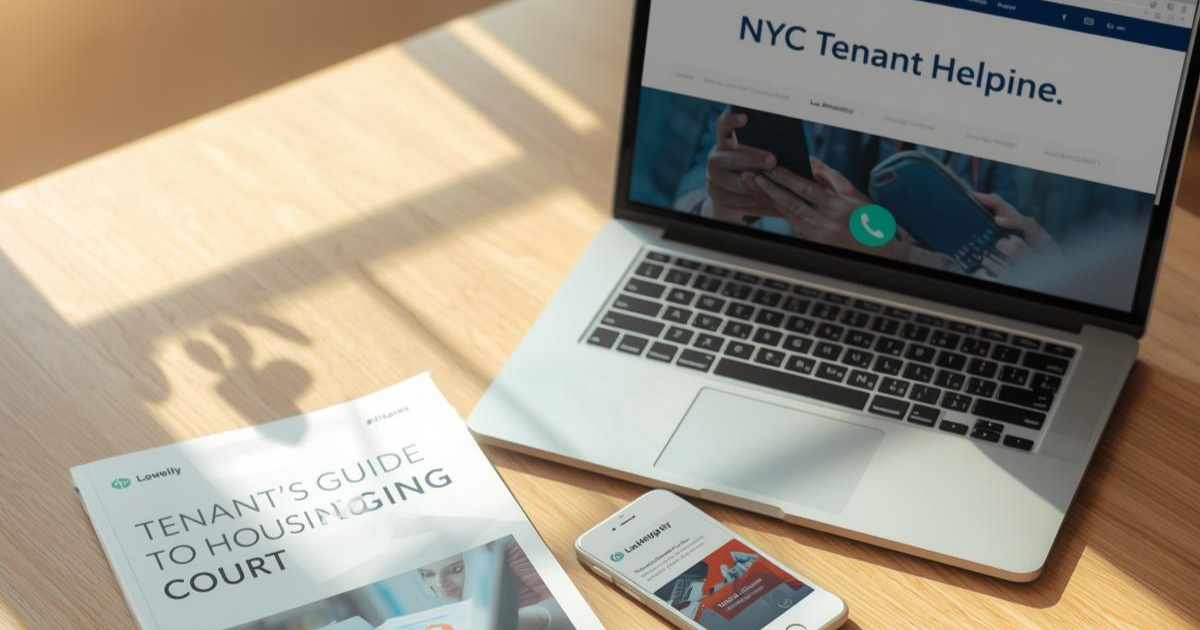
Calling 311 and asking for the "Tenant Helpline" connects you to the city's centralized tenant assistance system coordinated by HRA's (Human Resources Administration) Office of Civil Justice.
What happens when you call: Operators screen for the type of assistance you need: eviction defense, rental assistance, benefits enrollment, housing code enforcement, or emergency services. If you're facing eviction, they connect you to the Right to Counsel intake system, often scheduling an intake appointment with a provider during the same call.
Beyond legal services: The Tenant Helpline also connects tenants to rental assistance programs (CityFHEPS, FHEPS, HASA, ERAP), benefits screening for public assistance or SNAP, and referrals to housing counseling agencies that can help negotiate with landlords before cases become evictions.
The 311 system operates 24/7, though connection to legal services providers happens during business hours. If you call evenings or weekends about an eviction, 311 logs your information and has providers call you back on the next business day.
Best practice: Call 311 immediately when you receive a petition, notice, or any legal papers related to eviction. The earlier you connect to services, the more options your lawyer has to defend your case or negotiate resolution.
LawHelpNY.org maintains a comprehensive directory of legal aid offices, hotlines, and tenant resources throughout New York State. Visit the site and navigate to the "Housing" section, then use the "Find Legal Help" tool to locate services by county.
How it works: Enter your county and the site lists legal services organizations serving that area with phone numbers, intake procedures, and websites. Most organizations list specific housing hotlines or intake lines you can call directly.
Statewide resources listed: LawHelpNY aggregates hotlines for issues beyond just eviction defense—fair housing enforcement agencies, disability rights organizations, elder law services—all of which can be relevant depending on why you're being evicted.
For example, if your eviction involves disability discrimination, LawHelpNY directs you to both general legal aid and specialized disability rights organizations like Disability Rights New York that can assist with reasonable accommodation issues.
Using LawHelpNY ensures you're calling the right organization for your county instead of getting transferred multiple times or reaching an organization that doesn't serve your area.
Even if you arrive at Housing Court without a lawyer and couldn't connect to legal services beforehand, you're not completely on your own. Court-based services provide crucial assistance with procedures, forms, and understanding the process.
New York courts operate Housing Part Help Centers at Housing Court locations throughout the state. These centers are staffed by court attorneys, law students, and volunteers who cannot represent you in court but can provide significant procedural assistance.
What Help Centers do:
Explain court procedures. Staff walk you through what happens at different hearing types, what the judge will ask, what options you have at each stage, and what rights you're entitled to exercise.
Help fill out forms. Help Centers provide blank Answer forms, Order to Show Cause forms, motion papers, and other court documents. Staff help you complete these forms correctly, ensuring you include required information and use proper format.
Review papers you've received. Bring your petition, notices, and any other documents your landlord served. Help Center staff can identify defects in service, notice periods, or content that might provide defenses.
Refer you to legal services. If you haven't connected with a lawyer, Help Centers provide contact information for legal aid organizations and, in NYC, facilitate immediate connections to Right to Counsel providers.
Provide computer access. Help Centers have computers where you can access DIY forms, court instructions, and online resources. Staff can show you where to find specific forms or information you need.
What Help Centers cannot do: They cannot provide legal advice specific to your case, cannot represent you in front of the judge, cannot tell you whether you should accept a settlement offer, and cannot advocate for you against your landlord. They're neutral court staff providing procedural assistance, not advocates.
When to use Help Centers: Arrive at court early on your appearance date—ideally when the courthouse opens—and immediately visit the Help Center. Explain your situation and ask for help preparing an Answer if you haven't filed one yet. Even a basic Answer listing potential defenses prevents default judgment and gives you time to connect with a lawyer.
New York City Civil Court publishes "The Tenant's Guide to Housing Court," a comprehensive plain-language explanation of how Housing Court works. This guide is available online at the NYC courts website, in print at courthouse Help Centers, and through various tenant advocacy organizations.
What the Guide covers:
Step-by-step case process. From receiving a notice through trial and possible appeal, the Guide explains each stage, what happens, what you're required to do, and what your rights are.
How to Answer a petition. Detailed instructions on what an Answer is, why it's critical to file one, what defenses to list, and where to submit it. Sample Answer forms with explanations of each section.
Common defenses explained. Overview of nonpayment defenses (payment, breach of warranty of habitability, rent reduction orders), holdover defenses (improper notice, retaliation, discrimination, waiver), and procedural defenses (improper service, defective petition).
What to bring to court. Lists of documents, evidence, and records that strengthen your case: rent receipts, repair requests, photos of conditions, correspondence with your landlord, etc.
Understanding orders and warrants. Explanation of what happens if you lose, how warrants of eviction work, stay procedures, and last-minute options to prevent physical eviction.
Tenant rights overview. Summary of key protections like warranty of habitability, security deposit rules, and protections against harassment and illegal eviction.
The Guide isn't a substitute for legal representation, but it's invaluable if you must proceed without a lawyer—at minimum, it ensures you understand what's happening and don't accidentally waive rights through ignorance.
How to access: Google "NYC Tenant's Guide to Housing Court" or visit nycourts.gov/courts/nyc/housing and look for tenant resources. Print a copy and bring it to court as a reference. Help Center staff can also provide printed copies.
Beyond NYC, New York State Unified Court System provides online resources explaining eviction procedures:
NYCourts.gov has sections explaining that only court-ordered evictions are legal, outlining tenant rights during eviction proceedings, and linking to forms and instructions.
Eviction FAQs posted on court sites answer common questions about notices, timelines, defenses, and enforcement of warrants.
Housing Court locations and procedures vary by county. Court websites list addresses, hours, filing procedures, and local rules specific to each Housing Court part.
These resources help you understand local variations in procedure—for example, some counties require you to file Answers directly with the court clerk, while others have drop boxes or specific filing windows. Knowing your local Housing Court's procedures prevents mistakes that could hurt your case.
Before you ever speak to a lawyer or step into a courtroom, online resources help you understand what rights you have and what defenses might apply to your situation. This knowledge empowers you to communicate effectively with legal aid providers and make informed decisions.
LawHelpNY.org is New York's comprehensive legal information website, providing detailed plain-language explanations of legal issues including housing and eviction defense.
Housing section content:
Nonpayment eviction articles explain when landlords can evict for unpaid rent, how to calculate what's actually owed, warranty of habitability defenses, rent abatement calculations, and payment defense strategies.
Holdover eviction articles cover lease termination procedures, notice requirements, common grounds for holdover cases (lease violations, owner occupancy, substantial renovation), and defenses like waiver, retaliation, and discrimination.
Good Cause Eviction Law detailed explanation of who's covered, what protections apply, the 10-day cure requirement, and how to raise Good Cause as a defense.
Illegal lockout and self-help eviction articles explain your rights when landlords try to evict without court process, how to get emergency relief, and how to sue for damages.
How to respond to notices and petitions step-by-step instructions on receiving termination notices, calculating deadlines, preparing Answers, and gathering evidence.
Downloadable forms: LawHelpNY provides sample Answer forms, Order to Show Cause templates, and motion papers you can adapt to your case. Forms include instructions and examples showing how to fill them out correctly.
How to use LawHelpNY: When you receive eviction papers, immediately visit LawHelpNY.org, navigate to the "Housing" section, and read articles addressing your specific situation. If you're facing a nonpayment case, read the nonpayment articles. If it's a holdover based on lease violations, read about holdover defenses and Good Cause protections.
Print relevant articles and bring them to your legal aid intake appointment or court appearance. Annotate sections that seem to apply to your facts. This preparation helps you explain your situation more effectively to lawyers and court staff.
New York City operates a Tenant Resource Portal with an interactive Eviction Prevention Tool designed to assess your situation and connect you to appropriate resources.
How the tool works: Visit the portal (search "NYC Tenant Resource Portal" or access through NYC.gov) and use the Eviction Prevention Tool, which asks questions about your housing situation:
Based on your answers, the tool generates customized recommendations:
Rental assistance programs you might qualify for (CityFHEPS, FHEPS, ERAP, One Shot Deal, HASA).
Legal services providers appropriate for your situation (Right to Counsel intake, specialized providers for specific issues).
Emergency assistance if you're facing imminent eviction (marshal execution within days).
Prevention services if you haven't received court papers yet but are at risk (housing counseling, mediation services, landlord negotiation assistance).
The tool essentially triages your situation and directs you to resources that can actually help, rather than sending everyone to the same generic referrals.
Additional portal resources: Beyond the tool, the portal provides information on tenant rights, links to rental assistance applications, guides to applying for public housing or vouchers, and connections to community organizations providing tenant services.
The New York State Attorney General publishes a comprehensive "Residential Tenants' Rights Guide" explaining key protections under New York law. This guide is authoritative—it's published by the state's chief legal officer—and carries weight when cited in court.
What the guide covers:
Security deposits: Rules about holding deposits separately, interest requirements, 14-day return requirement, itemization rules, and penalties for violations.
Repairs and habitability: Warranty of habitability explanation, how to request repairs, procedures for pursuing repairs in court, rent reduction remedies.
Harassment and illegal eviction: What constitutes harassment, illegal lockout procedures and remedies, utilities shutoff protections, and how to file harassment complaints.
Discrimination protections: Fair housing laws, protected characteristics, how to file discrimination complaints with state and federal agencies.
Lease terms and renewals: What can and cannot be in leases, lease renewal rights in rent-stabilized housing, lease modification rules.
Eviction procedures: Required notices, proper service procedures, court process overview, and tenant rights during eviction.
How to use the guide: Download and print the entire guide or relevant sections. When you identify rights violations by your landlord—missed security deposit deadline, failure to provide required notices, harassment tactics, improper lease terms—cite the specific section of the AG's guide that addresses that violation.
Bring the guide to court. Hand the relevant pages to the judge if necessary. Judges respect the Attorney General's legal interpretations, and citing the official guide strengthens your credibility.
Access: Search "NY Attorney General Tenants' Rights Guide" or visit ag.ny.gov and navigate to the consumer resources section. The guide is available in English, Spanish, and several other languages.
Reading about resources is useful, but you need a concrete action plan based on where you are in the eviction process.
NYC tenants:
Outside NYC:
You have more time to prepare, which is valuable—use it:
NYC tenants:
Outside NYC:
This is an emergency requiring immediate action:
All locations:
Time is critical in illegal lockout situations. Act within hours, not days.
Even with representation, understanding resources helps you be an informed, engaged client:
Some tenants fall through cracks—incomes slightly above eligibility thresholds, living in areas with overwhelmed legal aid offices, or facing timing issues where cases move faster than intake processes. If this happens:
New York created this infrastructure of legal services, hotlines, and informational resources because research showed devastating outcomes for unrepresented tenants. Before Right to Counsel in NYC, approximately 27,000 tenants were evicted each year, and the vast majority had no legal representation. Since Right to Counsel implementation, evictions dropped to approximately 18,000 annually—a 30%+ reduction—and outcomes for represented tenants improved dramatically.
The resources exist because the state recognizes that housing stability is foundational to everything else. People can't keep jobs, kids can't stay in school, health conditions deteriorate, family stability collapses—all from wrongful evictions that could have been prevented with proper legal defense.
Act immediately upon receiving any eviction-related papers. Every day you wait is a day you can't get back. Legal services need time to investigate your case, gather evidence, and prepare defenses. Contacting them the day you receive papers gives them maximum time.
Be organized. When you contact legal services, have ready: your full name and current address, your landlord's name and management company, your case number if you have one, dates you received papers, your court date if scheduled, and a brief description of your situation. Organization speeds intake.
Bring everything to intake appointments and court. Lease, rent receipts, repair requests, photos, medical documentation if relevant, benefit documentation, communications with your landlord—everything. Lawyers can't build defenses from thin air. They need your evidence.
Be honest about your situation. If you owe rent, say so and how much. If you violated your lease, explain circumstances. If you have disabilities, disclose them so lawyers can raise accommodation issues. Lawyers can't help if they don't know the full picture, and they can't be blindsided in court by facts you didn't mention.
Follow through on lawyer requests. If your lawyer asks you to gather documents, attend meetings, or sign papers, do it promptly. Delays hurt your case. Your lawyer is handling dozens or hundreds of cases—your responsiveness affects your outcome.
Show up to every court appearance. Even if your lawyer says it's routine or they'll handle it, appear. Your presence shows the judge you take the case seriously. Missing court can result in default judgments even with representation.
Use multiple resources simultaneously. Don't wait to hear back from one before trying another. Call 311, contact legal aid directly, visit Help Centers, read online resources, reach out to tenant organizations—all at the same time. Cast a wide net.
These resources are powerful but not unlimited:
Eligibility requirements exist. Right to Counsel has income limits. Some legal services programs prioritize certain case types or populations. You may not qualify for everything available.
Capacity constraints are real. Legal services organizations are stretched thin. Even with expanded funding, they can't take every case immediately. Prioritize your intake by being responsive and organized.
Not all defenses win. Having a lawyer doesn't guarantee you avoid eviction, especially if you owe substantial unpaid rent without defenses or if your lease legitimately terminated. But even in weak cases, lawyers negotiate better outcomes than you'd get alone.
Self-help has limits. Reading guides and filing your own Answer is better than nothing, but it's not the same as having a lawyer who knows judges, procedures, and how to frame arguments effectively. Treat self-help resources as temporary measures while pursuing representation, not as permanent solutions.
You are not alone in fighting wrongful eviction. New York has invested millions in infrastructure specifically designed to help tenants defend against eviction: free lawyers in NYC, expanded legal services statewide, court Help Centers, hotlines, online resources, and informational guides.
These resources exist because you need them, and using them dramatically improves your chances of staying in your home. The difference between going to Housing Court alone and uninformed versus going with a lawyer and understanding of your rights is often the difference between eviction and dismissal.
Reach out for help today. Call 311 if you're in NYC. Call your county's legal services intake if you're outside NYC. Visit Help Centers when you're at court. Read the guides online. Don't face this alone when help is available and free.
The resources are there. Use them.