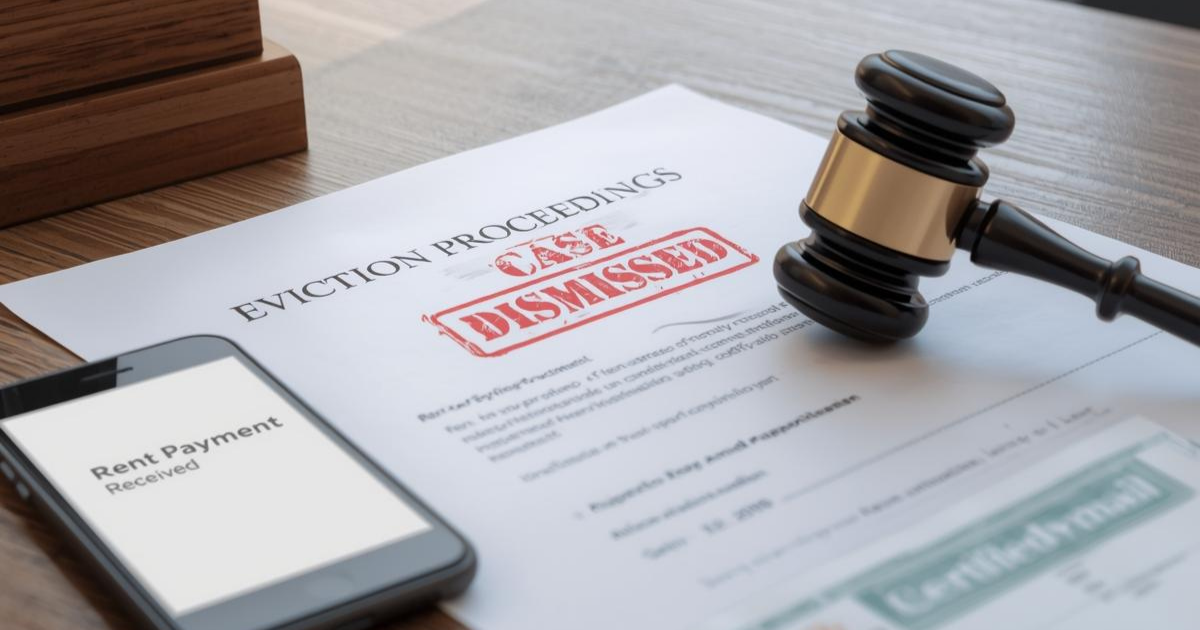
Your landlord can accidentally destroy their own eviction case through their actions after they claim your tenancy is over. New York courts recognize that when a landlord's behavior contradicts their claim that they want you out, they've "waived" their right to evict—meaning they have to start the entire process over from scratch, if they can evict you at all.
This is one of the most powerful defenses tenants have in eviction cases, and most landlords don't realize they're killing their own case until a judge dismisses it. Here's exactly what landlord actions count as waiver, how to recognize them, and how to use them to beat an eviction.
Waiver happens when your landlord's conduct is fundamentally inconsistent with ending your tenancy. Courts look at what your landlord does, not just what they say in legal papers.
If your landlord serves you with a termination notice claiming your lease is over but then continues treating you like a tenant in good standing—accepting your rent, sending you monthly bills, negotiating lease terms—the law treats those actions as an election to continue the tenancy instead of ending it.
Think of it like this: Your landlord can't have it both ways. They can't tell you in a legal notice that you're no longer their tenant while simultaneously behaving in ways that only make sense if you're still their tenant. When they try to do both, the behavior wins and the legal notice becomes worthless.
This isn't a technicality or a loophole. It's the law preventing landlords from playing games—keeping you on the hook for rent while also trying to evict you, or accepting government assistance payments for your apartment while claiming your tenancy ended months ago.
Once a landlord waives their right to evict based on a particular notice or claim, they generally can't revive that same claim. They have to start over with new notices following proper procedures, if they still have grounds to evict at all. And in many cases, the waiver means they've lost their legal basis entirely.
The most common waiver happens when landlords accept rent that covers time periods after they claim your tenancy ended. This tells the court: "The landlord said the lease was over on May 31, but then they accepted June rent. Which is it—over or ongoing?"
If your landlord serves you with a 30-day termination notice for a lease violation and that notice expires on May 31, but then your landlord accepts your full June rent payment and only files the eviction in July, you can argue they waived the entire May termination notice.
Here's why that works: Rent is payment for an ongoing tenancy. If the tenancy ended May 31, there's no June tenancy to pay rent for. By accepting June rent, your landlord treated the tenancy as continuing through June, which contradicts their claim that it ended in May.
The termination notice becomes vitiated—legally void—and the eviction petition based on that notice must be dismissed. Your landlord would have to start over with a new termination notice and wait through the new notice period before they could file again.
This applies to all types of termination-based evictions: lease violation holdovers, nuisance cases, unauthorized occupant claims, and even no-fault terminations in rent-stabilized buildings. If your landlord accepts rent covering the post-termination period before starting the court case, they've reset the clock.
Many landlords (especially larger management companies with automated billing systems) don't coordinate their legal and accounting departments. The legal team sends termination notices while the accounting team continues sending monthly rent bills and accepting payments as usual.
Tenants receive their normal rent bill for June showing the usual amount due, they pay it, the landlord cashes the check—and the landlord's lawyer doesn't find out until they're in court and the tenant raises waiver as a defense. By then it's too late.
Even when landlords realize what happened, they can't undo it by claiming "it was a mistake" or "accounting shouldn't have accepted that payment." The law doesn't care about internal miscommunication. The landlord is one entity, and that entity's acceptance of post-termination rent waives the termination regardless of which department made the decision.
The same principle applies when your landlord claims you breached your lease (for example, unauthorized pet, subletting, business use of apartment) and had the right to declare the lease ended, but then accepts rent afterward.
That acceptance is treated as an election to continue the tenancy rather than terminate it. Your landlord essentially chose the rent money over the right to evict based on that particular breach. The breach might still be a violation they can address going forward, but they can't evict you based on a breach they effectively forgave by accepting subsequent rent.
Some landlords try to get around this by labeling payments as "use and occupancy" instead of "rent." That language matters, but it only works if they use it before accepting the payment and make it clear they're not treating you as a tenant. If they bill you for "rent," accept payment labeled as "rent," or fail to specify that they're treating you as a holdover rather than a tenant, courts will likely find waiver regardless of what they call it later.
Nonpayment cases work differently from holdover cases, but waiver still applies when your landlord accepts payment.
Under New York law (specifically Real Property Actions and Proceedings Law § 749(3)), if you pay all rent due at any time before trial, your landlord must accept that payment and it "renders moot the grounds on which the special [nonpayment] proceeding was commenced."
Translation: You can defeat a nonpayment eviction by paying the full amount owed before the trial date, and your landlord has to take the money and dismiss the case. This is sometimes called "pay and stay."
Your landlord files a nonpayment petition claiming you owe three months of rent totaling $4,500. You scrape together the full $4,500 (maybe from family, maybe from a loan, maybe from emergency assistance) and tender it to your landlord or deposit it with the court before your trial date.
Your landlord cannot refuse that payment and continue the eviction. Once you've paid everything owed for the period covered by the petition, the legal basis for the nonpayment case disappears. The case gets dismissed or discontinued.
This applies even if your landlord really doesn't want to continue your tenancy. Too bad—they filed a case saying "this tenant owes rent," you paid the rent, and now they have no grounds to evict based on that nonpayment. If they want you out for other reasons, they need to pursue a different type of case.
The pay-and-stay rule goes even further: Under RPAPL § 749(3), even after a warrant of eviction has been issued against you, you can still tender the full rent due (either to your landlord or by depositing it with the court), and the court must vacate the warrant.
The only exception is if your landlord can prove you withheld rent in bad faith—meaning you had the money all along and deliberately didn't pay just to string out the process. That's a high bar for landlords to meet, and most tenants facing eviction genuinely didn't have the money earlier.
This means you can literally stop an eviction at the marshal's door by paying everything owed. The marshal cannot proceed with the eviction if you've deposited the full amount with the court and gotten the warrant vacated.
Emergency Rental Assistance Program (ERAP) payments and similar government assistance create their own form of waiver. If your landlord accepts ERAP payments covering specific months of rent arrears, they generally cannot continue a nonpayment eviction for those covered months.
The logic is straightforward: ERAP paid the rent for those months. Your landlord accepted that payment. The arrears that formed the basis of the eviction case no longer exist. Case dismissed.
Some landlords try to argue they can still evict even though ERAP covered the rent because they "don't want to continue the tenancy for other reasons." Courts generally reject that argument in nonpayment cases—if the rent is paid, the nonpayment grounds are gone, regardless of whether the payment came from the tenant directly or from a government program.
If your landlord refuses an ERAP payment within the required timeframe, New York law can deem them to have waived the rent covered by that payment and preclude them from evicting you or obtaining a money judgment for those months. This statutory waiver is separate from common-law waiver, but the effect is the same: your landlord's choices cut off their right to evict based on that rent.
The Tenant Safe Harbor Act and COVID-era ERAP provisions created additional waiver rules that still apply to many eviction cases filed during or after the pandemic.
If your landlord was offered provisional ERAP payments for a covered hardship period and accepted them, the law bars them from evicting you or obtaining a money judgment for the rent covered by those payments.
Provisional payments were emergency funds designed to keep tenants housed during COVID-related hardships. Landlords who accepted those payments made an election: take the government money for those months, or pursue eviction for those months. They can't do both.
When your landlord accepts a provisional payment covering, say, April through August 2021, they've been made whole for that period. They can't later claim you owe rent for April through August 2021 and try to evict you for it. The provisional payment satisfied the rent obligation for those months, and accepting it waives any eviction based on that same rent period.
Even more powerful: If your landlord was offered provisional ERAP payments and failed to accept them within the statutory period, the law can deem your landlord to have waived the rent covered by that payment.
This means your landlord lost the right to collect that rent and lost the right to evict you for nonpayment of that rent, purely because they didn't respond to the ERAP offer in time. The payment got offered, your landlord ignored it or rejected it, and now they can't use those months as grounds for eviction.
Courts enforce this strictly because the whole point of ERAP was to prevent evictions during hardship periods. Allowing landlords to reject assistance money and then evict for the same rent would defeat the program's purpose.
Beyond accepting rent, courts look at the full picture of your landlord's behavior to determine whether they're really treating your tenancy as ended or just pretending to while keeping you on the hook.
After a valid termination of tenancy, occupants become "holdovers" who owe "use and occupancy" rather than "rent." Rent is what tenants pay. Use and occupancy is what former tenants or trespassers pay for unlawfully staying in someone else's property.
If your landlord continues billing you for "monthly rent" at the lease rate after they claim your lease ended, that's strong evidence they're still treating you as a tenant. Why would they bill a holdover trespasser for "rent" using lease terms if the lease is actually over?
Courts see this as inconsistent conduct: Your landlord claims in their legal papers that you're not a tenant anymore, but their monthly bills call you a tenant and charge you rent under the lease. That inconsistency supports waiver.
The correct practice (from a landlord's perspective) would be to stop calling it "rent" after termination and start billing for "use and occupancy" at fair market value, making clear they're treating you as a holdover, not a tenant. When landlords fail to make that distinction and keep using lease language and lease amounts, they undercut their own termination claim.
If your landlord sends you a lease renewal offer, negotiates renewal terms, or actually executes a new lease after the date they claim your tenancy ended, that's devastating to their eviction case.
You can't renew something that already ended. If the lease terminated on May 31, how can your landlord offer you a renewal for June 1 onward? The offer to renew necessarily assumes the lease relationship continues or can be continued.
Even informal negotiations about renewing can support waiver. If your landlord emails you in June saying "let's discuss your lease renewal terms," but they also filed an eviction claiming your lease ended in May, those communications contradict each other. Courts will typically find that the landlord's willingness to negotiate renewal means they didn't really view the tenancy as ended.
Section 8 vouchers, SCRIE/DRIE benefits, and other rent subsidy programs pay a portion of your rent directly to your landlord each month. These payments are specifically designated as "rent" for your apartment for specific time periods.
If your landlord continues accepting Section 8 payments or SCRIE/DRIE subsidies for months after they claim your lease terminated, that acceptance can be used to argue they elected to continue your tenancy for those months.
Example: Your landlord serves a termination notice claiming your lease ends July 31. In August and September, they continue accepting your Section 8 voucher portion (maybe $1,200/month paid by the housing authority) while simultaneously pursuing an eviction claiming you haven't been their tenant since July.
That doesn't add up. If you weren't their tenant in August, why did they accept August rent subsidy payments from the government specifically designated for your tenancy? Courts will often find that accepting those payments waives the termination for the covered months.
Landlords sometimes argue they're entitled to "use and occupancy" in the same amount, so accepting the subsidy doesn't prove anything. But subsidy programs don't pay "use and occupancy"—they pay "rent" under active tenancies. By accepting those program payments, landlords implicitly confirm the tenancy is ongoing.
These conduct-based waiver arguments typically get pleaded as affirmative defenses in your eviction answer. You state facts showing your landlord's behavior was inconsistent with their claim that the tenancy ended:
"Landlord's termination notice claimed the lease ended May 31, 2024. However, Landlord subsequently (1) accepted full June and July rent, (2) continued billing Tenant for 'monthly rent' rather than use and occupancy, (3) sent Tenant a lease renewal offer on June 15, 2024, and (4) accepted Section 8 rent subsidy payments for June, July, and August 2024. These actions vitiated the termination notice and Landlord's petition must be dismissed for failure to comply with predicate notice requirements."
You attach evidence: rent receipts, billing statements, lease renewal emails, and Section 8 payment confirmations. These documents often come from the landlord's own records, which makes them hard to dispute.
New York's statewide Good Cause Eviction Law adds another layer of waiver protection for tenants in covered buildings. Under Good Cause, your landlord's actions acknowledging that you cured a violation can prevent them from evicting based on that same violation.
For lease-violation cases under Good Cause, landlords must give you a 10-day notice with an opportunity to cure the violation before they can proceed with eviction. If you cure the violation within those 10 days and your landlord then continues accepting rent and treating the tenancy as normal, that's strong evidence they waived the right to evict based on that violation.
Example: Your landlord sends a 10-day cure notice claiming you're violating your lease by having an unauthorized occupant. Within the 10 days, the person moves out and you notify your landlord they're gone. Your landlord then accepts your next month's rent without objection and doesn't file an eviction.
If your landlord waits two months and then tries to file an eviction based on that same unauthorized occupant claim, you can argue they waived it by accepting rent after you cured and by treating the tenancy as ongoing without raising the issue again.
Good Cause also bars landlords from inventing violations or selectively enforcing rules just to evade Good Cause protections. If your landlord claims you violated a rule they never enforced before, then continues your tenancy normally after the alleged violation, that pattern supports an argument that the violation claim was pretextual.
Courts look at whether the landlord actually cared about the alleged violation or just used it as an excuse to try to remove a protected tenant. Evidence that your landlord treated the tenancy as normal after the supposed violation undermines their claim that the violation was serious enough to justify eviction.
Good Cause requires landlords to prove they have "good cause" to evict—either nonpayment of rent, lease violations, illegal activity, or refusal to renew on reasonable terms. But if your landlord's own conduct shows they didn't actually view your behavior as problematic (because they kept accepting rent, negotiating with you, treating you normally), they'll struggle to prove good cause.
A landlord who truly believes a tenant is violating the lease or engaging in nuisance behavior doesn't just accept rent and continue business as usual. They take action. When they don't take action and instead treat the tenancy as fine, courts infer that either the violation wasn't real or the landlord chose to waive it.
If your landlord engaged in any of these waiver-creating behaviors, you raise it as an affirmative defense in your eviction answer. Here's how to structure it:
Before you file your answer, collect documentation proving your landlord's inconsistent conduct:
The more documentation you have, the harder it is for your landlord to claim their acceptance was a mistake or didn't happen.
In your answer to the eviction petition, include an affirmative defense titled "Waiver" or "Vitiation of Predicate Notice." State the facts specifically:
"Landlord served a Notice of Termination dated May 1, 2024, claiming the lease would terminate effective May 31, 2024. Subsequently, Landlord accepted Tenant's full rent payment for June 2024 in the amount of $2,200, deposited on June 5, 2024. Landlord also accepted Tenant's July 2024 rent payment in the amount of $2,200, deposited on July 3, 2024. By accepting rent covering the post-termination period, Landlord vitiated the Notice of Termination and waived the right to proceed with this eviction. The petition must be dismissed for failure to comply with predicate notice requirements."
Attach your evidence as exhibits to your answer.
When you raise waiver with solid documentation, one of two things usually happens:
Your landlord dismisses the case voluntarily. Once they realize you have proof they accepted post-termination rent or engaged in other waiver conduct, they often discontinue the case rather than litigate a defense they'll probably lose. This saves everyone time and gets your case dismissed.
The judge dismisses the petition. If your landlord doesn't voluntarily dismiss, the judge will likely grant your motion to dismiss based on waiver. Judges see these cases regularly and know the law. When a landlord clearly accepted rent after termination or engaged in obviously inconsistent conduct, courts dismiss without much hesitation.
Either way, you win. The eviction case ends, and your landlord has to start over with new notices if they still want to pursue eviction—assuming they haven't waived their grounds entirely.
If the court dismisses your eviction based on waiver, your landlord generally cannot revive that same case. They can, however, potentially start fresh:
What they cannot do is simply refile the same case with the same waived predicate notice. The waiver means that notice is legally void, and any petition based on it will fail again.
You'd think landlords and their lawyers would know better than to accept post-termination rent or engage in conduct that waives their eviction rights. Yet it happens constantly.
The main reasons:
Institutional dysfunction: Large property management companies have separate departments for legal, accounting, and property management. These departments don't always communicate. Legal serves termination notices while accounting continues auto-billing and auto-processing payments.
Cash flow pressure: Landlords want your rent money more than they want you out. When your rent check arrives, they deposit it, figuring they'll sort out the legal implications later. By the time "later" arrives, they've already waived their case.
Ignorance of the law: Smaller landlords often don't understand that accepting one month's rent after serving a termination notice destroys their eviction case. They think "I'll take the money for now and still evict them later." Courts don't allow that.
Optimism about settlements: Some landlords accept post-termination rent hoping you'll move out voluntarily before they have to go to court. When you don't move, they file for eviction anyway, only to discover they waived their predicate notice.
Whatever the reason, landlord mistakes become your defense. Use them.
Waiver rules exist to prevent landlords from gaming the system and keeping tenants in legal limbo. Without waiver protections, landlords could serve termination notices, continue collecting rent, maintain all the benefits of an ongoing landlord-tenant relationship, and still evict you whenever they felt like it.
That's fundamentally unfair. If your landlord wants to end your tenancy, they need to commit to ending it—not collect your money while keeping an eviction case in their back pocket as leverage.
Waiver forces landlords to make real choices. Accept the rent and continue the tenancy, or reject the rent and pursue eviction. Pick one. You can't do both.
These protections apply regardless of whether you're a "good" tenant or whether your landlord's complaints about you have merit. Even if you actually violated your lease, your landlord waives the right to evict based on that violation by accepting subsequent rent. Even if you genuinely owe back rent, your landlord can't evict if they accepted ERAP covering that rent.
The law doesn't ask whether you deserve to stay. It asks whether your landlord followed proper procedure and behaved consistently with their legal claims. When they didn't, you win on waiver, period.
If you're facing eviction and your landlord accepted rent after the termination date, accepted ERAP for covered months, continued billing you as a tenant, or engaged in any other conduct inconsistent with ending your tenancy, you have a strong waiver defense.
Document everything immediately. Pull your bank statements showing cleared rent checks. Request ERAP payment records from the administering agency. Save emails and texts from your landlord. Screenshot billing portals showing post-termination rent charges. Gather this evidence before your answer is due.
Raise waiver in your answer as an affirmative defense. Don't just mention it casually—state it clearly with specific dates and amounts. Attach your evidence as exhibits.
If you're already past the answer stage but just realized your landlord waived their case, you can still raise it. File a motion to dismiss based on waiver or raise it at trial. Waiver goes to the court's subject matter jurisdiction (whether the case can proceed at all), so it generally can't be waived by you failing to raise it earlier.
Talk to a tenant lawyer if one is available through legal services in your area, but understand that waiver defenses are often straightforward enough that you can raise them yourself if needed. The facts speak for themselves: your landlord said the lease ended on X date, then accepted rent covering Y date. That's waiver.
Courts dismiss these cases all the time. Yours can be next.
Find out if you have a case in 30 seconds →