When people worry about eviction, they picture the court: the notice, the filing, the judge, the marshal. That's the eviction everyone braces for. But there's another kind that never sees a courtroom, and for a lot of tenants it's the one that actually gets them — the eviction accomplished not through a legal process but through conditions. No heat, all winter. Locks that don't work. Leaks that never get fixed. A dangerous neighbor the landlord won't address. Intimidation, delay, neglect, until the tenant looks around at a home that's become unbearable and unsafe and concludes there's no choice but to leave.
And when they leave, it goes in the books as voluntary. The tenant "chose" to move. No eviction on their record, no case filed, nothing the landlord has to answer for — because on paper, nobody was evicted at all. But look at what actually happened: the landlord made the home unlivable, refused to fix it, and waited for the tenant to break. That's not a tenant moving on. That's a tenant being pushed out through the back door while the front door — the legal one, with all its protections — is carefully avoided. The real eviction threat, for many people, starts long before court, and may never reach it.
This article is about recognizing that quieter eviction for what it is. The difference between a formal case and pressure engineered to make you feel you have no choice. How ignored safety threats turn into a genuine housing crisis. The steep hidden costs of being forced out this way. And — most practically — why documenting this kind of eviction requires capturing not just the dangerous condition but the whole story around it: the notice you gave, the landlord's response, the inaction, and any threats. Because a pushed-out tenant is often a wronged tenant, and whether that wrong can be addressed depends almost entirely on what got written down.
Understand the distinction first, because it's the conceptual heart of this. There are two fundamentally different ways a landlord can remove a tenant, and they're governed by completely different rules — which is exactly why some landlords prefer the second.
The first is the formal eviction: the legal process, with its notices and court filing and hearing and judge. It's slow, expensive, and uncertain for the landlord, and — crucially — it comes wrapped in protections for the tenant. The tenant gets notice, gets to appear, gets to raise defenses, gets a neutral decision-maker. The process is deliberately demanding because it's how someone can lose their home, and the difficulty is a feature: it protects people from being removed on a whim.
The second way is to make the tenant leave "on their own" — to apply enough pressure, through conditions and conduct, that the tenant removes themselves. No heat through the winter. A broken entry lock left broken. Chronic leaks ignored. A safety threat unaddressed. Intimidation. The tenant, worn down and unsafe, eventually leaves — and because they technically walked out voluntarily, none of the protections of the formal process ever apply. There was no case to defend, no judge to persuade, no notice requirement to enforce. The landlord got the outcome of an eviction while sidestepping every safeguard that makes eviction hard.
That's why this route is attractive to a landlord who wants a tenant gone without cause, or without the cost and risk of doing it lawfully: it's the eviction with the protections stripped out. And it works precisely by disguising a removal as a choice. The tenant experiences it as deciding to leave — and in the narrowest sense they did — but the decision was manufactured, engineered by a landlord who made staying intolerable so that leaving would look like the tenant's own idea. The law has a name for the extreme version of this, constructive eviction: when conditions become so bad that the tenant is effectively driven out, the departure isn't truly voluntary, and the landlord may bear responsibility for it as if they'd evicted the tenant outright. The costume of "they chose to leave" is exactly what that doctrine exists to see through.
Some of the conditions that drive this kind of eviction are about comfort and health — the cold, the leaks, the mold. But some are about safety in the most immediate sense, and those deserve particular attention, because a landlord's refusal to address a safety threat can turn a housing situation into a genuine crisis fast.
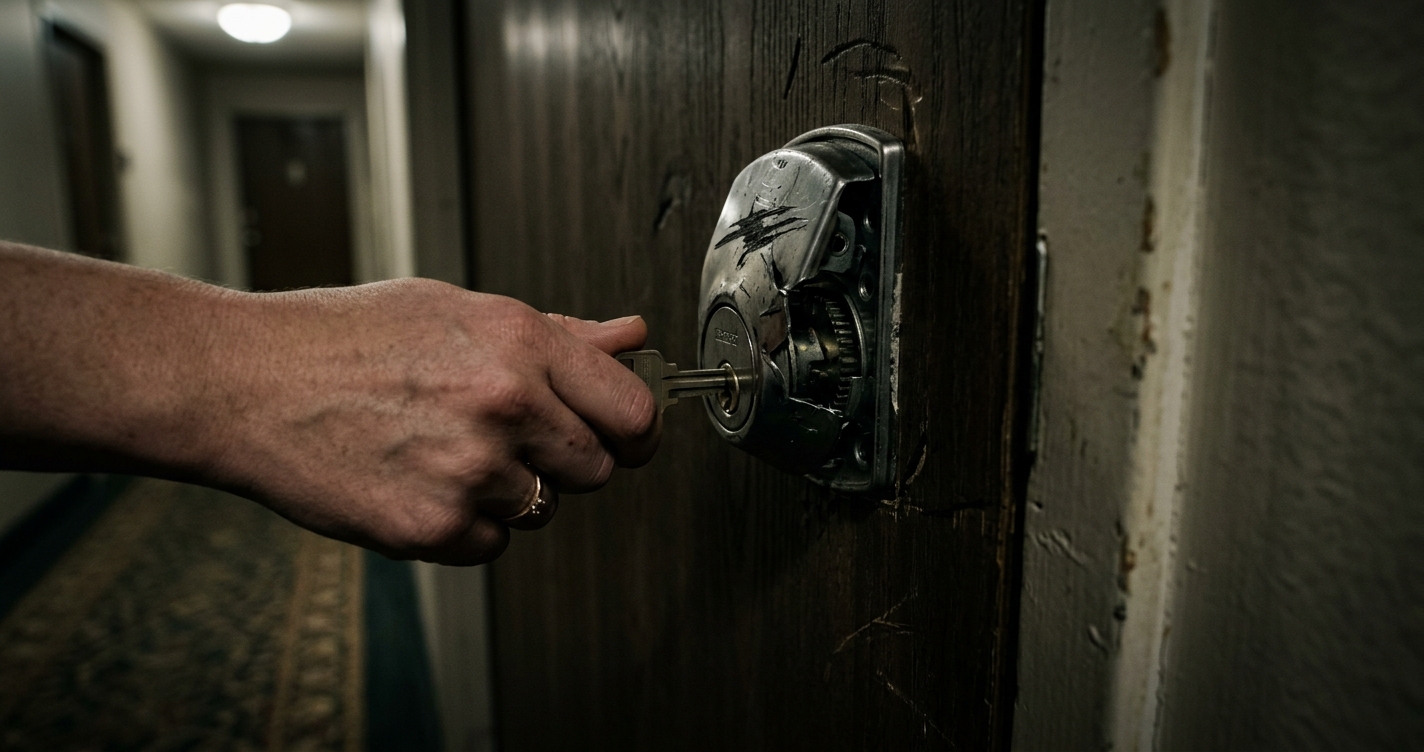
Consider the security failures. A broken entry lock or a broken building door isn't a minor maintenance issue — it means anyone can get into your home or your building, which is a direct threat to your physical safety, and a landlord who leaves it unfixed is leaving you exposed. A broken buzzer or entry system, inadequate locks, a ground-floor window that won't secure — these are safety hazards, not conveniences, and they can make a home feel and be genuinely unsafe to inhabit. And then there are threats from people: a violent or dangerous neighbor, ongoing threatening behavior in the building, a situation the landlord has the ability to address and simply won't. When a landlord ignores a serious safety threat like that, they're allowing a danger to persist that can make continued living there feel impossible — and sometimes genuinely be so.
Here's how these become the engine of a de facto eviction: a person cannot live somewhere they're afraid to be. If your home isn't safe — if the door doesn't lock, if a dangerous situation goes unaddressed, if you lie awake because anyone could come in — the pressure to leave becomes overwhelming, not because you want to go but because staying feels untenable. An ignored safety threat is one of the most powerful ways a landlord can push a tenant out, precisely because safety is non-negotiable in a way that even comfort isn't; you might endure a cold apartment, but you can't endure feeling in danger in your own home indefinitely.
And this is where the housing-stability crisis crystallizes. A tenant made unsafe in their home faces an awful choice — stay in danger, or leave and absorb all the chaos and cost of a sudden move. Many leave, because the alternative is unbearable, and in leaving they're pushed into exactly the instability the whole situation manufactured. The landlord's inaction on safety didn't just make the home unpleasant; it made it a place the tenant had to flee, which is a crisis by any honest description — and one the landlord created by refusing to act.
Being pushed out this way is not just a housing loss — it's expensive, often severely, in ways that compound precisely because the departure is sudden and unplanned. And these costs deserve to be named and counted, both because they're real harms and because they may be recoverable.
Think about what a forced, sudden move actually costs. Emergency housing — hotels or temporary places to stay in the gap before you find somewhere permanent, at exactly the moment you're least prepared to absorb the expense. Storage — fees to store your belongings when you can't move them straight into a new home. Replacement belongings — the things damaged or lost in a chaotic move, or ruined by the very conditions that forced you out, now replaced with your own money. Moving expenses — the trucks, the movers, the logistics of an unplanned relocation. Lost work — the income and time sacrificed dealing with the move and its aftermath. And school disruption — if there are children, the upheaval of changing schools or long displaced commutes, a cost measured in more than money.
Stack these up and a de facto eviction reveals itself as financially devastating in a way the "they just moved" framing completely hides. This is part of why the voluntary-departure disguise is so damaging: it obscures not only that the tenant was pushed out but that being pushed out cost them dearly, often thousands of dollars and enormous disruption, all flowing from the landlord's refusal to maintain a livable, safe home. The harm isn't just the lost apartment. It's the entire cascade of expense and instability the forced move sets off.
These costs matter practically, not just morally. When a tenant is constructively evicted — driven out by a landlord's failure to maintain habitable, safe conditions — the harms that flow from it, including these financial ones, can be part of what the tenant is entitled to recover. Which means they should be tracked: keep every receipt, log every expense, document the lost work and the disruption, because a forced-out tenant who can show precisely what the eviction cost them is in a far stronger position than one asking for a vague sum. The hidden costs stop being hidden the moment you write them down, and written down, they may be part of what you're owed.
Here's the practical crux, and it's where these cases are won or lost. Because a de facto eviction is disguised as a voluntary departure, proving what really happened requires documenting more than the bad condition — it requires capturing the entire story that shows the departure was forced, not chosen. Document only the leak, and you've shown a leak. Document the whole sequence, and you've shown an eviction.
So document all of it, in layers. The dangerous condition itself — the no heat, the broken lock, the leak, the safety threat — with dated photos, videos, temperature logs, and everything else that proves the condition was real and serious. That's the foundation, but it's only the first layer.
The notice you gave. Your reports to the landlord about the condition — dated, in writing wherever possible — because this establishes that the landlord knew. A constructive-eviction claim depends on showing the landlord was aware and had the chance to fix the problem, so your documented notice is essential.
The landlord's response — and their inaction. What the landlord said, and more importantly what they did or didn't do. The promises, the delays, the failures to act. The gap between "I'll take care of it" and the thing never being taken care of. This is what shows the landlord chose not to fix a problem they knew about, which is the core of the wrong.
Any threats or retaliatory messages. If the landlord's conduct included intimidation, threats, or messages that look like retaliation — especially if the pressure intensified after you complained — save every one, because these can transform the picture from mere neglect into active pushing-out, and may constitute separate violations on top of the failure to maintain the home.
The reason all these layers matter is that, together, they tell the true story that the "voluntary departure" framing hides. Not "a tenant moved out," but: here was a serious, documented condition; here is proof I reported it and the landlord knew; here is the landlord failing to act despite knowing; here are the threats; and here is the point at which the home became unlivable and I had no real choice but to leave. That complete record is what converts an apparent voluntary move into a documented forced-out — the difference between a departure that looks like your decision and one provably driven by the landlord's conduct. The condition alone doesn't prove an eviction. The condition plus the notice plus the inaction plus the threats does.
One important caution, because leaving is a serious and irreversible step: if you're being pushed toward the point of leaving, get advice before you go. Constructive eviction is a real legal doctrine but a demanding one — it generally requires genuinely severe conditions, proper notice, and often that you actually vacate within a reasonable time, and whether your specific situation meets the standard is exactly the judgment a tenant-rights organization or lawyer can make and this article cannot. The documentation is what makes that consultation productive. But the decision to leave on this basis is one to make with professional guidance, not alone under pressure, because getting it wrong can be costly. Build the record, and get the advice, before you make the move.
Step back and see the whole shape of it. The formal eviction, with all its protections, is the one everyone watches for — but the eviction that gets many tenants is the quiet one that never reaches court, accomplished through unlivable conditions and unaddressed danger and engineered until leaving feels like the only option. Its entire power comes from disguise: it presents itself as the tenant's free choice, which strips away the protections a formal eviction would carry and hides the fact that a removal happened at all. "They chose to leave" is the costume. Underneath it is often a person forced out of a home a landlord deliberately made unlivable.
So refuse the costume, starting with how you understand your own situation. If your home is being made unlivable — no heat, broken locks, ignored safety threats, chronic neglect, intimidation — and you're being pushed toward leaving, that pressure is not necessarily the neutral misfortune it's dressed up as, and your leaving, if it comes to that, may be far less voluntary than it will appear. A departure driven by a landlord's deliberate failure to maintain a safe, livable home can be an eviction in everything but name, and the law has ways of recognizing it as one.
Which is why, if you're in this situation, the documentation matters more than almost anything: document the condition, yes, but also your notice, the landlord's response, their inaction, and any threats — the whole story that proves you were pushed, not that you chose. Track every cost if you're forced to go. And get advice before you leave, because the difference between an undocumented "voluntary" move and a documented constructive eviction is the difference between absorbing this alone and being able to hold the landlord accountable for it. The real eviction threat may start long before court. Make sure that if it comes for you, it doesn't get to pretend it was your idea. Find out where you stand.