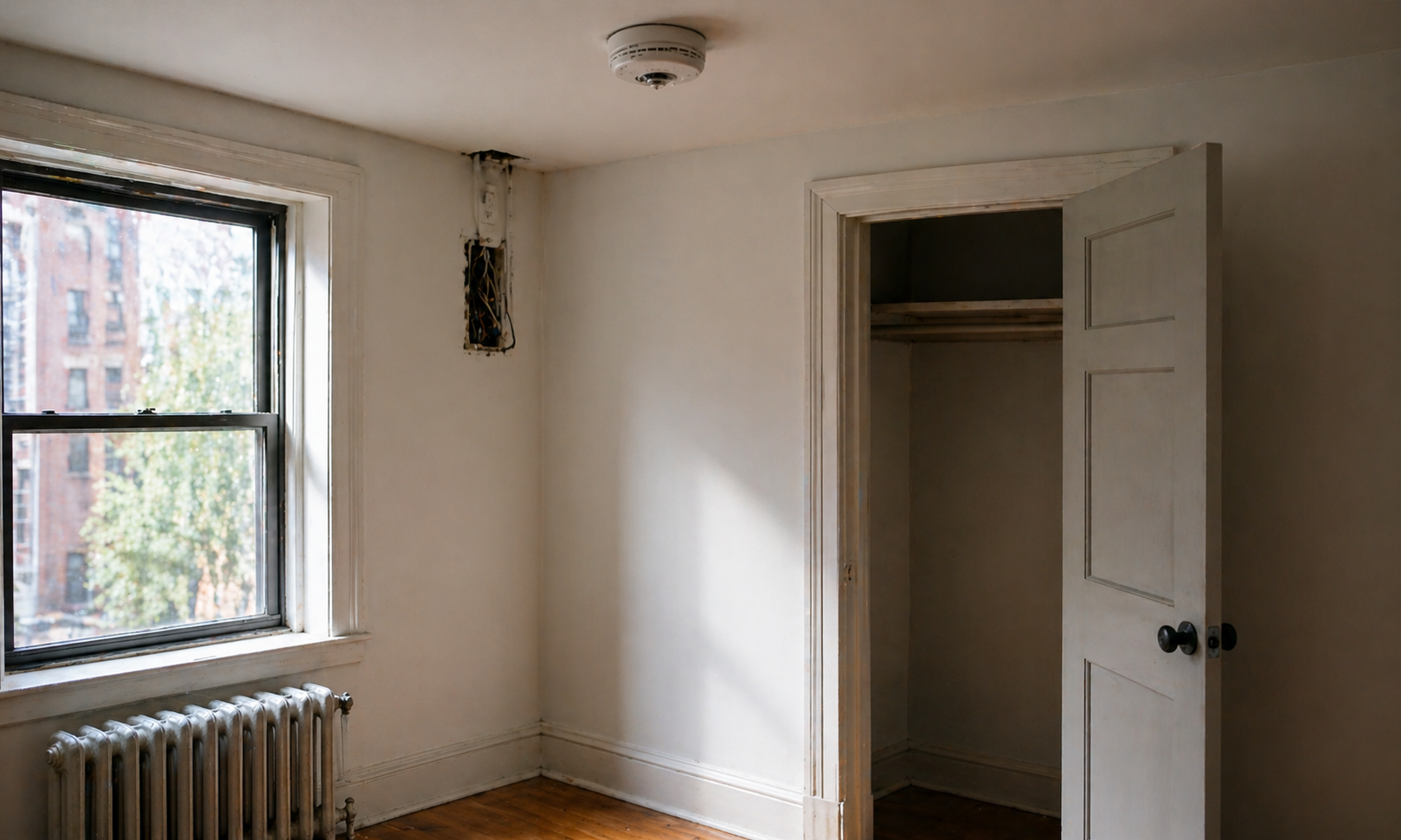
You've been living in your apartment for several months, and you're increasingly concerned about safety issues that the landlord hasn't addressed despite your complaints. You've noticed there are no smoke detectors in your apartment—not in the bedrooms, kitchen, or anywhere else. You've seen exposed electrical wiring in the basement and in one of your closets, with bare wires visible and outlets that occasionally spark when you plug things in. The fire escape window in your bedroom is painted shut and won't open, and the building's rear exit door is often blocked by the landlord's stored materials or chained shut.
You're scared. These aren't cosmetic problems or minor inconveniences—these are serious safety hazards that could kill you in a fire or electrical emergency. You've told the landlord multiple times, but they've done nothing. You're at your breaking point and wondering whether these safety violations are serious enough to justify breaking your lease and moving out immediately to protect yourself and your family.
You think: "Can I legally break my lease because of missing smoke alarms and exposed wiring? Are these problems serious enough to void my lease obligations? If I just move out to escape these dangerous conditions, will the landlord sue me for breaking the lease and win? What do I need to do to protect myself legally if I want to leave? Can I force the landlord to let me out of the lease, or do I have to stay in this unsafe apartment until my lease term ends?"
Here's the truth: Missing smoke detectors, exposed electrical wiring, and unsafe fire exits are exactly the kind of serious safety violations that can legally support breaking your lease in New York under the warranty of habitability and constructive eviction doctrines—but you cannot simply walk away without process. These fire-safety hazards violate fundamental habitability requirements and building codes, making your apartment legally uninhabitable and potentially justifying lease termination. However, to safely use these violations as legal grounds to leave, you must follow proper procedures: document the hazards thoroughly, provide written notice to the landlord demanding correction, obtain official inspections and violation notices from government agencies, and either secure court approval for lease termination or negotiate a written early-termination agreement before moving out.
Let me show you exactly why fire-safety violations are legally serious habitability breaches, what specific legal standards smoke detectors, electrical safety, and fire exits must meet, how these violations can support breaking your lease through breach of warranty or constructive eviction, what procedural steps you must take to protect yourself legally before moving out, and how to build the strongest possible case for lease termination based on safety violations.
Before understanding how to use fire-safety violations to break your lease, grasp why these particular problems carry such legal weight.
New York's warranty of habitability—the legal requirement that every residential rental be fit for human habitation and free from conditions dangerous, hazardous, or detrimental to life, health, or safety—treats fire-safety failures as quintessential habitability violations.
Fire-safety hazards directly threaten life and safety in the most immediate and catastrophic ways. Fire can kill within minutes through burns, smoke inhalation, or building collapse. Electrical hazards can cause deadly fires or electrocution. Blocked fire exits can trap people in burning buildings. These aren't theoretical or long-term health risks—they're acute dangers that can result in deaths and injuries in single incidents.
Courts and housing agencies consistently recognize fire-safety violations as serious habitability breaches precisely because they implicate survival. When the warranty of habitability refers to conditions "dangerous or detrimental to life," fire-safety failures are the paradigmatic examples. No reasonable interpretation of "fit for human habitation" can encompass dwellings lacking basic fire-safety protections like smoke detectors, safe electrical systems, and emergency egress.
The non-waivable nature of habitability protections is particularly important for fire safety. Landlords cannot include lease clauses waiving smoke detector requirements, disclaiming responsibility for electrical safety, or shifting fire-safety obligations to tenants. These protections are matters of public safety and public policy that override private lease agreements.
Understanding the specific legal requirements landlords must meet helps identify violations and build your case.
Smoke detector requirements are established by state law and local codes throughout New York. New York State law requires smoke detectors in all residential dwellings. In New York City specifically, landlords must install approved, operational smoke detectors in each dwelling unit, with detectors required on each story of the dwelling unit and within 15 feet of each room used for sleeping purposes. The NYC Fire Code requires landlords to install smoke alarms, and landlords remain responsible for maintaining them in working condition except when tenants occupy one- or two-family dwellings.
Missing smoke detectors—having no smoke alarms at all in an apartment, or lacking detectors near bedrooms—constitutes a clear code violation. Non-working smoke detectors that landlords fail to repair or replace also violate landlord obligations. HPD and the Fire Department enforce smoke detector requirements and can issue violations for missing or non-functional alarms.
Carbon monoxide detector requirements similarly mandate landlords install and maintain CO alarms in dwellings with fuel-burning appliances or attached garages. Carbon monoxide is an odorless, colorless, deadly gas, and working CO detectors are life-saving devices landlords must provide.
Electrical safety standards under building codes and the electrical code require proper wiring installation, secure electrical boxes and outlets, no exposed conductors, proper grounding, adequate capacity for electrical loads, and safe condition of all electrical systems. Exposed wiring—conductors visible outside junction boxes, wires hanging from ceilings or walls, outlets with exposed internal wiring—violates electrical codes. Sparking outlets, frequently tripping breakers indicating overloads, or other electrical faults creating fire or shock risks similarly violate safety standards.
Fire exit and egress requirements mandate that residential buildings provide safe means of escape in fire emergencies. Requirements include at least two means of egress from dwelling units (in many circumstances), fire escapes or emergency exit windows in good working order and accessible, exit doors that open freely from inside without keys or special knowledge, stairways and hallways kept clear and unobstructed, and proper emergency lighting in exit paths.
Blocked fire exits—rear doors chained or locked from inside, fire escapes blocked by stored materials or locked windows, exit paths obstructed—violate fire codes. Windows designated as emergency egress that are painted shut, nailed shut, or otherwise inoperable violate safety requirements.
Government housing and fire safety agencies treat fire-safety violations as serious priority enforcement matters.
HPD (in NYC) classifies fire-safety violations by severity. Missing or non-working smoke detectors are typically Class C (immediately hazardous) violations requiring correction within 24 hours, or Class B (hazardous) violations requiring correction within 30 days, depending on circumstances. The immediate hazardous classification reflects recognition that every day without working smoke detectors creates acute life-safety risks.
Exposed wiring, electrical hazards, and blocked fire exits similarly receive serious violation classifications with short correction deadlines. HPD's enforcement guidance explicitly lists broken or missing smoke alarms, unsafe electrical conditions, and blocked or inadequate fire exits as conditions they inspect for and issue violations against.
Fire Department enforcement focuses on fire code compliance including smoke detector presence and functionality, proper fire escape access and condition, unobstructed exit paths, and compliance with fire safety systems requirements. Fire marshals can issue violations and orders to correct fire-safety deficiencies.
Department of Buildings (DOB) enforcement addresses structural and systems violations including electrical code compliance and building code egress requirements. Serious electrical hazards can result in immediate orders to correct and potential building vacate orders in extreme cases.
The enforcement priority given to fire-safety violations by multiple agencies—HPD, FDNY, DOB—reflects official recognition that these aren't minor or cosmetic issues but fundamental safety requirements essential to protecting life.
Understanding how fire-safety violations legally support lease termination helps you strategically pursue this remedy.
The most straightforward legal theory for breaking a lease based on fire-safety violations is that the landlord has breached the warranty of habitability, a material breach of the lease excusing your performance.
Habitability breach through fire-safety violations operates as follows: The warranty of habitability is an implied term in every residential lease requiring the landlord to provide and maintain housing that is safe and habitable. When the landlord fails to provide working smoke detectors, allows dangerous electrical conditions to persist, or maintains blocked fire exits, they breach this implied lease term by failing to provide safe, legally compliant housing.
Material breach means the violation is serious enough to substantially impair the value of the tenancy. Fire-safety violations threatening life clearly rise to material breach—they go to the core of what makes housing habitable. You cannot reasonably be expected to continue paying full rent and remaining in a dwelling that lacks basic life-safety protections.
Your remedy options when the landlord materially breaches the warranty include: withholding rent (depositing it in escrow) until violations are corrected, pursuing rent reduction (abatement) to reflect the dwelling's diminished value, demanding specific performance (court order compelling repairs), or in severe cases, terminating the lease and vacating based on the landlord's breach.
Lease termination for habitability breach requires showing: the violations are serious and material (fire-safety violations clearly qualify), you provided the landlord notice and reasonable opportunity to correct (critical procedural requirement), the landlord failed to adequately remedy the violations within reasonable time, and the violations persist such that the dwelling remains uninhabitable justifying termination.
The legal principle is that when one party materially breaches a contract (the landlord breaching the habitability warranty), the other party (you) is excused from further performance under the contract (paying rent and remaining in the lease). However, you must properly establish and document the breach and follow appropriate procedures.
Constructive eviction is an alternative legal theory that can support breaking your lease when fire-safety violations make the apartment uninhabitable.
Constructive eviction doctrine holds that when a landlord's actions or failures to act substantially and permanently interfere with the tenant's use and enjoyment of the premises, making the dwelling uninhabitable, the landlord has "constructively evicted" the tenant even though no formal eviction occurred. Constructive eviction excuses the tenant from further rent obligations and justifies vacating.
To establish constructive eviction, you must show:
Substantial interference with use and enjoyment that goes beyond mere inconvenience. Fire-safety violations—lacking smoke detectors creating constant fear of undetected fire, exposed wiring creating shock and fire risks making portions of dwelling unsafe to use, blocked fire exits making the dwelling a potential death trap—constitute the kind of serious, fundamental interference that supports constructive eviction.
The interference is caused by landlord action or failure to act where landlord has obligation to act. Landlords have legal obligations to install and maintain smoke detectors, maintain safe electrical systems, and ensure fire exits are accessible. Their failure to fulfill these obligations causing unsafe conditions constitutes landlord-caused interference.
The interference is permanent or ongoing, not temporary. If fire-safety violations persist for extended periods despite notice to the landlord, they're effectively permanent absent landlord action.
You actually vacated the premises because of the interference. Constructive eviction requires you to actually leave—you can't remain in the apartment, continue paying rent, and later claim constructive eviction. The doctrine protects tenants who had to leave uninhabitable housing, not those choosing to stay despite problems.
You left within reasonable time after the interference became intolerable. If you continue living in the apartment with fire-safety violations for months or years, you may be deemed to have waived constructive eviction claims. However, if you leave within weeks or a few months of violations becoming acute or landlord definitively refusing to fix them, the timing supports constructive eviction.
The significance of constructive eviction is that it treats the landlord's failure to maintain habitable, safe housing as equivalent to evicting you—the landlord drove you out through uninhabitable conditions. This justifies your departure without penalty and may support recovering moving costs and damages.
While both theories can support lease termination for fire-safety violations, they function differently.
Breach of warranty habitability can be raised defensively (if landlord sues you for breaking the lease, you defend by proving their breach) or offensively (you sue for rent reduction or damages while still occupying). You don't necessarily have to leave to pursue habitability breach claims—you can seek rent reductions or repairs while remaining in the dwelling.
Constructive eviction requires you to actually leave. It's the theory you use when you've decided the violations are so severe you must leave for your safety, and you need to justify breaking the lease without penalty. Constructive eviction is your "I had to get out" argument.
Both can apply simultaneously. The landlord's fire-safety violations breach the warranty (supporting rent reduction or repairs if you stay) and also constructively evict you (justifying departure if you leave).
The procedural requirements are similar for both: notice to landlord, opportunity to cure, documentation of violations and landlord's failure to act. The main difference is constructive eviction requires actual departure while habitability breach doesn't.
Walking out of an apartment with fire-safety violations without following proper procedures creates serious legal risks even if the violations are real and serious. Strategic documentation and process protect you.
Evidence is critical for proving violations exist and justify lease termination.
Photograph and video record every fire-safety hazard:
Missing smoke detectors: Photograph ceilings and walls in each room showing no smoke detectors present. Photograph near sleeping rooms showing absence of required detectors. If detectors are present but non-functional, photograph them and document that they don't work (dead batteries landlord won't replace, defective units, absence of test button functionality).
Exposed wiring and electrical hazards: Photograph exposed wires with context showing location and extent. Photograph outlets or switches with exposed internal wiring. Document sparking outlets (if you can safely capture it) or scorch marks and damage indicating electrical faults. Photograph circuit breaker panels showing frequent trips or unsafe conditions.
Blocked or unsafe fire exits: Photograph fire escape windows that won't open, with close-ups showing paint sealing them shut or hardware that's broken. Photograph blocked exit doors (items stored against them, chains or locks preventing opening from inside). Photograph obstructed exit paths (hallways or stairways filled with stored items blocking egress).
Include scale and context in photos. Show the overall room or area, then close-ups of specific hazards. Include something for size reference if helpful. Date-stamp photos or email them to yourself to establish timeline.
Document any incidents or near-misses:
Create written logs tracking when you first noticed each hazard, any changes or worsening over time, and dates of incidents. Written contemporaneous records supplement photographic evidence.
Formal written notice demanding correction is legally essential and creates documentary evidence.
Send written notice via email (with read receipt), certified mail (with return receipt), or both stating:
"This letter provides formal written notice of serious fire-safety violations at [address, unit number] that breach the warranty of habitability and violate building and fire codes.
The following fire-safety hazards exist:
These are not minor maintenance issues—they are serious fire-safety code violations that make the apartment unsafe and uninhabitable under New York's warranty of habitability.
I demand immediate correction of these violations:
These violations create imminent risks to life and safety. New York law requires you to maintain safe, code-compliant housing. Failure to promptly correct these fire-safety violations will require me to pursue all legal remedies including reporting to HPD/FDNY/DOB [in NYC] / code enforcement [outside NYC], seeking rent abatement, and potentially terminating the lease based on your breach of habitability and constructive eviction.
Please confirm in writing within 3 days how and when you will address these violations."
This notice accomplishes several critical purposes:
Establishes landlord knowledge. After this notice, the landlord cannot claim ignorance of the problems.
Specifies violations clearly. Detailed description of what's wrong and why it violates law leaves no ambiguity.
Demands correction with reasonable deadlines. Giving specific timeframes (24 hours for immediately hazardous blocked exits, 7 days for smoke detectors and electrical) shows you're being reasonable while acknowledging urgency.
Identifies legal basis (warranty of habitability, code violations) establishing this is a legal matter, not just a request.
Preserves your remedies by stating you will pursue legal options if landlord doesn't act.
Creates documentary evidence for any future proceedings showing you properly notified landlord and gave opportunity to cure before taking action.
Save copies of your notice and any landlord responses.
Government-issued violation notices are powerful evidence that conditions are serious, code-violating, and legally actionable.
In New York City, call 311 and report fire-safety violations to appropriate agencies:
HPD violations: Report missing smoke detectors, electrical hazards, and blocked fire exits to HPD via 311. Request inspection for housing code violations related to fire safety.
Fire Department violations: Call FDNY or report via 311 for fire code violations including missing smoke detectors, blocked fire escapes, unsafe fire exits.
Department of Buildings violations: Report electrical hazards and structural fire-safety issues to DOB.
When reporting, be specific:
Inspectors will:
Official violation notices establish:
Outside NYC, contact:
Request inspections and ask for written reports and violation notices. Official government documentation is far more powerful than your own claims.
Violation notices serve multiple purposes:
The single most important step before breaking your lease is getting legal advice about how to do so safely.
Contact tenant attorneys or legal services:
Why legal consultation is critical:
Attorneys can assess strength of your case. They'll review your documentation, evaluate whether fire-safety violations are serious enough to support lease termination, and advise whether you have strong legal grounds.
Attorneys can guide proper procedure. There are safer and riskier ways to break a lease. Attorneys can advise whether to pursue HP proceedings for court-ordered repairs and rent reduction first, seek court permission for lease termination, negotiate written early-termination agreement with landlord, or under what circumstances unilateral departure might be justified.
Attorneys can help avoid pitfalls. Many tenants break leases improperly, creating liability for unpaid rent, damages, and adverse credit consequences even when underlying violations were real. Lawyers help you avoid these mistakes.
New York tenant resources emphasize that you're legally safer if you either: obtain court orders confirming violations and approving lease termination through HP proceedings or similar, or negotiate written early-termination agreements with landlord, rather than unilaterally walking out with no legal process or records.
Two legally safer pathways:
Court-approved termination: Bring HP (Housing Part) proceedings or similar action documenting fire-safety violations, requesting court orders compelling repairs, and if landlord still won't fix violations, requesting court permission to terminate lease. Court approval provides legal cover for leaving.
Negotiated early termination: With documentation of violations and possible legal action as leverage, negotiate with landlord for written agreement allowing you to break lease without penalty, perhaps giving notice period and leaving in good standing. Written agreement prevents future landlord claims.
Unilateral departure without court approval or written agreement is riskiest—even with good cause (real violations), you might face landlord lawsuits for breaking lease and have to prove violations in defense. Better to secure legal protection upfront.
If you're pursuing lease termination based on fire-safety violations, maximize your legal position through comprehensive evidence and procedure.
A strong case for lease termination combines multiple evidence types:
Photographic/video documentation showing missing smoke detectors, exposed wiring, blocked exits (as detailed in Step 1).
Written notice to landlord demanding correction (as detailed in Step 2).
Official violation notices from HPD, FDNY, DOB, or local code enforcement (as detailed in Step 3).
Landlord's failure to correct documented through follow-up photos after deadlines pass, correspondence showing landlord ignoring or refusing to fix violations, or inadequate attempted repairs that don't resolve hazards.
Evidence of ongoing hazards over time through dated photos showing violations persisting weeks or months after notice.
Incident reports if any fires, electrical events, or safety emergencies occurred demonstrating the dangers are real, not hypothetical.
Expert opinions if available—electricians' reports documenting electrical hazards, fire safety inspectors' assessments, engineers' reports on egress deficiencies.
Your own testimony about fear for safety, inability to sleep due to fire concerns, impacts on quality of life from living in fear of fire or electrical hazards.
Courts are more sympathetic to tenants who tried to work with landlords before breaking leases.
Your narrative should show: "I discovered serious fire-safety violations [dates]. I immediately notified my landlord [dates] specifically describing hazards and requesting prompt correction. The landlord [ignored my notice / promised repairs but didn't follow through / attempted inadequate fixes that didn't resolve problems]. I reported violations to [HPD/FDNY/DOB / local code enforcement] who inspected on [date] and issued violations confirming [missing smoke detectors / electrical hazards / blocked exits] violate codes. Despite official violations with correction deadlines, the landlord has not corrected the hazards as of [date, X weeks/months later]. I cannot continue living in constant fear for my safety in an apartment lacking basic fire protection. I have no choice but to vacate to protect my life and safety."
This shows:
Act promptly once you decide to leave. If you discover fire-safety violations and give notice demanding correction, but violations aren't fixed, don't wait months to take action. Leaving within reasonable time (weeks to a few months) after landlord's failure to cure strengthens constructive eviction claims. Extended delay suggests violations were tolerable, undermining urgency arguments.
Document deteriorating conditions or new hazards if violations worsen over time—fire-safety hazards becoming more severe, additional electrical problems developing, more exits becoming blocked. Escalating dangers support increasing urgency to leave.
Consider seasonal or situational factors. Winter heating seasons increase fire risks from space heaters people use to compensate for inadequate heat, making electrical hazards more dangerous. Knowing you're trapped in a fifth-floor apartment with no smoke detectors and painted-shut fire escape becomes acutely terrifying when you hear fire trucks in the neighborhood.
Missing smoke alarms, exposed electrical wiring, and blocked fire exits are serious fire-safety violations that breach New York's warranty of habitability and can legally support breaking your lease.
You cannot simply walk away without process—doing so creates legal risks even with valid reasons.
Follow essential protective steps: Document hazards thoroughly with photos and videos. Provide written notice to landlord demanding correction. Obtain official inspections and violation notices from HPD/FDNY/DOB or local code enforcement. Consult tenant attorneys before moving out.
Two safer pathways: Court-approved lease termination through HP proceedings confirming violations and approving departure, or negotiated written early-termination agreement with landlord.
Fire-safety violations support legal theories of: Breach of warranty of habitability (landlord's material breach excuses your performance), or Constructive eviction (landlord's failure to maintain safe housing effectively evicted you).
Build strong case with: Complete documentation of violations, written notice giving landlord opportunity to cure, official violation notices from authorities, evidence landlord failed to correct despite notice and violations, narrative showing you tried to resolve before leaving.
Your safety matters. You shouldn't have to live in fear of fire or electrical hazards. Document violations, follow proper procedure, get legal help, and assert your right to safe housing.