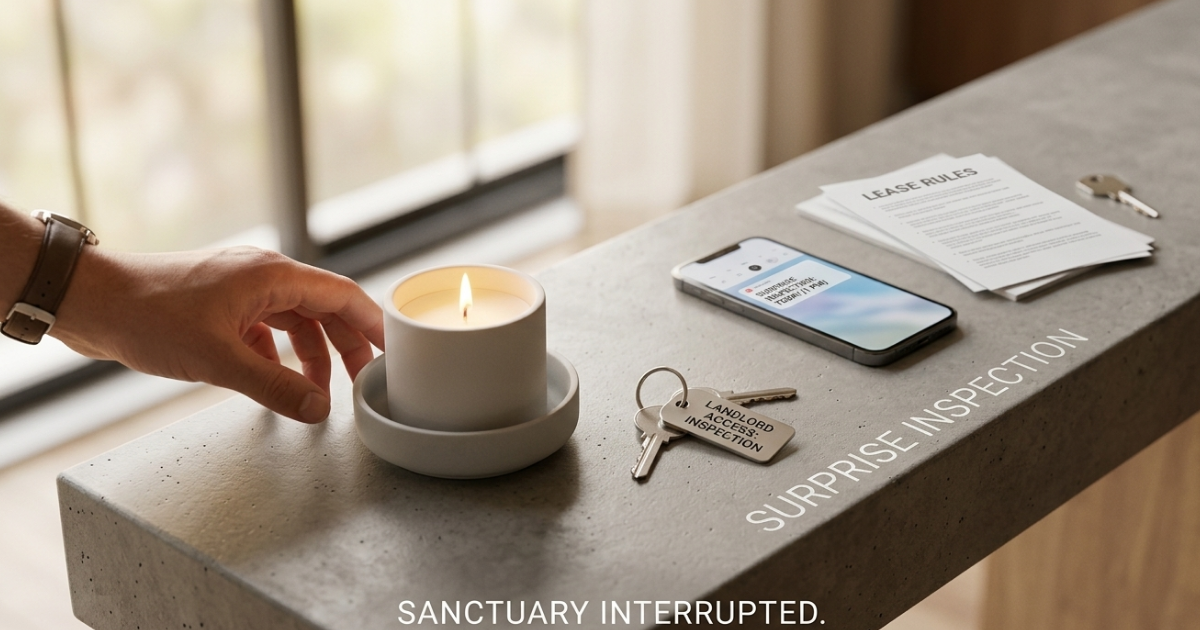
You're at home on a Saturday morning in your pajamas when there's pounding on your door. It's your landlord saying they need to "inspect" your apartment. You weren't given any notice. This is the third time this month. Last week they showed up at 8pm on a Tuesday claiming they needed to "check something." The week before, they came by unannounced saying they wanted to "see if everything was okay." Each time, there's no real emergency, no scheduled repair, no legitimate reason you can identify.
You feel like you're being watched. You can't relax in your own home because you never know when your landlord will show up. You're starting to wonder: "Can they just do this whenever they want? Is this legal? Or is this harassment?"
This question—whether repeated unannounced visits and surprise inspections are legal landlord conduct or illegal harassment—confuses tenants because landlords DO have legitimate rights to access your apartment in certain circumstances. But those access rights have clear legal limits, and when landlords exceed those limits repeatedly, especially without genuine reasons, it crosses the line into illegal harassment.
Here's the legal standard: Landlords can enter your apartment for real emergencies without notice, and for legitimate purposes with reasonable advance notice. But repeated surprise "inspections" without valid reasons, especially when used to intimidate, surveil, or pressure you, constitute illegal harassment that you can stop.
Let me show you exactly what access rights your landlord actually has, when those rights end and harassment begins, and how to protect your right to privacy and peaceful enjoyment of your home.
Before we define the legal boundaries, let's address why this issue creates so much uncertainty:
Legitimate reasons landlords can enter your apartment:
You think: "My landlord has the right to enter sometimes, so maybe all these visits are within their rights?"
The issue: Having SOME access rights doesn't mean UNLIMITED access rights. The law requires specific conditions (emergencies or reasonable notice for legitimate purposes). Repeated entries without those conditions are illegal.
Landlords use the word "inspection" to make unannounced visits sound legitimate:
You think: "If it's an 'inspection,' that must be legal, right?"
Reality: There's no general legal right to random "inspections" whenever landlord wants. Unless there's a legally required inspection (like annual smoke detector checks) or a specific reason related to repairs or showing the apartment, "inspection" is just a label landlord puts on harassment to make it sound legitimate.
Power dynamics make you hesitant to refuse entry:
You internalize the belief that you must allow entry whenever landlord demands it.
This is wrong. You have legal rights to privacy and notice. Landlords don't have unlimited access to your home just because they own the building.
Each individual surprise visit might seem borderline:
You think: "Each visit has some excuse, so maybe I'm overreacting?"
Reality: Harassment isn't about any single visit—it's about the PATTERN. Multiple surprise visits over time, especially without genuine reasons, create the harassment. You're not overreacting to a pattern even if each individual incident has a superficial justification.
Let's establish the legal framework for when landlords CAN and CANNOT enter:
Landlords may enter WITHOUT advance notice in genuine emergencies:
What qualifies as emergency:
Why notice isn't required: Emergency situations require immediate action to prevent serious harm or damage. Waiting 24 hours to give notice would defeat the purpose.
Key limitation: It must be an ACTUAL emergency, not a landlord-invented "emergency."
Red flags that suggest fake emergency:
Landlords may enter WITH reasonable advance notice for:
What this means:
Notice requirement: Reasonable advance notice (typically treated as at least 24 hours in NYC) stating date, time window, and specific purpose.
Example of legal entry: "I will be entering your apartment on Tuesday, March 15 between 10am-12pm to repair the leak in your bathroom ceiling that you reported last week."
What this means:
Notice requirement: Reasonable advance notice stating date, time, and legal basis for inspection.
Example of legal entry: "Annual smoke detector inspection will be conducted in all apartments on March 20-22. We will inspect your apartment on March 21 between 1pm-3pm as required by NYC fire safety regulations."
What this means:
Notice requirement: Reasonable advance notice, typically 24 hours, stating date, time window, and purpose (showing to prospective tenant/buyer).
Limitations: Must be at reasonable hours (not early morning or late evening), and frequency should be reasonable (not daily showings).
Example of legal entry: "We will be showing your apartment to a prospective tenant on Saturday, March 18 at 2pm. The showing will take approximately 15-20 minutes."
While New York doesn't specify an exact number of hours in statute, the accepted standard in NYC is:
At least 24 hours advance notice (some housing advocates recommend 48 hours as more reasonable, but 24 is widely accepted minimum).
Notice must be in writing (text, email, note on door—verbal notice alone is questionable).
Notice must state:
Reasonable hours: Entry should be during reasonable daytime hours (generally 9am-6pm on weekdays, 10am-5pm on weekends) unless you agree to different hours.
Example of reasonable notice:
✅ Good notice: "I will be entering your apartment on Thursday, March 16 between 2pm-4pm to repair the kitchen faucet leak you reported. My plumber will accompany me."
❌ Bad notice (not reasonable): Text sent at 9pm saying "I'll be stopping by tomorrow morning to check on things."
❌ Bad notice (not reasonable): "I'll be doing inspections this week, will let you know when I'm coming." (No specific date/time)
❌ Bad notice (not reasonable): Landlord shows up and says "I knocked on your door yesterday to tell you I was coming today, but you weren't home." (Not adequate advance notice)
Now let's identify when landlord entry behavior becomes illegal harassment:
New York City's harassment rules specifically identify as harassment:
"Repeatedly contacting or visiting a tenant during non-business hours when the tenant has not indicated a willingness to have such contact or visit."
What this tells us:
"Repeatedly visiting" = Pattern of visits, not just one instance.
"During non-business hours" = Early morning, late evening, weekends (without legitimate emergency or prior agreement).
"When tenant has not indicated willingness" = Unwanted visits. If you've told landlord to stop or to provide proper notice, continued visits are clearly unwanted.
This directly addresses surprise inspection harassment: Unannounced visits, especially at inconvenient times, when you haven't agreed to them, constitute harassment.
Tenant rights attorneys commonly identify these patterns as harassment tactics:
What this looks like:
Why this is harassment: Interferes with your privacy and peaceful enjoyment of your home. The pattern reveals intent to surveil, intimidate, or maintain control rather than accomplish legitimate landlord purposes.
What this looks like:
Why this is harassment: Timing reveals intent to disturb your peace and invade your privacy when you're most vulnerable, not accomplish legitimate business purposes.
What this looks like:
Why this is harassment: Goes far beyond legitimate inspection of landlord's property (checking for needed repairs, ensuring apartment is maintained). Crosses into invasion of privacy and surveillance designed to intimidate.
What this looks like:
Why this is harassment: Timing and context reveal visits aren't about legitimate property management—they're weapons used to pressure you into moving or punish you for asserting rights.
What this looks like:
Why this is harassment: Abuses emergency exception to notice requirement. Uses false emergencies as cover for unannounced surveillance and intimidation.
For surprise visits to constitute harassment under general NY law:
Course of conduct: Multiple visits over time, not just one or two incidents.
Interferes with comfort, peace, or privacy: Pattern disturbs your ability to relax at home, invades your privacy, makes you feel watched or controlled.
Intent to force you out or surrender rights: Visits seem designed to intimidate you into:
Especially clear when: Visits escalate after you assert rights, visits are combined with explicit pressure, landlord makes statements revealing intent ("If you don't like me checking on my property, maybe you should move").
Apply these questions to your situation:
For each visit, ask:
Did landlord provide at least 24 hours advance written notice?
Was there a genuine emergency?
Was there a legitimate, specific reason?
Bottom line: If most visits lack proper notice AND lack genuine emergency or specific legitimate purpose, they're improper and potentially harassment.
Look at the pattern over time:
How often are surprise visits happening?
Is frequency increasing?
Is there a pattern to timing?
Bottom line: Multiple surprise visits over time, especially with increasing frequency or at inconvenient hours, indicate harassment pattern.
How does landlord react when you object or set boundaries?
Scenario A - You say "Please provide 24 hours notice for future visits" and landlord:
Scenario B - You refuse entry because you didn't receive notice and landlord:
Bottom line: Landlord's refusal to respect reasonable boundaries proves harassing intent.
What happens during the visits?
Does landlord:
Does landlord:
Bottom line: Conduct during visits reveals whether purpose is legitimate property management or harassment/surveillance.
When did surprise visits start?
Timing analysis:
Bottom line: Timing relative to your assertion of rights reveals whether visits are harassment weapons or just boundary violations.
Let's apply the framework to real scenarios:
Pattern: Landlord emails on Monday: "I will be entering your apartment on Wednesday between 10am-12pm to fix the radiator issue you reported last week. My plumber will accompany me." Landlord arrives Wednesday at 10:30am, fixes radiator, leaves. This happens occasionally for legitimate repairs.
Analysis:
Conclusion: Legal entry. NOT harassment.
Pattern: Landlord shows up unannounced twice in two months, both times during daytime hours, claiming they wanted to "check on things." No actual repairs made. Tenant hasn't objected yet or set boundaries.
Analysis:
Conclusion: Improper entries (lack of notice and genuine purpose), but limited frequency means not yet clear harassment pattern. HOWEVER, tenant should set boundaries now in writing. If visits continue after boundaries set, crosses into harassment.
Recommended action: Send written notice requiring 24-hour advance notice for all non-emergency entry.
Pattern: Landlord shows up unannounced 2-3 times per month, sometimes as early as 7:30am or as late as 9pm. Claims "monthly inspection" or "just checking on my property." During visits, landlord looks through tenant's belongings, comments on lifestyle ("I see you have a lot of guests"), takes photos. This started after tenant refused buyout. Tenant asked landlord to provide notice; landlord ignored request and visits continued.
Analysis:
Conclusion: This is CLEARLY illegal harassment. Multiple red flags, pattern over time, retaliatory timing, boundary violations, invasive conduct.
Recommended action: Document everything, report to HPD, contact legal services, consider harassment proceeding in court.
Pattern: Over 3 months, landlord has shown up 5 times claiming "emergency." First time: claimed they smelled gas (tenant didn't smell gas, no gas leak found). Second time: claimed they heard water running (no leak existed). Third time: claimed they needed to check smoke detector "for fire department" (no fire department requirement for unannounced check). Fourth time: claimed building inspector was coming (no inspector showed up). Fifth time: claimed neighbor reported noise (tenant wasn't home, no noise occurred).
Analysis:
Conclusion: Clear harassment using fake emergencies as cover for unannounced surveillance. Abuse of emergency exception to notice requirement.
Recommended action: Document each fake emergency with details of landlord's claims vs. reality. Report to HPD. Contact legal services.
If you're experiencing repeated surprise visits that are crossing into harassment:
Create a detailed log for each visit:
Record:
Also save:
Why this matters: Your detailed contemporaneous log is evidence proving the pattern, frequency, lack of notice, pretextual reasons, and harassment impact.
Send an email (or certified letter if you want extra formality) establishing your entry requirements:
Template:
"[Landlord name],
I am writing to establish clear procedures for entry to my apartment at [address].
Entry With Notice: You may enter my apartment with at least 24 hours advance WRITTEN notice (email or written note) for the following legitimate purposes:
Your notice must include:
Entry Without Notice: You may enter without notice ONLY in case of actual emergency (fire, serious leak, gas smell, or other immediate threat to health/safety requiring immediate action).
No Unscheduled "Inspections": There is no legal right to unscheduled "inspections" or "checking on things." All entry must comply with the procedures above.
Going forward, I will not grant entry for unannounced visits unless there is a genuine emergency. If you arrive without proper notice, I will ask you to leave and reschedule with appropriate notice.
I need these boundaries to maintain my privacy and peaceful enjoyment of my home as legally required.
Please confirm your understanding and agreement with these procedures.
[Your name] [Date]"
Why this matters:
Creates legal record: Proves you explicitly requested proper notice, making all future surprise visits clearly "unwanted" (key harassment element).
Establishes reasonableness: Your requirements are completely reasonable and legally justified, showing you're not being difficult—landlord's conduct is the problem.
Provides evidence: When landlord violates these clear boundaries, you have proof they're deliberately harassing you despite knowing your rights.
Empowers you: Gives you clear basis to refuse entry ("As I stated in my email dated [date], I require 24 hours notice. Please leave and reschedule with proper notice.").
When landlord shows up without proper notice and there's no genuine emergency:
What to do:
Do NOT open the door fully. Speak through door or open with chain lock if you have one.
Say firmly but calmly: "You didn't provide the required 24-hour notice as I requested in my email dated [date]. Unless this is a genuine emergency requiring immediate action, I cannot allow entry. Please leave and contact me with proper notice to reschedule."
If landlord claims emergency: "What is the specific emergency?" Listen to response. If it's clearly not an emergency (vague "checking on things," fake emergency like previous false claims), say: "That is not an emergency requiring immediate entry without notice. Please leave and provide proper notice."
If landlord persists or becomes aggressive: "I am exercising my legal right to privacy. You do not have the right to enter without notice unless there's a genuine emergency. Please leave now or I will call the police for trespassing."
Important caveats and safety considerations:
If you feel physically threatened or unsafe:
If landlord has key and enters anyway after you refuse:
If you're unsure whether it's a real emergency:
In New York City:
Call 311 and say: "I want to report tenant harassment. My landlord is repeatedly entering my apartment without notice or legitimate reason."
Provide specifics:
HPD will:
Outside NYC:
Contact local code enforcement or housing authority to report harassment pattern.
Contact NY Attorney General's office (ag.ny.gov) for serious harassment.
Contact legal services immediately if pattern continues:
NYC:
Outside NYC:
Tell intake: "My landlord is harassing me through repeated unannounced visits to my apartment. They enter [frequency] without notice or legitimate reason. I've asked them to stop and provided written entry requirements, but visits continue. I have detailed documentation."
What lawyers can do:
Options:
HP (Housing Part) Harassment Proceeding in Housing Court (NYC):
Supreme Court Injunction (Statewide):
What courts can order:
Understanding the tactic helps you recognize and resist it:
Unannounced visits establish landlord's power to invade your space whenever they want.
The goal: Remind you that you have no real privacy, that landlord can intrude at any time, that you live under constant surveillance.
Psychological impact: You can't relax in your own home. You're always "on guard" for unexpected intrusion.
Why it works if you don't fight back: You internalize powerlessness and accept that you have no right to privacy.
Landlord makes surprise visits hoping to catch you violating lease:
The goal: Build eviction case by documenting violations, real or exaggerated.
Why it works if you don't fight back: Landlord gathers "evidence" through illegal surveillance that they use against you in eviction proceedings.
Constant intrusions create anxiety and stress.
The goal: Make you so uncomfortable and stressed that you'll:
Why it works if you don't fight back: Psychological toll becomes unbearable and you surrender.
Surprise visits escalate after you:
The goal: Punish you for asserting rights, discourage future complaints.
Why it works if you don't fight back: You learn that asserting rights brings harassment, so you stop asserting rights.
Here's what you need to know:
You have a legal right to privacy and peaceful enjoyment of your home. This is fundamental to tenancy. Landlord ownership doesn't override your privacy rights.
Landlords have LIMITED access rights, not unlimited access rights. They can enter for specific legitimate purposes with proper notice, or in genuine emergencies. That's it.
There's no legal right to random "inspections." Unless legally required (like annual smoke detector checks), landlords don't have a right to inspect whenever they want.
Repeated surprise visits without legitimate purpose ARE legally recognized harassment by HPD and courts.
You can and should set boundaries requiring proper notice. This is legally justified and reasonable.
You can refuse entry when landlord hasn't followed proper procedures (unless genuine emergency exists).
You have legal remedies to stop this harassment: HPD complaints, harassment proceedings, injunctions, penalties against landlord.
Taking action sends a critical message: That you know your rights, won't tolerate violations, and will use legal tools to protect your privacy.
Set your boundaries in writing. Document every violation. Report the harassment. Get legal help. Stop allowing landlord to invade your home.
Your privacy is legally protected. Defend it.