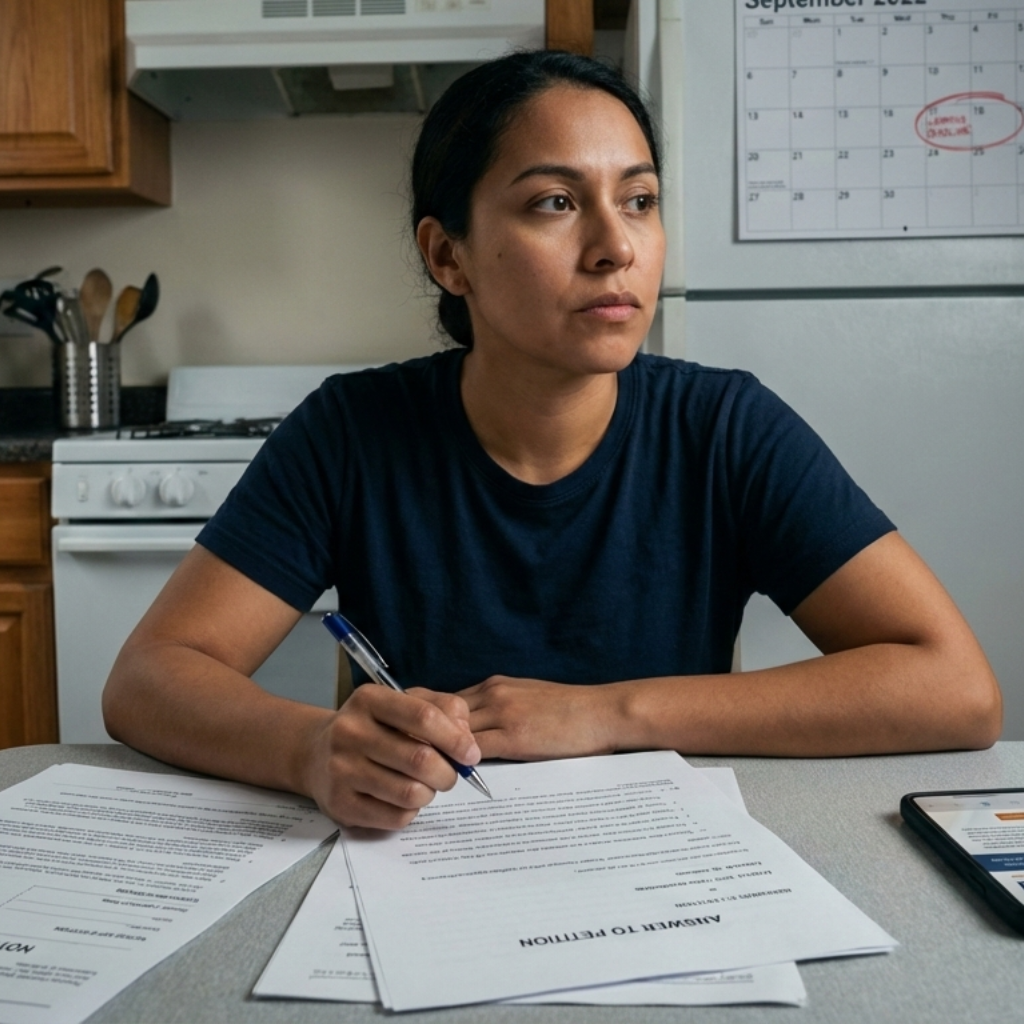
When you're served with eviction papers in New York, the single most critical action determining whether you stay or go is filing a proper Answer within the court's strict deadline. Most tenants who lose their homes don't lose because landlords have valid grounds—they lose by default because they never filed an Answer or filed it late.
Understanding exactly how to respond, what defenses to raise, and how to navigate Housing Court procedures is what separates tenants who successfully defend evictions from those who get displaced despite having strong legal protections.
Why Your Answer Is Everything
The harsh reality of Housing Court:
- Missing the Answer deadline = automatic loss
- Default judgments lead to eviction warrants within days
- Once evicted, getting back in is nearly impossible
- Strong defenses mean nothing if not properly asserted in Answer
- Landlords count on tenant confusion and inaction
What an Answer does:
- Prevents default judgment
- Preserves all your defenses
- Forces landlord to prove their case
- Creates official court record of your position
- Triggers your right to discovery
- Gets you court date where you can present evidence
What happens without an Answer:
- Landlord gets default judgment automatically
- No trial, no hearing, no chance to present defenses
- Warrant of eviction issued immediately
- Marshal scheduled to physically remove you
- Case over before you had chance to fight
The window is shockingly short: Typically 10 days in NYC nonpayment cases. Count wrong, file late, lose your home.
Understanding New York's Summary Proceeding
Before diving into how to answer, understand what you're facing.
What "Summary Proceeding" Means
New York doesn't use "unlawful detainer":
- That's California and other states' terminology
- New York calls it "summary proceeding"
- Governed by Real Property Actions and Proceedings Law (RPAPL) Article 7
- "Summary" means fast-tracked, expedited process
Why it's "summary":
- Shorter deadlines than regular lawsuits
- Faster court dates
- Designed for quick resolution
- Less formal discovery
- Fewer procedural protections than regular civil cases
The two types:
Nonpayment proceeding (RPAPL § 711(2)):
- Landlord claims you owe rent
- Must serve 14-day rent demand first
- Petition states amount allegedly owed
- Your defenses focus on whether you actually owe money
Holdover proceeding (RPAPL § 711(1)):
- Landlord claims your right to occupy ended
- Reasons: lease expired, lease violation, no-fault grounds
- Must serve termination/cure notice first
- Your defenses focus on whether landlord had valid grounds to terminate
The Court Papers You Received
What you were served with:
Notice of Petition:
- Court date and time
- Court location and address
- Case type (nonpayment or holdover)
- Index/docket number
- Instructions about answering
Petition:
- Landlord's name (petitioner)
- Your name (respondent)
- Property address
- Detailed allegations
- Amount claimed (if nonpayment)
- Grounds for eviction (if holdover)
- Landlord's verification (sworn statement)
These documents together constitute the lawsuit against you.
Service Requirements and Your Answer Deadline
How you may have been served:
Personal service:
- Papers handed directly to you
- Preferred method
- Starts deadline running immediately
Substituted service:
- Papers given to person of suitable age/discretion at home or work
- Plus mailed copy
- Deadline starts from mailing date
Conspicuous place service:
- Posted on door in conspicuous place
- Plus mailed copy
- Deadline starts from mailing date
- Requires affixing and mailing together
Why service method matters:
- Affects when Answer deadline starts
- Defective service = ground to dismiss case
- If you weren't properly served, raise it in Answer
Calculating your deadline:
General rule (NYC nonpayment):
- 10 days from service
- Day of service doesn't count
- Count every day including weekends/holidays
- Answer due by 10th day
- If 10th day is weekend/holiday, due next business day
Holdover cases:
- Notice of Petition states deadline
- Typically 3-5 days before court date
- READ THE NOTICE carefully for specific deadline
Example calculation:
- Served Monday, May 1
- Don't count May 1 (service day)
- Count starts May 2
- 10 days = due by Thursday, May 11
- Must file by end of business May 11
If you miscalculate: Even one day late can result in default. When in doubt, file immediately.
Step 1: Act Immediately Upon Receiving Papers
The moment you're served, the clock starts. Your first 24-48 hours determine everything.
Read Everything Carefully
Within first hour of receiving papers:
Note critical information:
- Court location and address
- Index/docket number (you'll need this for everything)
- Court date and time
- Answer deadline (calculate it)
- Type of case (nonpayment or holdover)
- Amount claimed (if nonpayment)
- Grounds stated (if holdover)
Read the Petition word by word:
- What is landlord claiming you did?
- What amount do they claim you owe?
- What dates are referenced?
- Are there attachments (predicate notices, lease, etc.)?
- What relief is landlord requesting?
Look for errors and defects:
- Wrong name or apartment number
- Wrong rent amount
- Incorrect dates
- Missing required notices
- Vague or unclear allegations
- Math errors
- Missing landlord verification
Every defect is a potential defense.
Gather All Supporting Documents
Within first 24-48 hours, collect:
Proof of tenancy:
- Current lease or rental agreement
- Prior leases
- Any sublease or assignment
- Move-in paperwork
- Proof of security deposit payment
Proof of rent payment:
- All rent receipts (every month)
- Cancelled checks
- Money order receipts
- Bank statements showing withdrawals/transfers
- Venmo/Zelle/electronic payment confirmations
- Any text/email acknowledging payment
Communications with landlord:
- All emails
- All text messages
- Letters you sent
- Letters landlord sent
- Repair requests
- Complaints you made
- Responses from landlord
- Any threats or harassment
Apartment condition evidence:
- Photos of all issues (lack of heat, leaks, mold, pests, etc.)
- Videos showing conditions
- HPD inspection reports
- 311 complaint records
- Photos from move-in (showing condition then vs. now)
- Estimates from contractors for needed repairs
Official records:
- HPD violation records for your building
- Certificate of occupancy
- Rent registration (if rent-stabilized)
- DHCR rent history
- Property tax records showing ownership
Other relevant evidence:
- Medical records (if conditions affected health)
- Photos showing retaliation timeline
- Tenant association materials
- Prior court papers
- Any settlement agreements
- Proof of discrimination or harassment
Why gather everything now:
- You may need it for Answer
- You'll definitely need it for court
- Better to have too much than too little
- Organizes your thoughts about defenses
- Shows attorney (if you get one) complete picture
Make Copies of Everything
Create organized file:
- Copy of Notice of Petition and Petition
- Copy of predicate notice (14-day demand or termination notice)
- Copies of all documents you gathered
- Chronological timeline of events
- List of potential witnesses
Keep originals safe:
- Store in secure location
- Bring copies to court, not originals (unless specifically requested)
- Have backup copies at different location
Step 2: Understand Your Answer Deadline and Where to File
Missing this deadline destroys your case before it starts.
NYC Nonpayment Cases
Standard deadline:
- 10 days from service of Notice of Petition
- Must be filed with Housing Court clerk
- Can be oral or written
Where to file:
Bronx Housing Court:
- 1118 Grand Concourse, Room 101
- Bronx, NY 10456
Brooklyn Housing Court:
- 141 Livingston Street, 2nd Floor
- Brooklyn, NY 11201
Manhattan Housing Court:
- 111 Centre Street, Room 208
- New York, NY 10013
Queens Housing Court:
- 89-17 Sutphin Boulevard, 4th Floor
- Jamaica, NY 11435
Staten Island Housing Court:
- 927 Castleton Avenue
- Staten Island, NY 10310
Hours:
- Typically 9 AM - 5 PM weekdays
- Arrive before 4 PM to ensure filing same day
- If deadline is today, get there early
Holdover Cases
Deadline varies:
- Check your Notice of Petition for specific deadline
- Often 3-5 days before court date
- Must be WRITTEN Answer (oral not sufficient for holdover)
- Must be served on landlord's attorney before filing
Why holdover deadline different:
- Court date already scheduled on Notice
- Answer must be filed before that date
- Gives landlord time to review before hearing
- Oral Answer at court date may be too late
Calculate carefully: If Notice says "answer must be served at least 3 days before hearing" and hearing is May 15:
- May 15 (hearing) minus 3 days = May 12
- Answer must be served by May 12
- Filed with court immediately after service
Upstate and Other NY Counties
Deadlines may vary:
- Some courts use different timelines
- Check local court rules
- Contact court clerk to confirm
- Don't assume NYC rules apply
County court locations:
- Each county has different Housing Court or City Court
- Find your court at nycourts.gov
- Call clerk's office if unsure
Step 3: Decide Between Oral and Written Answer
New York uniquely allows oral Answers in some situations, but written is almost always better.
Oral Answer Option
How it works:
- Go to Housing Court clerk's office
- Tell clerk you want to give oral Answer
- Clerk will ask you questions
- Clerk writes your answers on court form
- You review and sign
- Answer is filed immediately
Advantages:
- Don't need to draft document
- Clerk helps ensure proper format
- Filed immediately, no separate service step
- Good if deadline is today/tomorrow
- No notary needed
Disadvantages:
- Limited to what clerk asks/writes
- May miss important defenses
- No chance to carefully consider wording
- Harder to include detailed facts
- Can't include counterclaims easily
- No copy for your records unless you request
When to use oral Answer:
- Deadline is imminent (today or tomorrow)
- You can't get to attorney/legal services in time
- You're unable to draft written Answer
- Simple case with few defenses
- Emergency backup if written Answer delayed
Critical if using oral Answer:
- State ALL your defenses clearly
- Don't let clerk skip any
- Review form carefully before signing
- Make sure everything you said is written down
- Request copy for your records
- Still prepare for court with documents
Written Answer (Strongly Recommended)
Why written Answer is better:
More complete:
- Include every defense in detail
- Add all counterclaims
- Provide supporting facts
- Attach exhibits if helpful
- More professional presentation
More precise:
- Exact wording you want
- Legal language and citations
- Organized by defense type
- Clear and comprehensive
Better record:
- You have copy before filing
- Attorney can review before filing
- Can amend if needed
- Shows you're serious
Required for holdover:
- Oral Answer not accepted in most holdover cases
- Must be written, served, and filed before court date
Using Court Forms vs. Custom Answer
Standard court forms available:
CIV-LT-91a (Answer in Writing):
- Free form from court clerk
- Available online at nycourts.gov
- Fill-in-the-blank format
- Checkboxes for common defenses
- Space for additional defenses
Advantages of court form:
- Easy to use
- Court familiar with format
- Less likely to have formatting errors
- Good for straightforward cases
Limitations of court form:
- May not have space for all defenses
- Generic language
- Doesn't allow much detail
- May need to attach additional pages
Custom drafted Answer:
- Attorney or legal aid drafts from scratch
- Tailored to your specific case
- Detailed factual allegations
- Legal citations
- Professional format
When to use custom Answer:
- Complex case with many defenses
- Rent-stabilized/regulated apartment
- Retaliation or discrimination claims
- Substantial counterclaims
- You have attorney helping you
You can use court form AND attach pages:
- Start with CIV-LT-91a
- Check applicable boxes
- Attach additional pages with "See attached Exhibit A for additional defenses"
- Provides structure plus detail
Step 4: Draft Your Answer - What to Include
Your Answer must include specific components to be legally sufficient.
Caption and Case Information
At top of first page:
NEW YORK CITY HOUSING COURT
COUNTY OF [BRONX/KINGS/NEW YORK/QUEENS/RICHMOND]
[LANDLORD NAME],
Petitioner,
Index No. [DOCKET NUMBER]
-against-
[YOUR NAME],
Respondent.
_______________________________________/
ANSWER
Fill in:
- Correct county
- Landlord's name exactly as shown on Petition
- Your name exactly as shown on Petition
- Correct index/docket number
General Denial
Start with broad denial:
"Respondent denies each and every allegation in the Petition except as specifically admitted below."
Then admit only what you must:
"Respondent admits the following:
- Respondent resides at [address].
- Petitioner is the owner/landlord of the building.
- [Any other clearly true facts]"
Why deny everything else:
- Puts burden on landlord to prove claims
- Preserves all defenses
- Standard legal practice
- Protects your rights
Don't admit anything you're not 100% certain is true:
- If petition says you owe $5,000 but you think it's $3,000, DENY
- If petition says lease violation occurred but you disagree, DENY
- When in doubt, DENY
Affirmative Defenses
What affirmative defenses are:
- Legal reasons why landlord shouldn't win even if their allegations are true
- Must be raised in Answer or they're waived
- These are your strongest weapons
List each defense separately and numbered:
Common affirmative defenses in nonpayment cases:
1. Payment: "Respondent has paid all rent owed. Petitioner's claim of nonpayment is false."
2. Wrong amount: "The amount claimed by Petitioner is incorrect. Respondent owes at most [lower amount]."
3. Breach of warranty of habitability: "The apartment has substantial defects that violate the warranty of habitability, including [list: no heat, leaks, mold, pests, etc.]. These conditions reduce the reasonable rental value. Respondent is entitled to rent abatement."
4. Improper rent demand: "Petitioner failed to serve a proper 14-day rent demand as required by RPAPL § 711, or the demand was defective because [wrong amount stated, insufficient time, improper service]."
5. Retaliatory eviction: "This proceeding is retaliatory in violation of RPL § 223-b. Respondent [made repair complaints, called 311, joined tenant association, etc.] on [dates]. Within one year, Petitioner commenced this proceeding. Petitioner's actions are presumptively retaliatory."
6. Improper rent increase: "Petitioner failed to provide required written notice of rent increase as mandated by Housing Stability and Tenant Protection Act. The increase is void and Respondent does not owe the increased amount."
7. Good Cause violation (if applicable): "The rent increase exceeds the cap under Good Cause Eviction Law. The increase is unreasonable and unconscionable. Nonpayment resulting from excessive increase is not valid grounds for eviction."
8. Discrimination: "This proceeding is discriminatory in violation of Fair Housing Act, NY Human Rights Law, and NYC Human Rights Law based on [protected characteristic]. Respondent has filed complaint with [agency]."
9. Improper notice/service: "Petitioner failed to properly serve the Notice of Petition and Petition. Service was defective because [specify defect]. This court lacks personal jurisdiction."
10. Rent stabilization violations: "The apartment is rent-stabilized. Petitioner failed to provide proper lease renewal, failed to register apartment, or overcharged rent. These violations bar this proceeding."
Common affirmative defenses in holdover cases:
1. No valid grounds: "Petitioner lacks good cause to terminate tenancy as required by Good Cause Eviction Law. None of the enumerated grounds exist."
2. Improper termination notice: "Petitioner failed to serve proper termination notice. The notice [was not served with required advance time, failed to state specific grounds, was vague and conclusory, etc.]."
3. No lease violation occurred: "Respondent did not commit the alleged lease violation. Petitioner's allegations are false."
4. Violation was cured: "Petitioner served notice to cure. Respondent cured the alleged violation within the time provided. No grounds for eviction exist."
5. Selective enforcement: "Petitioner is selectively enforcing lease provisions against Respondent while allowing other tenants to engage in same conduct. This constitutes discrimination and bad faith."
6. Retaliation: "Same as nonpayment - assert retaliatory motive for termination."
7. Discrimination: "Same as nonpayment."
8. Owner occupancy pretextual: "Petitioner's claim that owner/family needs apartment for primary residence is pretextual and made in bad faith. [Petitioner has other vacant units, family member has no intent to actually occupy, this is cover for wanting higher rent, etc.]"
9. Senior/disability protection: "Respondent is [over 65 years old / has disability]. Owner occupancy ground cannot be used against Respondent under Good Cause Law."
10. Primary residence: "Respondent uses apartment as primary residence. Petitioner's claim of non-primary residence is false."
Format for listing defenses:
AFFIRMATIVE DEFENSES
FIRST DEFENSE - Payment
Respondent has paid all rent due and owing. [Provide details]
SECOND DEFENSE - Breach of Warranty of Habitability
The apartment contains substantial violations of the Housing Maintenance Code including [list specific conditions]. These conditions materially reduce the value of the apartment and entitle Respondent to rent abatement.
THIRD DEFENSE - Retaliation
[Detailed allegations with dates and facts]
[Continue for all applicable defenses]
Counterclaims
What counterclaims are:
- Your own claims against landlord
- Allows you to seek damages or other relief
- Can offset rent owed in nonpayment cases
- Must be asserted in Answer
Common counterclaims:
Harassment: "Petitioner has harassed Respondent through [specific acts]. Respondent seeks damages."
Rent overcharge: "Petitioner has overcharged rent in violation of rent stabilization laws. Respondent seeks refund of overcharges plus treble damages and attorney fees."
Security deposit violations: "Petitioner failed to return security deposit or provide itemized statement within 14 days as required by GOL § 7-108. Respondent seeks return of deposit plus double damages."
Breach of warranty of habitability: "Can be both defense AND counterclaim. As counterclaim, seek rent abatement for past months."
Illegal fees: "Petitioner charged illegal fees [broker fee paid by tenant, application fee above legal limit, etc.]. Respondent seeks refund."
Unlawful eviction attempt: "Petitioner attempted illegal lockout on [date]. Respondent seeks triple damages under RPAPL § 768."
Format for counterclaims:
COUNTERCLAIMS
FIRST COUNTERCLAIM - Rent Overcharge
1. [Reallege and incorporate prior paragraphs]
2. The apartment is rent-stabilized.
3. Petitioner charged rent exceeding legal regulated rent.
4. Overcharge was willful.
5. Respondent is entitled to refund of overcharges, treble damages, interest, and attorney fees.
SECOND COUNTERCLAIM - Harassment
[Continue with numbered paragraphs]
Prayer for Relief
What you're asking court to do:
WHEREFORE, Respondent respectfully requests that this Court:
1. Dismiss the Petition with prejudice;
2. Award Respondent rent abatement for breach of warranty of habitability;
3. Order Petitioner to make all necessary repairs;
4. Award Respondent damages on counterclaims;
5. Award Respondent attorney fees and costs;
6. Grant such other and further relief as this Court deems just and proper.
Verification
Must be notarized:
VERIFICATION
STATE OF NEW YORK )
) ss.:
COUNTY OF [COUNTY] )
[YOUR NAME], being duly sworn, deposes and says:
I am the Respondent in the above-captioned proceeding. I have read the foregoing Answer and know the contents thereof. The statements contained herein are true to my own knowledge, except as to matters therein stated to be alleged on information and belief, and as to those matters, I believe them to be true.
___________________________
[YOUR SIGNATURE]
[YOUR NAME]
Sworn to before me this
___ day of ________, 20__
___________________________
Notary Public
Getting notarized:
- Many banks offer free notary for customers
- UPS stores have notaries (fee)
- Legal services can notarize
- Court may have notary
- Must bring photo ID
- Must sign in front of notary
Step 5: Serve Your Answer on Landlord
Written Answers must be properly served before filing with court.
Who Must Serve
Cannot be you:
- Must be someone 18 or older
- Cannot be party to the case
- Can be friend, relative, legal services staff
- Professional process server (costs money)
Why you can't serve:
- Legal requirement
- Ensures fairness
- Creates neutral verification
How to Serve
Service methods:
Personal service (best):
- Hand-deliver to landlord's attorney at their office
- Hand-deliver to landlord if no attorney
Service by mail:
- Mail copy to landlord's attorney's address
- Use certified mail, return receipt requested
- Provides proof of mailing
Email/fax (if attorney accepts):
- Some attorneys agree to email service
- Faster than mail
- Get written confirmation
Address for service:
- Check Petition for landlord's attorney information
- Serve at attorney's office address
- If no attorney, serve landlord at address on Petition
Affidavit of Service
Person who served must complete:
AFFIDAVIT OF SERVICE
STATE OF NEW YORK )
) ss.:
COUNTY OF [COUNTY] )
[SERVER NAME], being duly sworn, deposes and says:
1. I am over 18 years of age and not a party to this proceeding.
2. On [DATE], I served a copy of the attached Answer upon [LANDLORD'S ATTORNEY NAME / LANDLORD NAME] by [method of service: personal delivery / mailing to the following address: _______________].
3. I served the Answer by [describe exactly what happened: "handing it to [name] at [address]" or "depositing in US mail, certified mail, return receipt requested, at [address]"].
___________________________
[SERVER SIGNATURE]
[SERVER NAME]
Sworn to before me this
___ day of ________, 20__
___________________________
Notary Public
Must be notarized just like Answer.
Timeline for Service
Serve before filing:
- Service must happen first
- Then file with court
- Court won't accept Answer without proof of service
How much time to allow:
- Personal service: can file immediately after
- Mail service: best practice is mail 2-3 days before Answer deadline, then file
Don't cut it close:
- If Answer due Friday, don't wait until Thursday to serve
- Allow time for unexpected problems
Step 6: File Your Answer with Court
Final step to preserve your rights.
What to Bring to Court
Required documents:
- Original Answer (signed and notarized)
- Original Affidavit of Service (signed and notarized)
- Copy of Answer for your records
- Copy of Notice of Petition and Petition
- Photo ID
Filing fee:
- Typically no fee for Answer in Housing Court
- If fee required and you can't afford, request fee waiver
Where to File
Go to Landlord-Tenant Clerk's office:
- Housing Court for your borough/county
- Not general clerk's office
- Specific window for landlord-tenant cases
Filing Process
Steps:
- Go to clerk's window
- Say "I need to file an Answer in [index number] case"
- Give clerk original Answer and original Affidavit of Service
- Clerk will review for completeness
- Clerk will stamp and file
- Clerk will give you back filed copy
- Clerk may give you court date (if not already scheduled)
What clerk checks:
- Case number correct
- Answer signed and notarized
- Affidavit of Service provided
- Papers complete
If clerk finds problem:
- Fix it immediately if possible
- Don't leave without filing
- Ask clerk specifically what's needed
Keep Everything
After filing:
- Filed-stamped copy of Answer
- Copy of Affidavit of Service
- Receipt if any
- Note of court date
- Clerk's name (if they gave you information)
Organize for court:
- File folder with all documents
- Bring to every court appearance
- Make backup copies
Step 7: Prepare for First Court Appearance
Filing Answer is just the beginning. Now prepare for court.
What Happens at First Appearance
Typical flow:
Check-in:
- Arrive 30 minutes early
- Find your courtroom on calendar
- Check in with clerk or court officer
- Wait for your case to be called
Resolution Part / Settlement Conference:
- Many courts start with settlement discussion
- Court attorney (not judge) facilitates
- Landlord's attorney presents offer
- You present your position
- Attempt to negotiate resolution
Before judge (if no settlement):
- Both sides appear before judge
- Judge reviews Answer and Petition
- Judge may ask questions
- Judge sets schedule for next steps
Possible outcomes:
- Case settled (stipulation signed)
- Case adjourned for discovery
- Trial date set
- Case dismissed (if landlord's case clearly defective)
- Default against landlord (if they don't appear)
Bring All Documents and Evidence
Essential to bring:
- Filed Answer and all court papers
- Lease
- All rent receipts and payment proof
- Photos of apartment conditions
- HPD violations
- 311 records
- All communications with landlord
- Timeline of events
- List of witnesses
- Copies of everything (original stay home)
Organize in folders:
- Easy to access during discussions
- Professional presentation
- Shows you're prepared
Request Right to Counsel
NYC Right to Counsel:
- If income-eligible, you qualify for free attorney
- Tell court officer you want to request Right to Counsel
- May adjourn case to allow attorney to be assigned
- Attorney will contact you
How to request:
- At first appearance, tell judge "I request Right to Counsel"
- May need to fill out financial forms
- Case will be adjourned while attorney assigned
- Don't waive this right
Why this matters:
- Represented tenants 77% more likely to remain housed
- Attorney handles all legal procedures
- Negotiates better settlements
- Presents stronger defense at trial
Understanding Stipulations
What stipulation is:
- Settlement agreement between you and landlord
- Becomes court order
- Binding and enforceable
- Violating it leads to eviction
Common terms:
- Payment plan for arrears
- Repairs to be made
- Future rent payment schedule
- Landlord agrees not to seek eviction if you comply
NEVER sign stipulation you don't understand:
- Ask for explanation
- Request time to review
- Consult with attorney if available
- Read every word carefully
Bad stipulation terms to avoid:
- Unrealistic payment amounts
- Waiving defenses
- Agreeing to move by certain date (if you want to stay)
- "Confessing judgment" (admitting you owe money)
- Waiving right to appeal
Good stipulation terms:
- Reasonable payment plan you can afford
- Landlord makes specific repairs by dates
- Case discontinued upon full compliance
- You can remain in apartment
What Not to Do at First Appearance
Don't:
- Miss the court date (results in default)
- Arrive late
- Talk to landlord directly (communicate through attorneys)
- Sign anything without reading completely
- Agree to terms you can't comply with
- Admit you owe money you don't actually owe
- Waive right to counsel
- Be disrespectful to judge or court staff
- Bring phone into courtroom (most courts prohibit)
Do:
- Arrive early
- Dress appropriately (business casual)
- Be respectful and polite
- Listen carefully to instructions
- Ask for clarification if you don't understand
- Request adjournment if you need attorney or more time
- Take notes
- Get everything in writing
Step 8: If You Missed the Deadline - Vacating Defaults
If you missed Answer deadline or court date, act immediately.
Understanding Default Judgments
What happens when you default:
- Landlord gets judgment automatically
- No trial needed
- Warrant of eviction issued
- Marshal scheduled to evict you
- Usually within 14 days of judgment
Common reasons for default:
- Never received papers (improper service)
- Miscalculated deadline
- Family emergency
- Hospitalization
- Didn't understand importance
- Lost in mail
- Wrong address
Good news: Defaults can often be vacated (undone) if you act fast.
Vacating the Default
File Order to Show Cause immediately:
What Order to Show Cause is:
- Emergency motion to reopen case
- Asks judge to vacate default judgment
- Requests stay (stop) of eviction
- Gets you immediate court date
Where to file:
- Same Housing Court that issued judgment
- Landlord-Tenant clerk's office
- File same day or next business day after discovering default
What you must show:
1. Reasonable excuse: Why you didn't answer or appear:
- Never received papers (improper service)
- Medical emergency with documentation
- Family emergency
- Miscalculated deadline
- Papers served at wrong address
2. Meritorious defense: That you have valid defenses to eviction:
- Rent was paid
- Conditions are terrible
- Retaliation
- No valid grounds
- Any defenses from Step 4 above
What to Include in Order to Show Cause
Required papers:
Order to Show Cause (proposed order for judge to sign):
Upon reading and filing the attached Affidavit of [Your Name] and proposed Answer, and upon all proceedings had herein:
LET the Petitioner show cause before this Court at [address] on [date judge fills in] at [time judge fills in] why an Order should not be entered:
1. Vacating the default judgment entered on [date];
2. Staying execution of the warrant of eviction;
3. Restoring Respondent to the position prior to default;
4. Granting such other relief as this Court deems just and proper.
ORDERED that pending the hearing on this Order to Show Cause, execution of the warrant of eviction is hereby STAYED.
Affidavit explaining:
I, [Name], state under oath:
1. I am the Respondent in this case.
2. A default judgment was entered against me on [date].
3. I did not answer or appear because [reasonable excuse].
4. I have meritorious defenses to this proceeding, specifically:
[List all your defenses]
5. If my default is vacated, I will immediately appear and defend this case.
6. I request this Court vacate the default and allow me to defend.
Proposed Answer:
- Attach the Answer you should have filed
- Includes all defenses
- Shows you're ready to defend now
Supporting documentation:
- Medical records (if medical excuse)
- Proof you never received papers
- Rent receipts (if payment defense)
- Photos (if conditions defense)
- Anything supporting your excuse and defenses
Service and Filing
Must serve Order to Show Cause:
- On landlord's attorney
- Immediately after filing
- Before hearing date
Court will set hearing:
- Usually within days
- Both sides appear before judge
- Judge decides whether to vacate default
At the Hearing
Bring everything:
- All documents supporting excuse
- All documents supporting defenses
- Be prepared to testify
- Explain what happened
- Show you're ready to defend now
Possible outcomes:
Default vacated:
- Case reopened
- You file Answer
- Case proceeds as if no default
- You get to defend
Default stands:
- Judgment remains
- Eviction proceeds
- Very rare if you have good excuse and defenses
Partial relief:
- Judge may impose conditions
- Pay certain amount to reopen
- Agree to payment plan
- Comply with court orders
After Default Vacated
File Answer immediately:
- If not already filed
- Include all defenses
- Proceed with case
Appear at all future dates:
- Don't default again
- Mark calendar
- Set reminders
- Arrange childcare/work in advance
Special Considerations for Different Case Types
Nonpayment Cases
Focus on amount owed:
- Calculate exactly what you paid vs. what's claimed
- Gather payment proof for every month
- Identify any overcharges or illegal fees
- Calculate rent abatement if conditions are bad
Use and occupancy:
- If you've been withholding rent due to conditions
- Court may require you to pay "use and occupancy" (reasonable value of apartment in current condition) into court registry
- Usually less than full rent if conditions are bad
Paying to cure:
- In nonpayment cases, paying full amount owed before warrant execution stops eviction
- This is called "curing" the judgment
- Even after judgment, you can pay and stay
Holdover Cases
Focus on landlord's grounds:
- Did lease actually expire?
- Did you actually violate lease?
- Does landlord have valid Good Cause grounds?
- Was termination notice proper and timely?
No cure by payment:
- Unlike nonpayment, you can't just pay money to stay
- Must prove landlord lacks valid grounds
- Defenses are everything
Rent-Stabilized Tenants
Additional protections:
- Automatic renewal rights
- Can only be evicted for specific grounds
- Landlord must follow strict procedures
- DHCR oversight
Additional defenses:
- Failure to register apartment
- Failure to offer proper renewal lease
- Improper rent increases
- Illusory tenancy
- Fraudulent deregulation
Resources:
- Contact DHCR (718-739-6400)
- Get rent history
- Check registration status
- Consult rent-stabilization specialist
Good Cause Coverage
If in covered area and non-exempt unit:
- Landlord must prove one of enumerated grounds
- Rent increases capped
- Can't refuse renewal without just cause
Assert Good Cause in Answer: "Respondent is covered by Good Cause Eviction Law. Petitioner has failed to state valid grounds under RPL Article 6-A. Petition must be dismissed."
Getting Legal Help
Don't navigate this alone.
Free Legal Services
NYC Right to Counsel:
- Call 311
- Email [email protected]
- Income-eligible tenants get free attorney
- Attorneys at Housing Court daily
Legal Aid Society:
- 212-577-3300
- Walk-in intake at borough offices
- Housing Court presence
Legal Services NYC:
- 646-442-3600
- Neighborhood offices throughout NYC
- Eviction defense specialists
Housing Court Answers:
- 718-557-1379
- Walk-in help at Bronx and Manhattan Housing Courts
- Same-day advice
- Help with Answer forms
Statewide Resources
LawHelpNY.org:
- Directory of legal aid statewide
- Self-help resources
- Court forms
- Know your rights information
New York State Bar Association:
- Lawyer referral service
- May offer reduced-fee consultations
What Attorney Does
Immediate help:
- Review your papers
- Identify all defenses
- Draft comprehensive Answer
- File and serve properly
- Advise on strategy
Ongoing representation:
- Appear at all court dates
- Conduct discovery
- Negotiate settlement
- Present case at trial
- Protect your rights
Why attorney crucial: Studies show 77% of represented tenants remain housed vs. 23% of unrepresented tenants.
Your Answer Determines Your Outcome
Filing a proper, timely, comprehensive Answer is the single most important action you can take when facing eviction. It's the difference between having your day in court and losing by default. Between asserting strong defenses and waiving them forever. Between staying in your home and being displaced.
The system is designed to move fast—often faster than tenants can understand what's happening. Landlords and their attorneys know the procedures intimately. They count on tenant confusion, fear, and inaction.
But you now know exactly what to do: Calculate your deadline precisely. Gather every supporting document. List every applicable defense. File and serve your Answer properly. Appear at every court date. Get legal help.
Your landlord may have grounds to evict you, or they may not. But they only win if you let them win by default. Make them prove their case. Assert every defense. Fight for your home.
Find out if you have a case in 30 seconds →