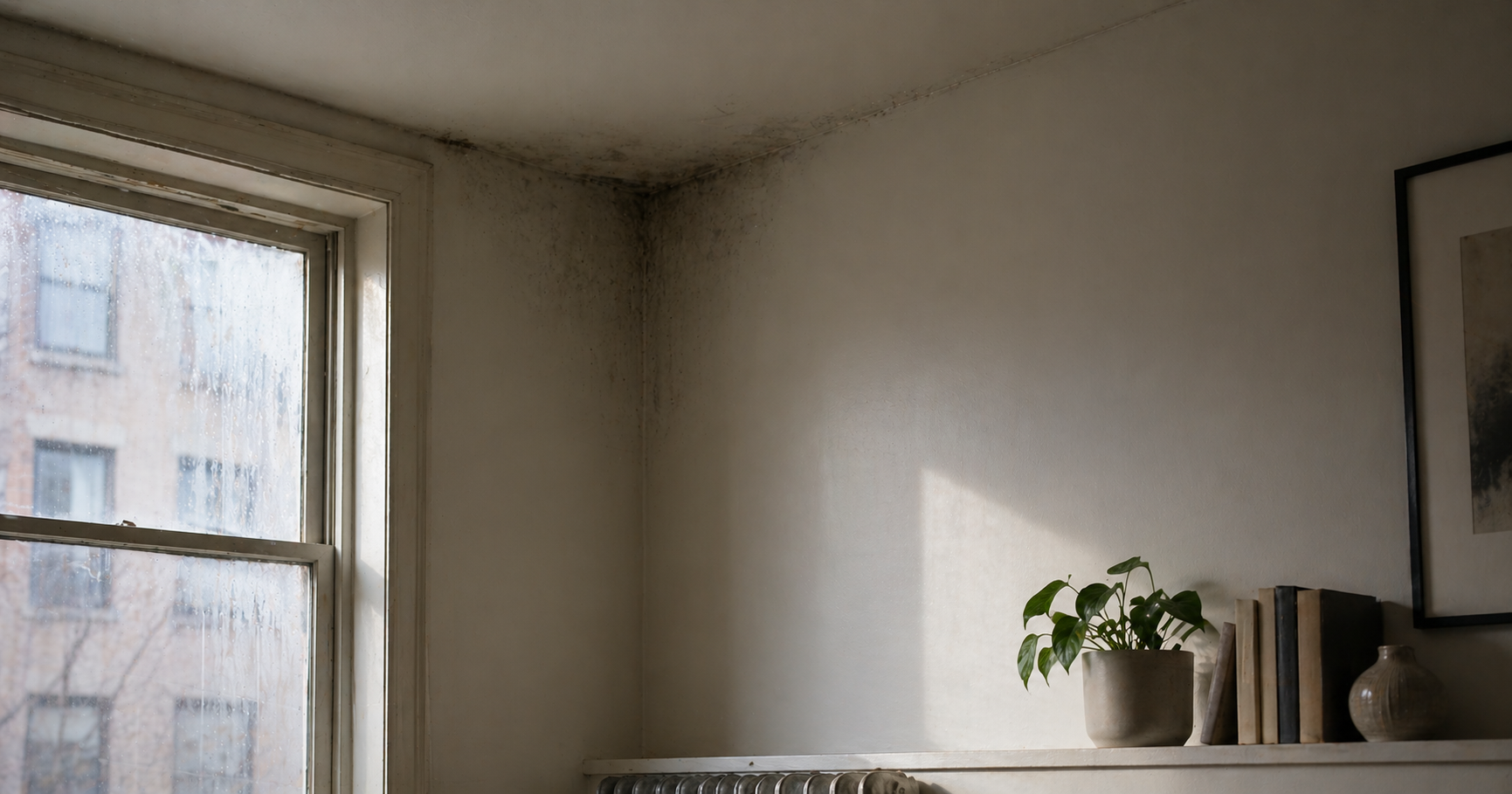
You've been noticing problems in your apartment for a while now. There's visible mold growing in patches on your bathroom ceiling and spreading along the corner where the wall meets the ceiling in your bedroom. The apartment has a persistent musty smell that never quite goes away no matter how much you clean or air out the space. You've tried wiping the mold down with bleach, but it keeps coming back within days or weeks. There's a leak somewhere—you can see water stains, and after it rains, you sometimes notice fresh dampness. You've mentioned it to the landlord, but they've either ignored it or just painted over the mold without addressing the underlying moisture problem.
You're concerned but unsure how serious this actually is. Is this just an inevitable part of living in an older building, something you have to tolerate, or has it crossed into territory where it's a genuine health hazard and legal violation? You have asthma, and you've noticed your symptoms seem worse at home—more wheezing, more coughing, more difficulty breathing—but they improve when you're at work or visiting friends. Your child has started complaining about stuffy nose and itchy eyes. The musty smell is constant now, and the mold seems to be spreading to new areas.
You think: "When does mold go from being gross and annoying to being a serious health problem? At what point does it become a legal issue my landlord has to fix? How much mold is too much? Does the fact that my asthma is worse at home mean the mold is dangerous? What are my rights, and what should I do about this?"
Here's the truth: In New York, mold stops being "just an unpleasant cosmetic issue" and becomes a serious health and legal problem when it's more than a small isolated spot, keeps recurring despite cleaning, is tied to moisture or leak problems the landlord won't fix, or when you or household members experience health symptoms that correlate with being in the moldy environment—particularly if anyone has asthma, allergies, or respiratory conditions. Under New York's warranty of habitability and specific mold-related laws like NYC's Local Law 55, landlords have legal obligations to prevent, remediate, and eliminate mold and its moisture sources, and failure to do so constitutes a habitability violation giving you legal rights to demand correction, pursue rent reductions, and in severe cases, potentially vacate.
Let me show you exactly when mold crosses from nuisance to health hazard, what health warning signs indicate mold is affecting you, when mold becomes a legal habitability violation under New York law, what specific legal protections exist including NYC's mold-specific regulations, and what concrete steps you should take to document the problem and force landlord action.
Before examining legal standards, understand when mold exposure creates genuine health risks that should prompt immediate concern and action.
Mold exposure affects health through multiple mechanisms, and understanding these helps recognize when your mold problem has become medically serious.
Mold releases spores and fragments into the air that, when inhaled, can trigger immune responses, allergic reactions, and respiratory irritation. Even non-toxic molds can cause health problems through allergic and irritant effects. While only certain molds produce mycotoxins (toxic substances), any mold growth in indoor environments can affect air quality and health.
Respiratory symptoms are the most common health effects of mold exposure. Mold can trigger or worsen asthma, causing increased frequency and severity of asthma attacks, wheezing, shortness of breath, chest tightness, and coughing. For people with allergies, mold acts as an allergen producing symptoms like stuffy or runny nose, sneezing, itchy or watery eyes, itchy throat or skin, and sinus congestion. Even people without pre-existing conditions can experience respiratory irritation from significant mold exposure.
Particularly vulnerable populations face heightened risks from mold. People with asthma or other respiratory conditions can experience serious exacerbations when exposed to moldy environments. Those with allergies to mold have more severe reactions. People with weakened immune systems (from HIV/AIDS, cancer treatment, transplant medications, or other immunocompromising conditions) are at risk for fungal infections from mold. Infants, young children, and elderly adults may be more susceptible to mold's health effects. Pregnant women should avoid significant mold exposure as a precaution.
The NYC Department of Health has issued clear guidance that mold exposure can trigger or worsen asthma and allergies, and that people with these conditions, weakened immune systems, or chronic lung disease are at higher risk of health effects from mold. This official recognition that mold creates real health risks—not just aesthetic concerns—underlies legal protections requiring mold remediation.
Certain patterns of symptoms strongly suggest that mold in your home is creating health effects, moving the situation from theoretical risk to actual harm.
The home-away symptom pattern is one of the most telling indicators. If you experience respiratory symptoms, headaches, fatigue, or other health complaints that worsen when you're at home, improve when you're away from the apartment (at work, visiting others, on vacation), and return when you come back home, this pattern strongly implicates environmental factors in your dwelling—and when visible mold and musty odors are present, mold is the likely culprit.
This pattern is significant because it establishes causation. Random illness or chronic conditions typically don't correlate so clearly with presence in a specific location. When symptoms track with being in the moldy environment and resolve with removal from it, the connection between mold exposure and health effects becomes clear.
Asthma exacerbations at home are particularly concerning. If you or household members have asthma and experience more frequent attacks, increased use of rescue inhalers, nighttime asthma symptoms, morning symptoms upon waking, or generally poorer asthma control when at home compared to when away, mold is likely triggering these exacerbations. Asthma triggered or worsened by environmental mold is a documented medical phenomenon and a serious health concern.
New or worsening allergy symptoms—developing allergic rhinitis (hay fever-like symptoms), experiencing increased sinus congestion, having persistent cough without other cold or flu symptoms, developing skin rashes or itching—when these appear after mold growth develops or intensify as mold spreads, the correlation suggests mold-induced allergic response.
Respiratory symptoms in multiple household members strengthen the case that environmental mold is causing health effects. If several people in the household—especially those without pre-existing respiratory conditions—develop respiratory complaints, allergic symptoms, or respiratory infections more frequently since mold appeared, the mold is creating an unhealthy indoor environment affecting everyone exposed.
Persistent musty odor itself is a warning sign. Musty, earthy, or moldy smells indicate active mold growth and airborne mold particles. When the smell is constant and pervasive throughout the dwelling or concentrated in certain rooms, it signals that mold contamination is significant enough to continuously affect air quality. The smell isn't just unpleasant—it indicates ongoing exposure to mold-contaminated air.
Certain health manifestations indicate mold exposure has become dangerous and requires immediate action.
Severe asthma attacks or markedly worsening asthma control in a moldy environment requires urgent response. If asthma symptoms are so severe they require emergency room visits, oral steroids, or significantly increased medication use, and the pattern correlates with being in the moldy dwelling, continuing to occupy the space poses serious health risks.
Respiratory infections occurring frequently—bronchitis, pneumonia, or sinus infections requiring antibiotics multiple times per year, especially if they develop or worsen at home—can indicate mold-compromised air quality contributing to infection susceptibility.
Symptoms in vulnerable populations like infants, young children, elderly adults, or immunocompromised individuals warrant particular concern. Even moderate symptoms in these high-risk groups should prompt immediate mold remediation efforts.
Visible widespread mold growth combined with any respiratory symptoms in household members creates an urgent situation. When mold covers large areas (multiple square feet), appears in multiple rooms, or has spread extensively, the level of contamination and spore release is high enough to create significant exposure risks.
Beyond health concerns, mold becomes a legal problem when it violates landlord obligations under housing law.
New York's warranty of habitability—the fundamental requirement that all residential rentals be fit for human habitation and free from conditions dangerous, hazardous, or detrimental to life, health, or safety—applies to mold problems.
Mold violates the warranty of habitability when it creates conditions that threaten health or make the dwelling unsuitable for safe, healthy occupancy. Given medical evidence that mold exposure can trigger asthma, cause allergic reactions, and create respiratory health risks, significant mold growth—particularly when persistent or extensive—constitutes a condition "detrimental to health" violating the warranty.
The landlord's obligation is to maintain the dwelling free from moisture conditions that promote mold growth and to remediate mold when it appears. This means fixing leaks, addressing condensation problems, repairing water damage, ensuring proper ventilation, and when mold develops despite preventive efforts, properly removing it and addressing its moisture source.
Mere cosmetic fixes don't satisfy the warranty. Landlords cannot simply paint over mold or superficially clean it without addressing the underlying moisture problem causing mold growth. When mold returns after such cosmetic treatments—as it inevitably does when moisture sources remain—the landlord's failure to properly remediate violates habitability obligations.
Courts have recognized mold-related habitability violations in cases where landlords fail to fix leaks causing mold, ignore tenant reports of mold, provide only superficial remediation, or allow mold to spread and persist. Rent reductions, repair orders, and damages have been awarded in mold-related habitability cases.
New York City has enacted specific legislation targeting mold as a recognized health hazard requiring landlord prevention and remediation.
Local Law 55, known as the "Mold Law" or "Asthma-Free Housing Act," took effect in 2018 and classifies indoor mold as an "indoor allergen hazard" that landlords of buildings with three or more dwelling units must address. The law recognizes mold as a trigger for asthma and allergies and imposes specific obligations on landlords to prevent and remediate mold.
Under Local Law 55, landlords must:
The law creates an enforceable standard beyond general habitability principles. Landlords cannot claim mold is merely cosmetic or tenant-responsibility—Local Law 55 explicitly requires landlord investigation, remediation, and correction of underlying causes.
HPD (Department of Housing Preservation and Development) enforces Local Law 55 through inspections, violations, and fines. When tenants report mold to HPD via 311, inspectors evaluate whether mold constitutes a violation under the law. Violations are classified by severity, with correction deadlines and escalating fines for non-compliance.
The significance of Local Law 55 is that it provides a specific legal framework beyond general habitability law, explicitly naming mold as a hazard landlords must address. This gives NYC tenants particularly strong legal grounds to demand mold remediation.
Understanding when mold crosses from "minor issue tenant can handle" to "landlord violation" helps assess your situation.
Small, isolated mold spots that result from temporary conditions (like condensation from showering) and can be cleaned with household cleaners without recurring might not constitute landlord violations if the underlying building conditions are sound. A small patch of mildew on shower tile grout that appears occasionally and cleans away with bathroom cleaner, for example, might be normal maintenance within tenant control.
Mold becomes a landlord violation when:
It's more than isolated small patches. When mold appears in multiple locations, covers areas larger than a few square feet, appears on walls or ceilings (not just surfaces like shower grout), or spreads over time despite cleaning attempts, it's beyond normal tenant maintenance and indicates building moisture problems requiring landlord remediation.
It recurs after cleaning. When you clean mold with bleach or other cleaners but it returns within days or weeks, this pattern proves the mold growth is driven by ongoing moisture problems you cannot control. Recurring mold demonstrates that the building has moisture or ventilation issues—leaks, condensation from poor ventilation, water intrusion, plumbing problems—that are landlord responsibilities to fix.
It's tied to building defects. When mold appears near leaks (roof leaks, plumbing leaks, window leaks), water damage (stained ceilings or walls, bubbling paint), or areas with poor ventilation that's building-related (bathrooms without working exhaust fans, units without adequate air circulation), the mold is caused by building conditions the landlord must address.
It's accompanied by persistent musty odor. Constant musty smell indicates active, ongoing mold growth—not just surface mold that can be wiped away but mold growing within building materials or throughout the environment. Persistent odor signals significant contamination requiring professional remediation.
The landlord has been notified and hasn't properly remediated. Once you report mold to the landlord, they have an obligation to investigate, determine the cause, fix moisture sources, and properly remove mold. If the landlord ignores your reports, provides only cosmetic fixes (painting over mold), or tells you to clean it yourself without addressing underlying causes, they're violating habitability obligations.
NYC regulations and guidelines establish specific thresholds that help determine when professional remediation is required.
The 10-square-foot threshold appears in NYC mold guidance. When mold contamination exceeds 10 square feet of surface area in a single contiguous area, and the building has 10 or more dwelling units (or contains certain commercial spaces), landlords must use licensed mold assessors to evaluate the problem and licensed mold remediators to perform cleanup. This threshold recognizes that mold exceeding this size represents significant contamination requiring professional expertise.
Even below this threshold, landlords must still investigate and remediate mold—the 10-square-foot rule just triggers mandatory use of licensed professionals. Smaller mold problems still violate habitability and Local Law 55 if they're building-related and landlord fails to address them.
HPD violation classifications for mold typically treat it as Class B (hazardous violation) or Class C (immediately hazardous violation) depending on severity, extent, and health risks. Class B violations must be corrected within 30 days, Class C within 24 hours. These classifications reflect official recognition that mold is a serious hazard, not a minor maintenance issue.
The presence of vulnerable populations can affect severity assessment. When children under 6, elderly adults, people with asthma or respiratory conditions, or immunocompromised individuals live in a dwelling with mold, the health risks are heightened and the urgency of remediation increases.
If you're experiencing significant mold problems, strategic documentation and action can force landlord remediation and protect your legal rights.
Evidence is critical for proving mold violations, supporting health claims, and pursuing legal remedies.
Photograph every mold patch and affected area:
Document mold's progression over time:
Keep a written log tracking:
Document health effects:
Identify moisture sources:
This comprehensive documentation proves mold exists, is extensive or recurring, is tied to building moisture problems, has persisted over time, and is causing health effects—establishing the foundation for habitability violation claims.
Formal written notice to the landlord is legally critical and creates records of landlord knowledge and failure to act.
Send written notice via email (with read receipt) or certified mail documenting:
"This letter provides formal notice of mold growth and moisture problems at [address, unit number]. Visible mold is present in [specific locations: bathroom ceiling, bedroom corner near window, etc.] and has been recurring since approximately [date]. A persistent musty odor pervades the apartment. I have observed [leaks, water damage, condensation, or other moisture sources] that appear to be causing the mold.
I previously reported this problem verbally on [dates], but the mold has not been properly remediated. [If applicable: The landlord painted over the mold without addressing the moisture source, and the mold has returned.]
Mold creates serious health hazards. [If applicable: I have asthma/my child has asthma, and symptoms worsen when we are home.] Under New York's warranty of habitability and NYC Local Law 55 [if in NYC], landlords must investigate and remediate mold and correct underlying moisture conditions.
I request that you:
Please respond within 7 days with a plan to address these violations. Failure to remediate will require me to pursue enforcement through HPD [if NYC] / local code enforcement and legal remedies."
This written notice:
Save copies of your notice and any landlord responses (or lack thereof).
Official inspections and violations create powerful leverage and legal documentation.
In New York City, call 311 to report mold and request HPD inspection. When calling:
HPD will schedule an inspection. The inspector will:
Official HPD violations:
Outside NYC, contact local agencies:
Request official inspections and ask that violation notices be issued. Official government documentation of mold violations strengthens your legal position substantially.
When landlords fail to remediate mold despite notice and violations, legal action becomes necessary.
Consult with tenant attorneys or legal services:
Legal options include:
HP (Housing Part) proceedings in NYC allow you to bring the landlord to court to compel mold remediation. Courts can:
Rent reduction (abatement) claims based on mold violations can reduce rent to reflect the dwelling's diminished value during the violation period. Severe mold problems can support substantial rent reductions.
Constructive eviction in extreme cases—when mold is so severe and pervasive it makes the dwelling effectively uninhabitable—can allow you to break your lease and vacate without penalty, potentially recovering moving costs and damages.
Damages claims for health effects, property damage (mold can destroy belongings), or other harm caused by landlord's failure to remediate mold.
Withholding rent is risky without legal guidance but in some circumstances can be appropriate when deposited into escrow accounts pending mold remediation. Never unilaterally withhold rent without attorney advice.
The Attorney General's tenant resources and legal aid guides emphasize that official violation notices and inspection records are key evidence for legal proceedings. Document everything, get official inspections, then pursue legal remedies with professional help.
When mold is causing serious health effects, protecting health may require actions beyond legal proceedings.
Consult healthcare providers about mold exposure. If doctors document that mold is causing or exacerbating health conditions, this medical evidence:
If health effects are severe and landlord isn't acting promptly:
Use HEPA air purifiers as a temporary measure (doesn't solve the problem but can reduce airborne mold spore exposure while fighting for remediation).
Remove mold-contaminated belongings that can't be cleaned (porous materials like fabric, stuffed items, papers that have mold growth) to reduce mold sources and exposure.
Avoid DIY mold removal for extensive mold (beyond small surface spots) because disturbing mold can release massive spore quantities creating worse exposure. Professional remediation with containment and proper equipment is necessary for significant mold.
Mold crosses from nuisance to serious health issue when it's extensive, recurring, creating persistent musty odors, and when you or household members experience health symptoms that correlate with being in the moldy environment—especially if anyone has asthma, allergies, or respiratory conditions.
Mold becomes a legal violation when it's more than isolated small spots, keeps returning after cleaning, is tied to landlord-controlled moisture or leak problems, covers significant area, or persists after you've notified the landlord.
NYC Local Law 55 specifically requires landlords to investigate, remediate mold, and fix underlying moisture causes—painting over mold doesn't satisfy these obligations.
Document everything: photograph all mold with scale and dates, photograph water damage and leaks, keep logs of odor and health symptoms, track mold recurrence and spread.
Report in writing to landlord demanding: leak/moisture repair and proper mold remediation, not just cosmetic fixes.
Call 311 (NYC) or local health/code enforcement for official inspections and violations. Government violation notices are powerful evidence.
Get legal help to pursue: HPD proceedings, rent reductions, court-ordered repairs, damages for health effects.
Your health matters. Mold isn't "just gross"—it's a real health hazard and legal violation. Assert your rights to healthy, mold-free housing.