You're living in fear in your own home because of violence or threats from someone else in your building—maybe a roommate you didn't choose who's become increasingly threatening and aggressive, or a neighbor who's made explicit threats against you, attempted to break into your apartment, damaged your property, or even physically assaulted you. You've reported the situation to your landlord multiple times, describing the threats, the violence, the fear you're experiencing, but your landlord either dismisses your concerns, tells you it's "not their problem" because it's a dispute between tenants, or promises to do something but never follows through. Meanwhile, you're terrified to come home, you're not sleeping, and you're constantly looking over your shoulder wondering when the next violent incident will occur.
You're at the point where you feel you have no choice but to move out immediately to protect yourself, but you're still months away from your lease end date and you're worried about the legal and financial consequences of breaking your lease. You think: "Can I legally break my lease because another tenant is violent and my landlord won't do anything about it? Is my landlord responsible for protecting me from other tenants, or is that just a police matter? Does a dangerous roommate or neighbor count as an 'unsafe living condition' like mold or no heat, or is that completely different? If I move out to escape violence, will my landlord sue me for breaking the lease and win because tenant-on-tenant violence isn't technically a housing code violation? What rights do I have when the danger in my home comes from another resident rather than from building defects?"
Here's the truth: Yes, if a roommate, neighbor, or other tenant is violent, making credible threats, or creating genuinely dangerous conditions, and your landlord knows about the situation and fails to take reasonable protective action, this can be treated as an unsafe living condition that breaches your right to safe, habitable housing—potentially justifying breaking your lease under constructive eviction doctrine, supporting rent reduction claims, or creating landlord liability for negligence. Landlords have a legal duty to keep their properties reasonably safe, and this duty extends beyond fixing physical defects to protecting tenants from foreseeable violence and crime, including violence from other tenants when the landlord has notice of the danger. When threats or violence from other residents become so serious that a reasonable person cannot safely remain in their home, and the landlord fails to take reasonable protective steps despite clear notice, the dwelling becomes effectively uninhabitable through landlord's failure to provide basic safety.
Let me show you exactly what legal duty landlords have to protect tenants from violence by other residents, when threatening or violent behavior crosses the line from "difficult neighbor" to "unsafe living conditions," what reasonable protective steps landlords must take when notified of tenant-on-tenant violence, what evidence you need to document to prove the danger and landlord's failure to act, and what legal options you have including breaking your lease, seeking rent reduction, or pursuing landlord liability claims.
Understanding the legal framework establishing landlord obligations to maintain safe housing including protection from violence helps explain why tenant-on-tenant violence isn't just "not the landlord's problem."
Landlords' obligations to tenants extend beyond maintaining physical building conditions to ensuring the property is reasonably safe from foreseeable harm, including criminal activity and violence.
The warranty of habitability requiring landlords provide housing that's safe, sanitary, and fit for human habitation isn't limited to physical defects like broken heating systems or structural damage. Safety is a core component of habitability, and housing isn't habitable if tenants face serious, foreseeable safety threats that landlord could reasonably prevent or mitigate.
Premises liability law imposes duties on property owners to maintain reasonably safe conditions and protect lawful visitors and residents from foreseeable harm. This includes taking reasonable security measures to protect against foreseeable criminal activity on the property. When landlords know or should know that dangerous conditions exist—including dangerous tenants—they have duties to take reasonable protective action.
The foreseeability principle is critical. Landlords aren't strictly liable for all crime or violence on their property—they can't prevent every possible incident. But when violence or threats become foreseeable because of known patterns, prior incidents, or specific warnings from tenants, landlords' duty to take reasonable protective measures is triggered.
Courts and legal authorities recognize that landlords can be liable for failing to protect tenants from foreseeable violence even when the perpetrators are other tenants rather than outside intruders. The source of the danger doesn't eliminate the landlord's duty to maintain safe housing.
Landlord duties to protect tenants specifically apply to threats and violence from other residents in the building, not just from outside strangers or intruders.
The duty applies when:
Prior incidents create foreseeability. If a tenant has a history of threatening or violent behavior that landlord knows about—previous complaints from other tenants, past police calls, documented threats or assaults—the landlord can foresee that future violence is likely and has heightened duty to protect other residents.
Complaints from targeted tenants create notice. When you report to your landlord that another tenant is threatening you, stalking you, damaging your property, or has assaulted you, you're providing direct notice making future harm to you foreseeable. The landlord can no longer claim ignorance of the danger.
The landlord's control over tenancy gives them unique power and responsibility. Unlike random criminals over whom landlord has no control, the landlord has contractual relationship with the dangerous tenant through their lease. The landlord can enforce lease terms prohibiting threats and violence, can pursue eviction for lease violations, and can refuse to renew leases of dangerous tenants. This control creates corresponding responsibility to exercise it to protect other tenants.
Courts have recognized landlord liability for failing to protect tenants from violence by other tenants in various contexts.
Negligence claims have succeeded when landlords ignored repeated complaints about dangerous tenants, failed to take reasonable protective action, and tenants were subsequently harmed. Courts have found that once landlords have notice of dangerous tenant behavior, their failure to take reasonable steps to protect other tenants can constitute negligence if harm results.
Constructive eviction claims have been recognized when tenant-on-tenant violence or threats made housing uninhabitable. When conditions become so dangerous due to other tenants' behavior and landlord's inaction that reasonable person cannot safely remain, courts have found constructive eviction justifying lease termination.
Habitability breach claims have included safety failures. While most habitability cases involve physical conditions, courts and legal authorities recognize that housing isn't habitable if serious, foreseeable violence threatens residents and landlord fails to address it.
Tenant rights materials and legal guides specifically discuss landlord liability when landlords ignore repeated complaints about threats or violence from other tenants. The principle is established in tenant protection law that landlords can't wash their hands of tenant safety when the danger comes from residents rather than building defects.
Not every difficult or unpleasant interaction with roommates or neighbors rises to the level of making housing legally unsafe or uninhabitable. Understanding the threshold helps assess when you have legal grounds to act.
Minor interpersonal conflicts, personality clashes, and general unpleasantness typically don't constitute unsafe conditions justifying legal action against landlords.
Rude or annoying behavior—neighbors who are unfriendly, play music too loud, have different lifestyles, or are generally unpleasant to interact with—isn't a safety issue or habitability violation. These are common realities of shared housing that don't give rise to landlord liability or justify breaking leases.
Verbal arguments or disagreements that don't rise to threats of violence are interpersonal conflicts, not safety emergencies. People can argue, disagree strongly, or even yell without creating unsafe conditions.
Minor disputes over shared spaces or resources in shared housing situations might be frustrating but don't constitute dangers justifying legal intervention.
Personality conflicts making living together uncomfortable but not dangerous are part of shared living risks tenants assume.
The line between annoying and dangerous is whether there's genuine threat to physical safety and wellbeing, not just comfort or convenience.
Certain behaviors clearly cross from unpleasant into genuinely dangerous, creating unsafe living conditions.
Explicit threats of violence against you or household members constitute serious safety concerns. Statements like "I'm going to hurt you," "You better watch your back," "I know where you sleep," or other direct threats of physical harm create reasonable fear and are not acceptable tenant behavior.
Stalking or harassment including following you, watching your apartment, repeated unwanted contact despite requests to stop, or other behavior creating persistent fear for safety constitutes dangerous harassment.
Attempts to break into your apartment or forcibly enter your space demonstrate willingness to violate your physical safety and security, creating immediate danger.
Property damage targeting your belongings, vehicle, or apartment door/windows—slashed tires, broken windows, vandalized door, damaged possessions—shows escalating aggression and suggests potential for violence against persons.
Brandishing or threatening with weapons—displaying knives, guns, or other weapons in threatening manner, making references to weapons during threats, or any weapon-involved intimidation—dramatically escalates danger.
Physical assaults or violence including pushing, hitting, grabbing, or any unwanted physical contact clearly constitutes unsafe conditions and potential criminal conduct.
Intimidation and menacing behavior designed to create fear—blocking your path, standing outside your door for extended periods, pounding on walls or doors, aggressive posturing—creates hostile environment incompatible with safe housing.
Credible threats based on protected characteristics—threats specifically targeting you because of race, religion, national origin, gender, sexual orientation, disability, or other protected class add civil rights violations to safety concerns.
Legal determination of whether conditions are genuinely unsafe involves objective assessment of whether reasonable person would fear for safety.
Would a reasonable person in your situation, knowing what you know about this person's behavior and history, feel genuinely unsafe continuing to live there? Not just annoyed or uncomfortable, but actually fearful that violence could occur?
Is future harm foreseeable based on the pattern and severity of behavior? Single argument probably doesn't make future violence foreseeable. But pattern of escalating threats, multiple incidents, explicit violent statements, or actual prior violence makes future harm reasonably foreseeable.
Courts apply objective standards, not purely subjective fear. Your genuine fear matters, but must be reasonable fear that others in your position would share, not idiosyncratic or exaggerated fear without objective basis.
Evidence supporting reasonableness includes: multiple incidents over time showing pattern, escalation in severity or frequency, explicit nature of threats, involvement of weapons, any actual violence that's occurred, police reports or protective orders confirming authorities take threats seriously, and witness corroboration from others who've observed the behavior.
For conditions to justify legal action like breaking lease, the danger must be ongoing and serious, not isolated or resolved.
Ongoing danger means the threats or violence continue or reasonably appear likely to recur. Single past incident that's been resolved, perpetrator moved out, or circumstances changed eliminating the danger doesn't create ongoing unsafe conditions.
But patterns of behavior even without constant daily incidents can create ongoing danger. If person has made threats on multiple occasions, engaged in harassment campaign, or demonstrated violent tendencies, the danger is ongoing even if not manifesting every single day.
Seriousness relates to potential severity of harm. Genuine risk of physical violence, assault, or serious injury creates serious unsafe conditions. Lesser concerns like verbal unpleasantness without threat of violence might not meet the threshold.
The combination of ongoing nature and serious potential harm is what makes conditions rise to level justifying constructive eviction or other legal remedies.
When landlords receive notice of dangerous tenant behavior, their legal obligations include taking reasonable protective action appropriate to the severity of the threat.
The most basic landlord obligation when receiving reports of tenant-on-tenant violence or threats is treating complaints seriously rather than dismissing them.
Landlords must:
What landlords cannot do:
Even if landlord concludes after investigation that threats aren't credible or danger isn't as severe as reported, they must conduct some investigation and respond to complaints, not simply ignore them.
Most leases contain provisions prohibiting threatening behavior, violence, illegal activity, and conduct disturbing other tenants' peaceful enjoyment.
Lease enforcement is primary tool landlords have for addressing dangerous tenant behavior. Landlords can and should issue warnings to tenants violating lease terms through threats or violence, serve notices of lease violations requiring cessation of threatening behavior, impose penalties or conditions available under lease terms, and make clear that continued violations will result in eviction.
This enforcement demonstrates landlord is taking protective action, creates documentation if eviction becomes necessary, and puts dangerous tenant on notice that their behavior must stop.
Failure to enforce lease terms against dangerous tenants when landlord enforces same terms against others (selective non-enforcement) can support claims landlord is breaching duties to maintain safe housing.
When tenant behavior is seriously dangerous and hasn't stopped after warnings, eviction may be the reasonable protective step required.
Landlords can pursue eviction for lease violations including threatening behavior, violence, illegal activity, and disturbing other tenants. These are grounds for termination of tenancy and eviction in most leases and under law.
Eviction process involves serving proper termination notice citing lease violations, filing eviction case if tenant doesn't vacate, obtaining court judgment for possession, and having marshal remove tenant.
This process takes time—weeks or months—but initiating it demonstrates landlord is taking serious action to protect other tenants. Starting eviction proceedings after receiving credible complaints of violence is often the "reasonable step" courts expect.
Failure to pursue eviction of tenant with known violent history who continues threatening or harming others can support landlord liability claims, particularly if violence escalates and someone is injured while landlord took no eviction action.
Physical security improvements can be reasonable protective measures in some situations.
Appropriate security enhancements might include improving locks on victim's apartment door, adding or repairing locks on building entrance, improving lighting in common areas (dark hallways create danger), installing or repairing security cameras in common areas, or providing key fobs or access control limiting who can enter building.
These measures don't address the dangerous tenant directly but can reduce their ability to threaten or harm the victim tenant.
Landlord obligation to improve security depends on circumstances. If security deficiencies facilitate the danger (broken building door lets aggressor enter victim's floor, lack of locks on individual apartment), improving security is reasonable step. But security improvements alone don't satisfy landlord's duty if dangerous tenant remains unaddressed.
Landlords should support and cooperate with law enforcement and legal proceedings addressing tenant violence.
Landlords can and should:
In serious situations, landlord calling police or supporting criminal prosecution demonstrates they're taking violence seriously and using all available tools to protect tenants.
Conversely, certain landlord responses are clearly inadequate and support claims of breach of duty.
Inadequate responses include doing absolutely nothing after receiving complaints about violence, telling victim to work it out themselves, blaming the victim for the conflict, dismissing threats as not serious without investigation, promising action but never following through, continuing to rent to known violent tenant without warnings or consequences, or retaliating against the victim for complaining (raising their rent, threatening their eviction, creating hostile environment).
These failures to take reasonable protective action breach landlord's duty to provide safe housing and can support various legal claims by victim tenant.
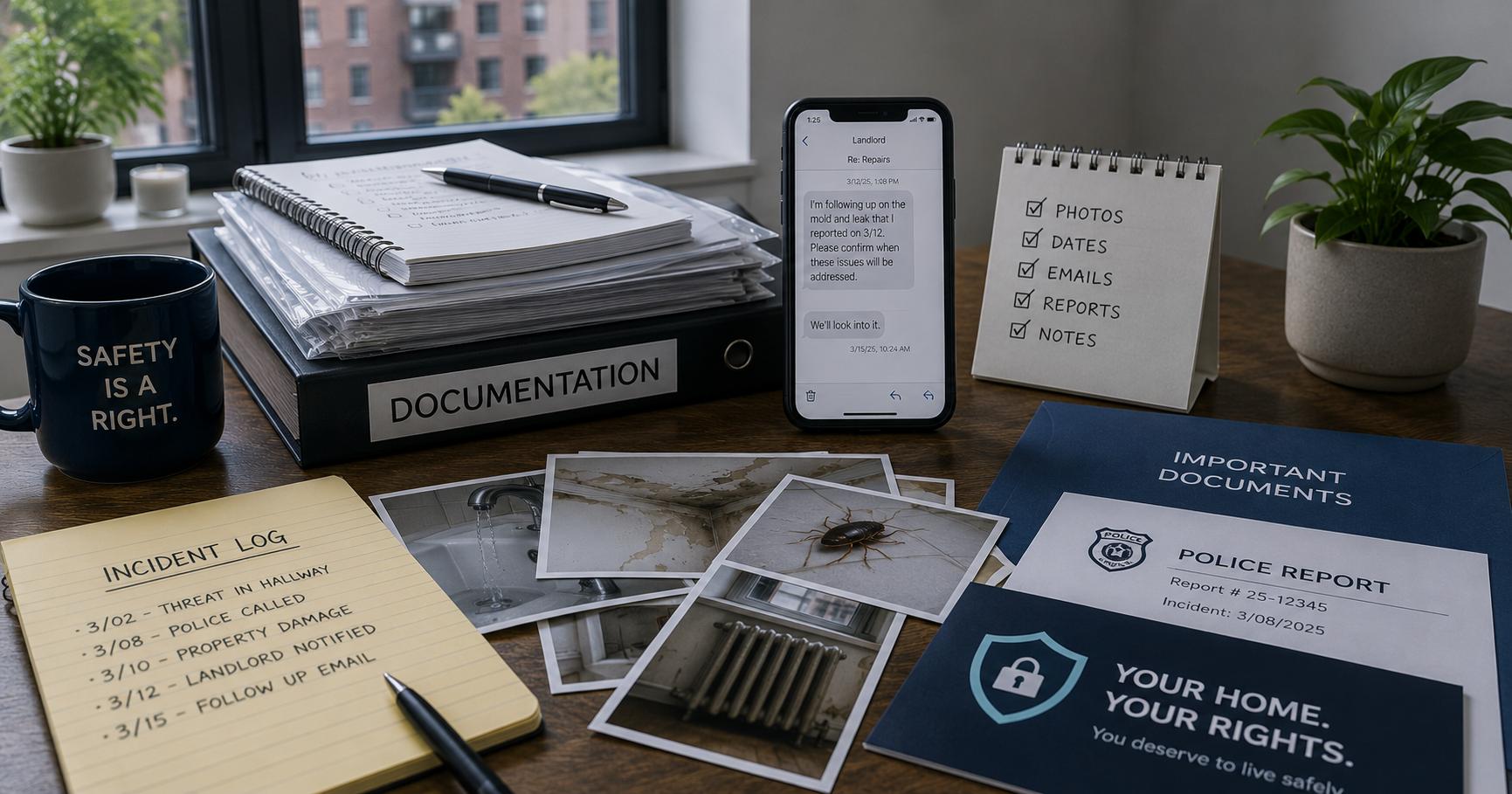
If you're experiencing violence or threats from roommate or neighbor and landlord isn't protecting you, strategic documentation and action protects you legally and physically.
Create detailed records of every threatening or violent incident.
For each incident, document:
Call police and file reports for serious incidents. Police reports create official third-party documentation that incident occurred and was serious enough for police involvement. Even if police don't arrest or charge the aggressor, the report documents the incident.
Get report numbers and copies of police reports for your records.
Photograph injuries if you're physically harmed—document bruises, cuts, or other injuries with dated photos.
Save threatening messages—screenshot texts, save voicemails, preserve emails or social media messages containing threats.
Keep incident log compiling all incidents chronologically creating pattern evidence.
Provide landlord clear written notice of the dangerous situation and your expectation that they take protective action.
Write email or letter to landlord describing:
Example language: "This letter provides formal notice of ongoing threats and violence from [name/apartment number]. On [dates], this tenant [describe specific incidents: made explicit threats stating 'I'm going to hurt you,' attempted to force entry to my apartment, damaged my property, etc.]. I have called police regarding these incidents [report numbers]. I feel genuinely unsafe in my home due to this tenant's behavior.
As my landlord, you have a legal duty to provide safe, habitable housing and protect tenants from foreseeable violence. This tenant's behavior makes my apartment unsafe and uninhabitable.
I request that you take immediate protective action including [specific requests: enforce lease provisions against threatening behavior, pursue eviction of this dangerous tenant, improve security of my apartment, etc.]. Please respond in writing within [reasonable timeframe] detailing what concrete steps you will take to ensure my safety.
Your failure to take reasonable protective action after this notice will constitute breach of your obligations to provide safe housing."
Send via email (with read receipt) and certified mail for documentation.
This notice establishes landlord knowledge, triggers their duty to act, creates documentary evidence if you later need to break lease or sue, and demonstrates you attempted to resolve through landlord before taking other action.
Independent of landlord action, pursue legal protection directly through courts.
Restraining orders or orders of protection are court orders prohibiting the dangerous person from contacting you, coming near you, or threatening you. Violations are criminal contempt.
Apply through family court (if domestic relationship), criminal court (if criminal charges pending), or civil court depending on circumstances and jurisdiction.
Protective orders:
Having protective order strengthens your case with landlord and in any later legal proceedings—it's official court recognition that danger is real and serious.
If landlord continues failing to act, involve housing code enforcement.
Report to 311 (NYC) or local code enforcement that your building is unsafe not only due to physical defects but because landlord is permitting dangerous tenant to threaten and harm other residents and failing to take protective action.
Explain that you've reported violence/threats to landlord repeatedly, landlord has done nothing, and you believe this violates requirements to maintain safe housing.
Housing agencies may have limited direct authority over tenant-on-tenant violence but can document your complaints, potentially pressure landlord, and create official records supporting your claims.
Given the seriousness and complexity of violence situations, legal consultation is important.
Tenant attorneys can advise on:
Personal injury attorneys can evaluate:
Legal Aid, Legal Services, tenant law organizations, and private attorneys can help navigate options.
Don't stay in dangerous situation out of fear of lease liability. Attorneys can help you understand your rights and options for safely leaving.
If situation is genuinely dangerous and landlord won't act, your physical safety takes priority over lease obligations.
Constructive eviction theory can justify breaking lease when:
Document thoroughly before leaving:
Consult attorney before breaking lease to assess strength of constructive eviction claim and risks.
If you must leave immediately for safety, do so—your life is more important than lease liability. But recognize you may need to defend breaking lease in court with evidence landlord's failure to protect you justified departure.
Yes, violent or threatening roommate or neighbor combined with landlord's failure to take protective action after notice can constitute unsafe living conditions justifying breaking your lease, seeking rent reduction, or pursuing landlord liability.
Landlords have legal duty to maintain reasonably safe housing including protecting tenants from foreseeable violence, even when danger comes from other tenants. Once landlord has notice of threats or violence, their duty to take reasonable protective action is triggered.
Unsafe conditions threshold: Explicit threats, stalking, break-in attempts, property damage, weapons, or actual violence—not just personality conflicts or rudeness. Must be ongoing and serious enough that reasonable person would feel unsafe.
Reasonable landlord action: Taking complaints seriously, investigating, enforcing lease terms against dangerous tenant, pursuing eviction if behavior continues, improving security, involving authorities. Doing nothing or dismissing complaints is inadequate and supports liability.
Document everything: Detailed log of every incident with dates/times/specifics, police reports, photos of damage or injuries, witnesses, threatening messages saved. Written notice to landlord describing danger and requesting protection. Protective orders from court.
Legal options: Report to housing agencies that landlord failing to maintain safe building. Consult tenant attorneys about constructive eviction if you need to break lease. Consult personal injury attorneys about negligence claims if you've been harmed. Seek restraining orders for immediate protection.
Your safety comes first. If situation is genuinely dangerous and landlord won't protect you, leaving may be necessary even with lease liability risks. Document thoroughly and get legal advice but prioritize your physical safety.
Landlords can't ignore violence between tenants and claim "not my problem." Their duty to provide safe housing includes protection from foreseeable tenant-on-tenant violence.