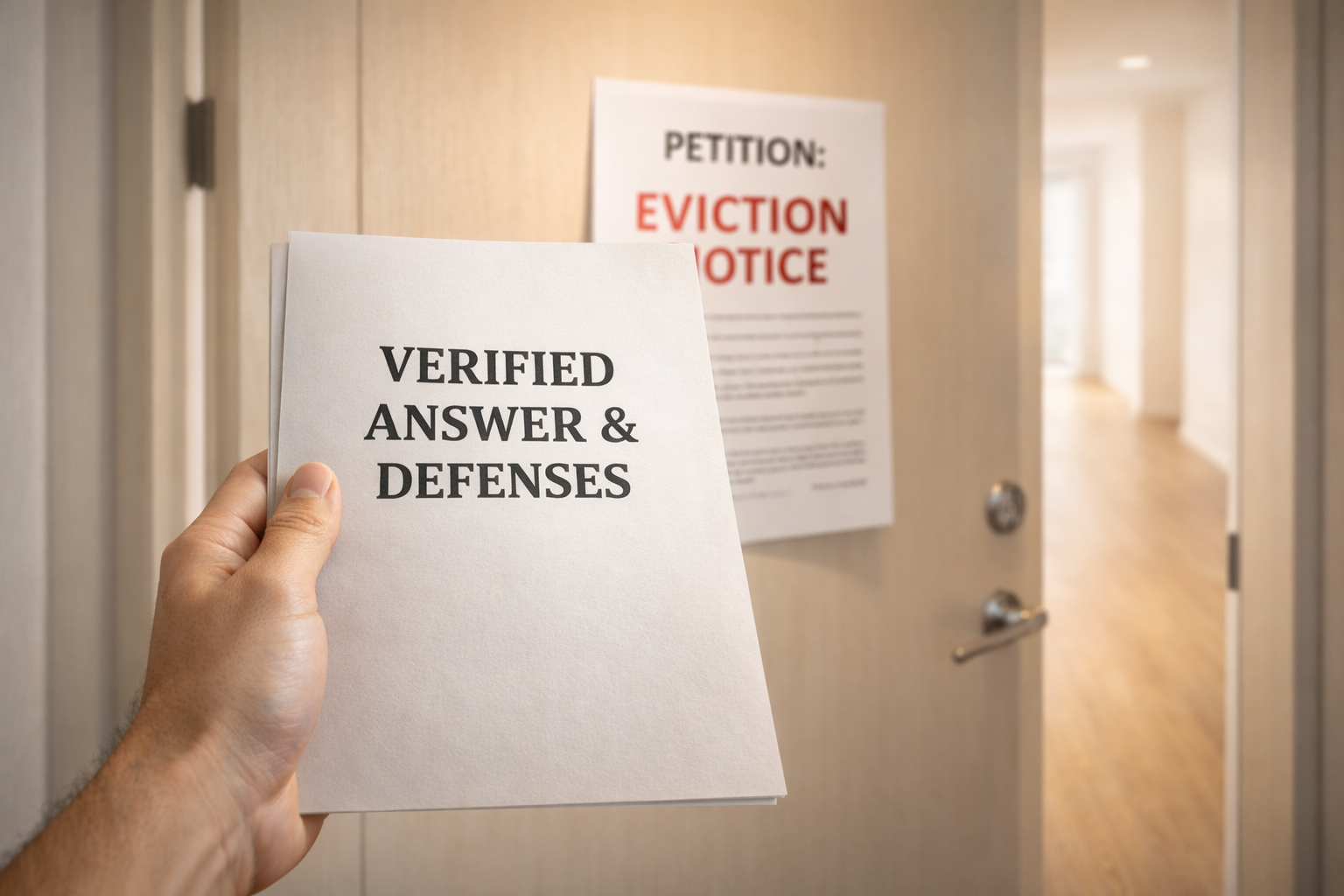
You're holding eviction papers, and somewhere deep in your gut you know this isn't right. Your landlord's claims don't match reality. You have defenses. You could fight this. But every time you consider taking action, another voice stops you cold: "What if fighting back makes everything worse? What if I lose anyway and now I'm marked as a difficult tenant? What if they come after me harder? What if pushing back means I can never rent anywhere again?"
This limiting belief—that resistance escalates harm while compliance offers safety—keeps thousands of New York tenants from defending against wrongful evictions. The fear translates to: silence equals self-preservation, and speaking up equals destruction.
You imagine two paths: Path A (comply quietly, accept the eviction, hope to move on) feels safer than Path B (fight back, risk angering your landlord, face unknown consequences). Staying silent feels like damage control. Fighting back feels like volunteering for punishment.
This belief is catastrophically backwards. In reality, staying silent when you have defenses doesn't make things better—it guarantees the worst possible outcome (losing your home). Fighting back doesn't escalate the harm—it gives you the only chance of avoiding it. And the consequences you fear from pushing back (being blacklisted, being targeted for retaliation, making everything worse) are either illegal, less likely than you think, or already happening whether you fight or not.
Silence doesn't protect you. It just makes it easier for your landlord to take your home. Let me show you why fighting back is actually the safer choice.
This belief isn't irrational paranoia. It's built on legitimate fears that feel very real:
What you imagine: Right now, your landlord is evicting you for one stated reason (didn't pay rent, violated lease, whatever they claim). If you fight back, they'll get angry and vindictive. They'll add more claims. They'll dig for every possible violation. They'll make the eviction worse—claiming more money, seeking more penalties, being more aggressive.
Why it feels true: You've seen people face retaliation when they stood up to authority. You know your landlord has more resources than you. Poking the bear seems like it could make the bear more dangerous.
Why it's wrong: Your landlord has already filed eviction papers. They've already done the worst thing they can legally do to you as a tenant—they're trying to take your home. What exactly gets "worse" than that?
They can't evict you "more." There's no super-eviction that's worse than regular eviction. The case they filed is the case you're defending. Fighting back doesn't create a new, worse case—it forces them to prove the case they already filed. And most landlords who file evictions can't prove them when tenants actually defend, which is why they prefer tenants who don't fight back.
What you imagine: If you stay quiet and move out, maybe you avoid having a formal eviction judgment. But if you fight and lose, you'll have an official eviction on your record PLUS you'll be marked as someone who fought their landlord. Future landlords will see you as litigious and difficult. You'll be unhireable as a tenant.
Why it feels true: Eviction records do follow you. Fighting feels like it creates more official documentation of conflict. Seems better to keep it quiet.
Why it's wrong: If your landlord filed an eviction petition, there's already a court case with your name on it. That case is already public record. Tenant screening companies already have access to it whether you fight or not. Staying silent doesn't make the case disappear—it just determines whether the case ends with "tenant didn't defend, eviction granted" or "tenant defended with merit, case dismissed."
Fighting and winning results in NO eviction judgment, which is the best possible outcome for your record. Fighting and losing results in the same eviction judgment you'd get from not fighting, except you tried everything possible to avoid it. Staying silent guarantees the eviction judgment you're trying to avoid.
What you imagine: If you fight the eviction, your landlord will retaliate in ways that make your current living situation unbearable: refusing to do repairs, harassing you, making false complaints to authorities, creating hostile living conditions, making you wish you'd just left quietly.
Why it feels true: Landlords do retaliate sometimes. You've heard stories. If your landlord is already willing to wrongfully evict you, they might be willing to do other hostile things.
Why it's wrong in this context: Your landlord is literally evicting you. They're not going to do repairs for a tenant they're actively evicting. The relationship is already over. They're trying to remove you from the property.
The "making your life hell" retaliation you fear is moot when they're already attempting to end your tenancy entirely. They can't threaten to make your life difficult as a tenant when they're simultaneously arguing you shouldn't be their tenant anymore.
And legally: if your landlord does engage in retaliatory harassment during an eviction proceeding, that retaliation becomes evidence supporting your eviction defenses (particularly retaliation defenses) and can result in additional damages against them.
What you imagine: There's some industry database where landlords share information about "problem tenants." If you fight an eviction, your name gets entered into this blacklist. Future landlords check it and refuse to rent to you. Fighting this one eviction costs you all future housing opportunities.
Why it feels true: Tenant screening companies exist. Landlords do check references. It feels like there could be informal networks where landlords warn each other about tenants who fight back.
Why it's wrong: Tenant screening reports are regulated by the Fair Credit Reporting Act. They can only include verifiable information like court records, credit reports, and factual payment history. They can't include subjective "this tenant fought back" editorials.
If you fight and win your eviction case, there's no eviction judgment to report. Screening reports show eviction judgments, not eviction petitions that were dismissed. Fighting successfully keeps you OFF blacklists, not on them.
If landlords call your previous landlord for references, anti-retaliation laws (RPL § 223-b) prohibit retaliatory bad references for exercising legal rights. If your former landlord tells future landlords "don't rent to them, they fought their eviction," that's illegal retaliation and defamation if the statements are false.
What you imagine: Once you engage with the legal system by fighting back, you're stuck in a grinding process that consumes time, money, and energy. Court dates. Paperwork. Stress. Legal fees. Even if you eventually win, the process itself damages you more than just moving out would have.
Why it feels true: Legal proceedings are stressful. You don't want to spend months dealing with courts and lawyers.
Why it's wrong: Not fighting doesn't avoid the legal process—the eviction case exists whether you participate or not. Your landlord already dragged you into court by filing the petition. The question isn't "legal process or no legal process?" The question is "participate in the legal process that's already happening, or let it happen to you without defending yourself?"
And the timeline: most eviction defenses resolve quickly. Cases with strong procedural defenses (landlord missed deadlines, didn't serve proper notices) often get dismissed at early stages—weeks, not months. Cases that settle because landlord realizes tenant has strong defenses settle quickly too.
Not fighting often creates longer-term harm (eviction on your record affecting housing for years) than fighting does (a few weeks or months of court proceedings that end with you keeping your home or at least avoiding a judgment).
Let's look at what actually occurs when tenants push back on evictions, versus what you're imagining:
What you fear will happen: Landlord gets angry, escalates conflict, makes everything worse.
What actually happens:
Week 1: Tenant receives eviction petition claiming lease violation. Tenant contacts legal services, gets lawyer assigned. Lawyer reviews case, discovers landlord never sent required 10-day cure notice before filing (required under Good Cause Eviction Law).
Week 2: Lawyer files Answer raising defense: no cure notice provided, petition must be dismissed for failure to comply with statutory requirements.
Week 3: Landlord's lawyer reviews the Answer, checks their file, realizes they did not send cure notice. Landlord's lawyer contacts tenant's lawyer: "We're going to withdraw the petition and re-notice properly."
Week 4: Landlord files motion to withdraw petition. Case dismissed. Tenant stays in apartment.
Outcome: Tenant fought back. Nothing got worse. Case ended quickly because tenant forced landlord to follow proper procedures.
Did landlord "come after tenant harder"? No. They withdrew their defective case.
Did fighting make things worse? No. It made things better—tenant kept their home.
What you fear will happen: Landlord escalates, adds more claims, makes trial brutal.
What actually happens:
Month 1: Tenant receives nonpayment petition claiming $6,000 in unpaid rent. Tenant knows they paid most of it and has receipts. Files Answer denying amounts owed and claiming apartment has significant habitability violations (no heat all winter) that reduce rent owed.
Month 2: Discovery. Tenant's lawyer requests rent ledger and repair records. Landlord's ledger shows disputed charges. Tenant produces rent receipts showing they paid $4,000 of claimed $6,000. Tenant also produces HPD violations showing no heat violations that warrant 50% rent abatement for three months.
Month 3: Trial. Tenant presents receipts proving payment, HPD violation notices proving habitability issues. Landlord tries to argue tenant still owes money despite receipts and violations. Judge reviews evidence:
Judge asks if tenant can pay $1,000. Tenant pays in court. Case dismissed.
Did landlord add more claims or escalate? No. They presented the same case they filed. Tenant's evidence proved it was largely unfounded.
Did fighting make things worse? No. Tenant paid $1,000 actually owed instead of $6,000 falsely claimed, and kept their home.
What you fear will happen: Settlement will be worse than if tenant had just cooperated initially.
What actually happens:
Week 1: Landlord files eviction for alleged lease violation (unauthorized occupant). Tenant knows the "occupant" was a family member visiting for two weeks, not a permanent resident. Tenant gets lawyer.
Week 2: Lawyer files Answer denying violation and raising retaliation defense (tenant filed HPD complaint about mold three months before eviction, creating presumption of retaliation).
Week 4: Settlement conference. Landlord's lawyer realizes retaliation defense is strong (timing is bad for landlord), and "unauthorized occupant" claim is weak (just a visitor, no evidence of permanent occupancy). Makes offer: "Tenant can stay. No lease violation. Landlord will address mold issues. Case dismissed."
Tenant accepts settlement. Stays in apartment. Mold gets fixed.
Did fighting escalate to worse outcome? No. Fighting resulted in keeping apartment AND getting repairs done.
Was settlement worse than initial cooperation? Initial "cooperation" would have been moving out. Settlement is staying. Fighting created better outcome.
What you fear will happen: Losing after fighting creates worse outcome than just accepting eviction initially.
What actually happens:
Month 1: Landlord files eviction for non-renewal in rent-stabilized building claiming owner occupancy. Tenant fights, argues owner occupancy is pretext.
Month 2: Discovery shows landlord actually has family member who needs the apartment, proper notices were given, procedures were followed.
Month 3: Trial. Evidence supports landlord's claim. Judge grants eviction but gives tenant six months to relocate (standard for owner occupancy evictions with long-term tenants).
Result: Tenant must eventually move, but got six months instead of immediate eviction, got to test landlord's claims, ensured procedures were proper.
Was this worse than not fighting? No. Outcome would have been the same (eviction) but tenant got:
Did fighting make it worse? No. It made the inevitable transition more manageable.
Notice the pattern:
In your fear: Fighting back → landlord escalates → everything gets worse
In reality: Fighting back → landlord must prove their case → landlord either can't prove it (you win) or can prove it but you get fair process and sometimes favorable terms (you don't lose any worse than if you hadn't fought)
Let's examine what actually happens when you DON'T fight back:
If you don't file an Answer and don't appear in court:
Week 1: Landlord files eviction petition.
Week 2-3: Service period, notice requirements.
Week 4: Court date. You don't appear. Landlord's lawyer asks for default judgment.
Judge: "Is respondent present?"
Landlord's lawyer: "No, Your Honor."
Judge: "Has proper service been made?"
Landlord's lawyer: "Yes, Your Honor." (Whether this is true or not, you're not there to contest it)
Judge: "Judgment for petitioner. Warrant of eviction granted."
Week 5: Marshal posts eviction notice. You have days to leave.
Week 6: If you haven't left, marshal executes warrant. You're physically evicted.
Consequences:
Did staying silent make things better? No. It made them as bad as they could possibly be.
Did staying silent avoid conflict? No. It just meant you didn't participate in defending yourself.
When you don't fight, you lose:
Opportunity to get the case dismissed on procedural grounds (improper notice, missed deadlines, defective service). Many evictions are filed improperly. Only fighting reveals and exploits these defects.
Opportunity to present evidence proving landlord's claims are false (you paid rent they claim you didn't, damage they claim you caused was pre-existing, violation they claim happened didn't).
Opportunity to raise legal defenses (retaliation, discrimination, waiver, warranty of habitability, Good Cause protections) that could defeat the eviction entirely.
Opportunity to negotiate favorable settlement (staying in apartment with conditions, extended move-out time, dropping money judgments, avoiding eviction judgment on record).
Opportunity to contest the amount owed if it's a nonpayment case (challenging inflated amounts, applying rent abatements, correcting calculation errors).
Opportunity to delay eviction while you find alternative housing (adjournments, appeals, trial scheduling all buy time).
All these opportunities only exist if you fight. Silence forfeits all of them.
Staying silent doesn't mean "let me move on peacefully."
Staying silent means:
"I accept everything my landlord claims even if it's false."
"I waive all my legal rights and defenses."
"I agree to the worst possible outcome without attempting to improve it."
"I want this eviction judgment on my record and I want to lose my home immediately."
Nobody actually wants that. But that's what silence accomplishes.
Your fears about fighting back assume you're unprotected. You're not. New York has extensive legal protections specifically for tenants who assert their rights:
The law: Landlords cannot retaliate against tenants for exercising legal rights, including defending eviction cases.
What this means: If your landlord retaliates against you for fighting your eviction—refuses repairs, harasses you, makes threats, gives bad references to future landlords—they're violating state law and you can sue them for:
How this protects you: The very retaliation you fear is illegal and creates liability for your landlord. Most landlords who understand the law don't retaliate because it's too expensive. Landlords who do retaliate can be sued successfully.
The law: Landlords cannot treat you differently based on protected characteristics (race, national origin, family status, disability, source of income, etc.).
What this means: If your landlord targets you for eviction because you're a voucher holder, or a single mother, or disabled, or any other protected reason, the eviction is illegal regardless of stated grounds.
How this protects you: Fighting the eviction allows you to raise discrimination defenses. Staying silent allows discriminatory evictions to succeed.
The law: Landlords must follow specific procedures to evict (proper notices, proper service, proper timeline, proper grounds).
What this means: If your landlord violated any procedural requirement, the case must be dismissed regardless of whether underlying claims have merit.
How this protects you: Fighting the eviction forces your landlord to prove they followed every rule. Most landlords make procedural mistakes. Only tenants who fight back get cases dismissed on these grounds.
The law: In eviction cases, landlords must prove their claims. You don't have to prove innocence; they have to prove guilt.
What this means: Your landlord must prove you didn't pay rent (if that's their claim), or you violated your lease (if that's their claim), or whatever they're alleging. If they can't prove it, they lose.
How this protects you: Fighting puts the burden where it belongs—on your landlord to prove their case. Staying silent means they never have to prove anything; your silence is treated as admission.
The reality: Housing Court judges hear eviction cases all day, every day. They see landlords filing bogus evictions constantly. They see improper notices, inflated amounts, retaliatory evictions, fabricated violations.
What this means: Judges aren't automatically on landlords' side. They enforce the law, and the law often favors tenants who have legitimate defenses.
How this protects you: When you fight with legitimate defenses, you're working with judicial skepticism of landlord claims, not against it. Judges often rule for tenants who show up and present evidence.
Beyond just avoiding the worst outcome, fighting back often creates actively better outcomes than staying silent:
Most tenants who fight evictions with representation avoid eviction.
NYC Right to Counsel statistics: 84% of represented tenants avoid eviction or achieve favorable outcomes.
This means: Fighting back with proper defense doesn't just delay eviction—it often prevents it entirely.
Staying silent: 100% eviction rate. Fighting with defenses: ~16% eviction rate. Fighting reduces your eviction risk by 84%.
If you fight and win (dismissal, settlement, withdrawal): No eviction judgment. Your record is clean. Future landlords see no eviction.
If you stay silent: Eviction judgment. On your record for 7+ years. Affects every future rental application.
Fighting doesn't put eviction on your record—losing does. And fighting dramatically reduces the chance you'll lose.
If you fight: Court proceedings take time (weeks to months). Adjournments, discovery, trial scheduling. Each step buys you time to:
If you stay silent: Immediate default judgment, immediate warrant, immediate eviction. No time to plan.
Even if you ultimately lose, fighting gives you time to transition instead of being thrown out unprepared.
Psychological research on learned helplessness: People who attempt to resist adverse circumstances, even if they don't fully succeed, maintain better mental health and self-efficacy than people who passively accept harm.
If you fight: You exercised agency. You stood up for yourself. You tried. Whether you win or lose, you know you didn't just surrender.
If you stay silent: You let someone take your home without resistance. You may spend years regretting not trying. You internalize powerlessness.
Fighting back, regardless of outcome, preserves psychological well-being better than passive acceptance.
Every tenant who fights back:
Collective tenant power comes from individual tenant resistance.
Staying silent perpetuates landlord power. Fighting back, even in individual cases, strengthens systemic tenant power.
Let's actually assess what you risk by fighting back:
Time:
Money:
Emotional energy:
Risk of worse outcome:
Certainty of loss:
Lost opportunities:
Psychological cost:
Long-term consequences:
Fighting:
Silence:
Silence doesn't minimize harm. It guarantees maximum harm.
If you're convinced you should fight but still nervous about escalation, here's how to fight effectively while minimizing risks:
Don't engage with your landlord directly. Once you have representation, all communication goes through lawyers. This prevents emotional escalation and keeps everything professional and documented.
In court, you speak to the judge, not your landlord. Court proceedings are structured and supervised. There's no opportunity for hostile confrontation.
Legal process creates boundaries that prevent the personal conflict you're afraid of.
Frame everything as legal violations, not personal attacks:
❌ "My landlord is a terrible person who's trying to steal from me!"
✓ "Petitioner failed to provide the statutorily required 14-day notice, violating RPAPL requirements."
Legal framing keeps things professional and reduces emotional escalation.
If your landlord does attempt retaliation:
Documentation serves two purposes:
If landlord retaliates:
Don't just tolerate retaliation. Use legal tools to stop it and penalize it.
You think: Landlord has all the power, I have none.
Reality:
The courtroom is one of the few places where power dynamics equalize because judges enforce law, not economic power.
If you're currently facing eviction and have been silent out of fear:
Stop waiting to see if things get worse. They're already as bad as they can be (eviction filed). Get a lawyer:
Do this today. Not tomorrow. Today.
Even if you don't have a lawyer yet, file an Answer:
Filing an Answer:
Silence = default = automatic loss. Answer = you're in the fight.
No matter what, appear in court:
Your presence is the minimum requirement. You can request adjournments, you can ask for help, you can still defend yourself. But only if you're there.
Don't wait to be asked. Collect:
Having evidence ready strengthens your position and shows you're serious.
Stop thinking: "Fighting back might make things worse."
Start thinking: "Staying silent guarantees the worst outcome. Fighting gives me a chance."
Stop thinking: "I should keep quiet and avoid conflict."
Start thinking: "My landlord created this conflict by filing eviction. I'm defending my legal rights."
Stop thinking: "What if I lose?"
Start thinking: "What if I win? And even if I lose, I'll have tried everything."
Fighting back doesn't escalate harm—it gives you the only path to avoiding harm.
Silence doesn't protect you—it just makes it easier for your landlord to take your home without resistance.
The consequences you fear from fighting (retaliation, blacklisting, escalation) are either illegal, unlikely, or already happening.
The consequence you get from silence (losing your home) is guaranteed.
84% of represented tenants who fight avoid eviction or get favorable outcomes.
100% of tenants who stay silent get evicted.
The math is simple. The choice is clear.
Fight back. You have more to lose from silence than from resistance.