Most B2B companies publish more content and see zero increase in AI citations.
This company did the opposite, increasing citations by over 300% in six months.
More importantly, it moved from being rarely mentioned to appearing consistently in AI-generated answers across ChatGPT, Gemini, and Perplexity.
This wasn’t luck.
It was the result of a structured shift in how content, authority, and distribution were approached.
Most businesses still create content like this:
That worked for Google rankings.
It does not work for AI.
Because AI doesn’t rank pages.
It builds answers.
And to build those answers, it selects:
If your content doesn’t meet those criteria, it doesn’t get cited.
The biggest change that drove citation growth was simple:
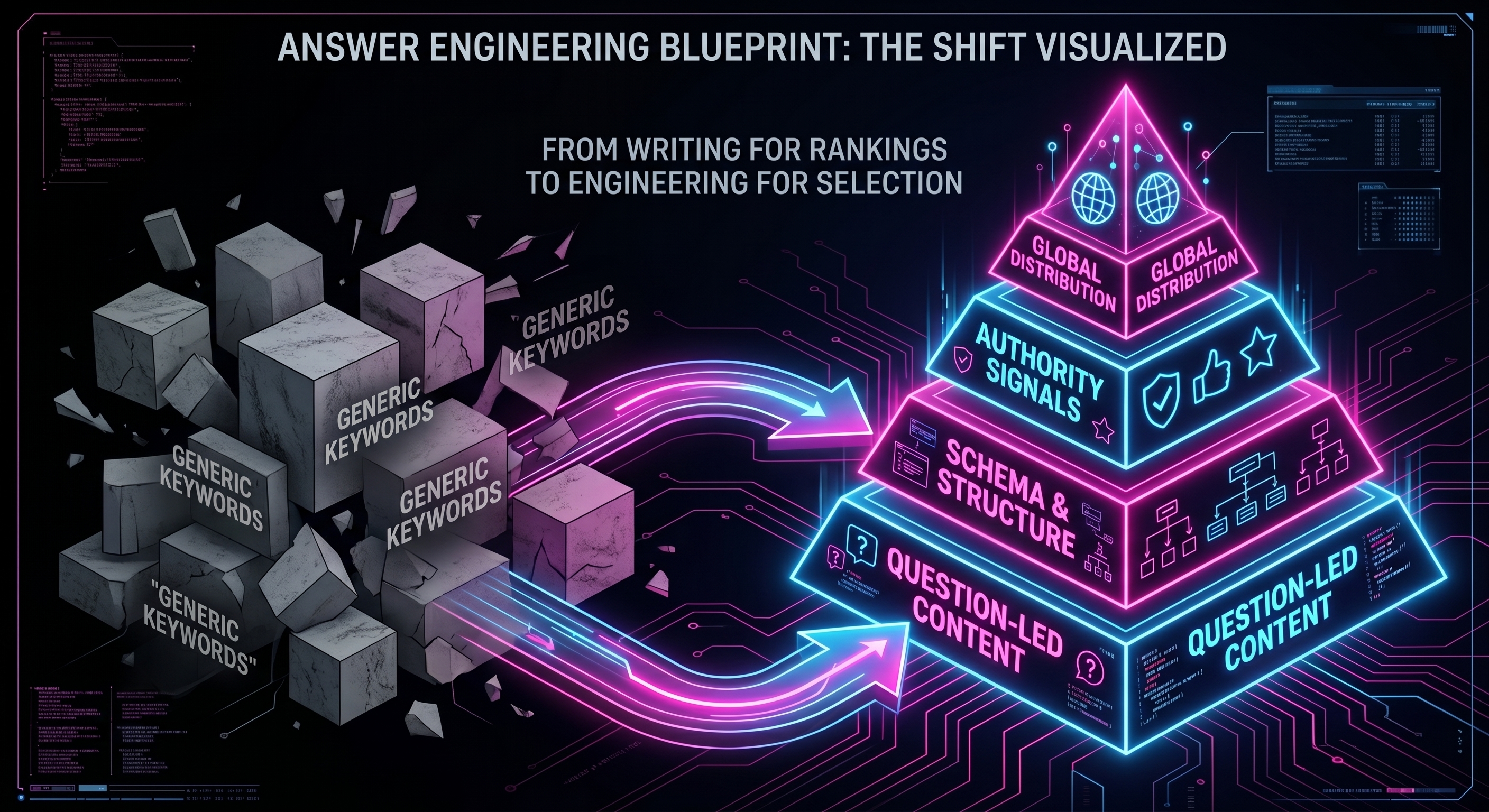
Stop creating content for rankings. Start creating content for selection.
Instead of targeting keywords, we focused on:
This included content like:
This type of content aligns directly with how AI systems build answers.
Example queries this content targeted included:
Not all content performs equally.
The content that consistently drove citations included:
These formats work because they are:
And importantly, they match how users phrase questions in AI tools.
One of the biggest misconceptions is that citations come mainly from blogs.
They don’t.
The hierarchy we consistently see is:
This is critical.
Because it means: AI visibility is not a website problem. It’s an internet-wide presence problem.
For example, discussions on platforms like Reddit, where professionals compare solutions, often appeared alongside blog content in AI-generated answers
This is one of the most underrated drivers of AI visibility.
The approach was simple:
Why this works: AI reads text, not video
The transcript becomes:
When combined:
You create a much stronger signal than any single format alone.
In several cases, transcripts were cited before the blog itself, because they provided clearer, conversational explanations that AI systems could extract easily.
Another major improvement came from making content easier to understand.
This included:
But the key insight is this:
It’s not about technical tricks.
It’s about making content obvious and easy to extract.
We also introduced:
This made it easier for AI systems to:
Content alone wasn’t enough.
Authority played a major role.
What made the difference:
AI doesn’t just evaluate content.
It evaluates: who is saying it and whether they are trusted.
This is where platforms like LinkedIn and YouTube become critical.
They don’t just distribute content.
They build credibility signals that influence whether you get cited at all.
This is where things get interesting.
Sterimelt, a company specialising in plastic recycling machines for hospitals, initially approached GEO with a simple goal: reach more buyers.
But once their content was optimised for AI visibility:
The growth followed a clear pattern:
Within 90 days:
By month 4:
By month 6:
They didn’t just attract buyers.
They attracted:
Manufacturers even explored redesigning products to align with Sterimelt’s circular economy model.
This wasn’t planned.
It happened because they became the answer that AI platforms were giving.
The result: they didn’t just generate demand, they expanded their entire business model.
This is the part most businesses don’t expect.
When you optimise for AI discovery:
You create: global discoverability
Which leads to:
In simple terms: you engineer serendipity
And that is where the real upside exists.
Before:
After:
Here are the exact changes that drove the 300% increase:
| Area | Change Made | Impact on AI Citations |
| Content Strategy | Shift to question-led content | Higher relevance to AI queries |
| Content Types | Added comparisons, use cases | Increased selection in answers |
| Platform Strategy | Expanded to YouTube & Reddit | More citation sources |
| Structure | Added schema, FAQs, clear headings | Easier extraction by AI |
| Authority | Founder content + consistency | Increased trust signals |
This isn’t just a one-off result.
It aligns with broader trends.
Most businesses are still:
But AI doesn’t reward that.
It rewards:
Which leads to one simple truth:
The goal is no longer to rank.
The goal is to be selected.
The increase didn’t come from one tactic.
It came from aligning four critical layers:
When these layers work together, AI doesn’t just find your content. It selects it.
If your content isn’t being cited in AI-generated answers, you're already losing visibility at the moment decisions are made.
Get a clear understanding of:
Talk to our team and turn your content into a system that gets selected, not ignored.
AI citations increase when content is structured, answer-focused, and supported by strong authority signals.
Comparison content, direct answers, “best options” lists, and how-to guides perform best.
Yes. AI tools use transcripts heavily, making YouTube one of the top citation sources.
AI evaluates trust, not just content. Founder presence and consistency improve credibility.
Initial improvements can be seen within months, with stronger growth compounding over time.
No. Blogs help, but visibility improves significantly when combined with video, social, and external platforms.
Creating keyword-focused content instead of answer-focused content.