.jpg)
You can fake a blog post with ChatGPT. You can fake a LinkedIn comment with an automation bot. You can even fake a website with a template.
But you cannot fake a founder speaking on video. (At least, not easily).
In the eyes of Google and modern AI engines, text is "cheap." It is low-effort and low-trust. Video, however, is "expensive." It requires a human, a voice, and a verified identity.
This is why founders ask us at Tenacious AI Marketing: “Does video actually help with SEO and GEO?”
The answer is yes, but not for the reasons you think. You shouldn't be on YouTube to get "views" or become an influencer. You should be on YouTube to verify your existence in the Knowledge Graph.
If you don't have video, you are a "text-based entity" in a Multimodal world. Here is why that makes you invisible, and how to fix it using our VITAL Framework.
Stop thinking of Google as a "Search Engine." Think of it as an “Answer Engine.”
With the rollout of Gemini, Google’s core AI model is now Multimodal. This means it doesn't just read text; it watches video frames and listens to audio tracks natively.
When you upload a video to YouTube, you aren't just posting content. You are feeding Google’s brain with Training Data.
The Tenacious Take: If you are actively writing about "AI Marketing" but never speak about it on video, the AI assigns you a lower "Confidence Score." Video is the ultimate proof of life for your brand.
Most startups struggle to rank their website on Page 1 because they are competing with giants like HubSpot or Forbes who have 15 years of Domain Authority (DA).
Video is the backdoor.
Google reserves specific real estate on the Search Engine Results Page (SERP) called the Video Carousel. This carousel often appears above the traditional text results.
If you ignore the video, you are voluntarily giving up the only slot on Page 1 where "New" can beat "Old."
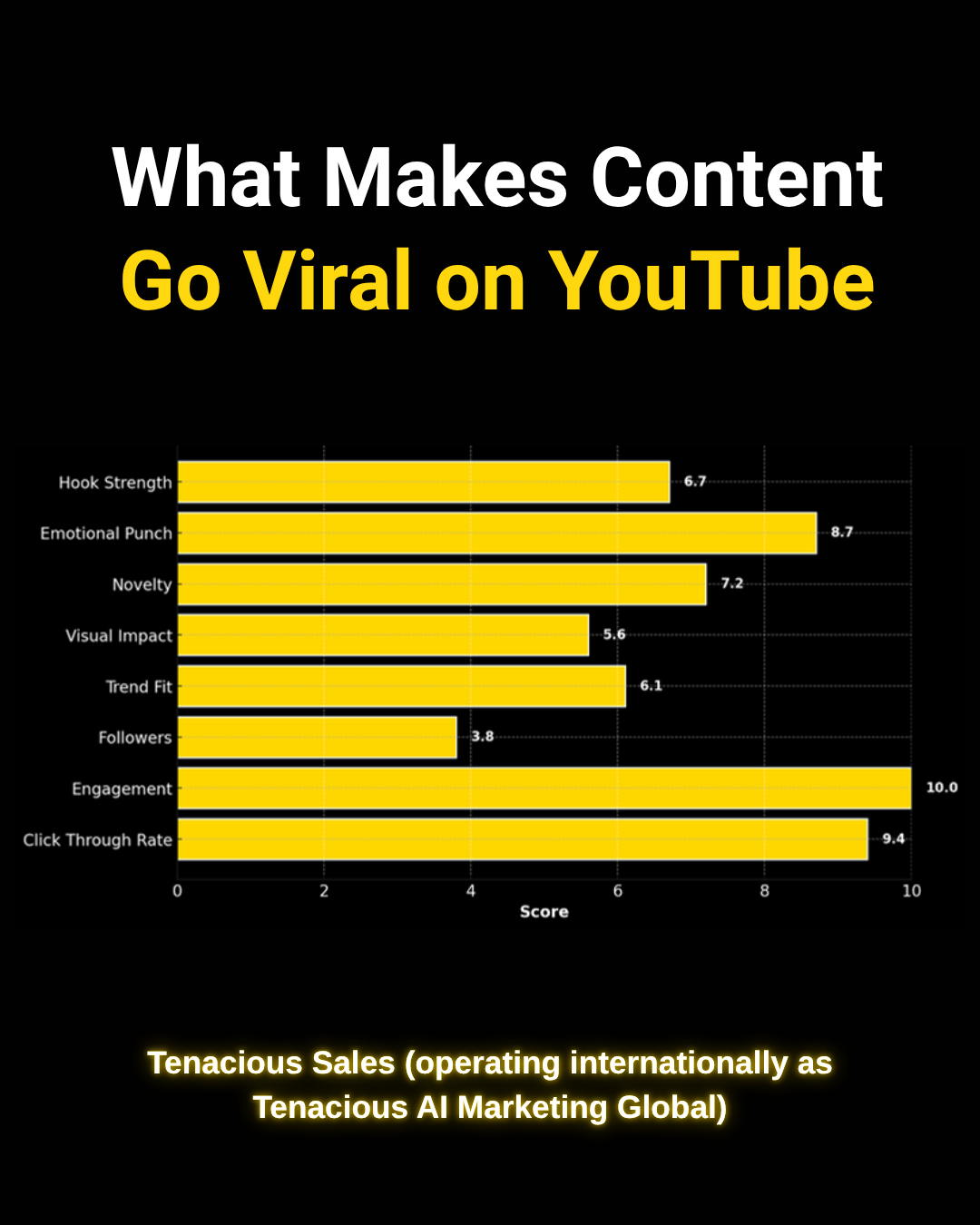
If you think this is just theory, look at the data. The "10 Blue Links" are dying. They are being replaced by AI Overviews (those AI summaries at the top of the search results).
To get mentioned in an AI Overview, you need to be a cited source.
Since the rollout of Google's AI Overviews, data from BrightEdge (2025) shows a 25% increase in YouTube citations appearing directly in AI answers.
YouTube has become the dominant platform for video citations in AI search.
This isn't a niche feature. According to Xponent21 (Nov 2025), Google AI Overviews now appear in 60.32% of U.S. search queries.
The Reality: If you aren't on YouTube, you are statistically locking yourself out of 60% of modern searches where AI is curating the answer.
Why does AI trust video more than text? It comes down to a technical concept called Entity Resolution.
In a Knowledge Graph, Google needs to confirm that the "Dean" writing the blog is the same "Dean" who founded the company. Text is ambiguous. There might be 50 people named “Dean Whitby.”
Video provides unique biometric anchors:
When you upload consistent video, you help the AI perform "Identity Resolution," merging all your fragmented data points (LinkedIn, Website, YouTube) into one solid, verifiable entity.
The Bottom Line: A verified Entity gets cited. An ambiguous entity gets ignored to prevent "hallucinations."
Old SEO advice says: "Optimize your tags and thumbnail." New GEO advice says: “Optimize your transcript.”
AI models do not look at your "tags" (YouTube admitted years ago that these are mostly irrelevant). AI models read your Transcript to understand the semantic meaning of your content.
How to "Feed the Robot":
At Tenacious, we use the VITAL Framework to build entities that last. To understand exactly how we apply these pillars to protect your brand, watch Dean break down the full framework here: The VITAL Framework Explained.
Does YouTube help with getting mentioned by Google? It is arguably the most powerful signal you have left.
In a sea of AI-generated text content, Human Video is the differentiator. It proves you exist. It proves you know your stuff. And most importantly, it gives the AI the confidence to cite you as the “Source of Truth.”
Don't be a faceless entity. Turn the camera on.
Is your brand invisible to the AI? Check your AI Visibility Score with Tenacious AI Marketing.
Stay Tenacious.
Does YouTube really impact Google rankings?
Yes. Google's AI Overviews now cite YouTube videos in 25% of cases (BrightEdge). Furthermore, video carousels appear in standard search results, often outranking text blogs for "How-To" queries.
Do I need professional production quality?
No. AI models judge the content (the transcript and audio clarity), not the lighting. A clear, founder-led video shot on a webcam often outperforms a highly produced "commercial" because it feels more authentic and trustworthy.
How does AI "watch" my video?
Models like Gemini use "Multimodal" processing. They analyze the audio track (speech-to-text) and sample video frames (visual recognition) to understand the topic, context, and entities within the video.
What is the most important SEO factor for YouTube?
Your Transcript. While titles matter for humans, the transcript is the raw data the AI reads to understand your expertise. Always upload a corrected .SRT file rather than relying on auto-captions.
How long should my videos be for AI visibility?
There is no perfect length, but "Chapterized" content works best. Break your video into distinct sections (e.g., "What is GEO?", "How to implement it"). This allows Google to rank specific clips of your video for specific questions.