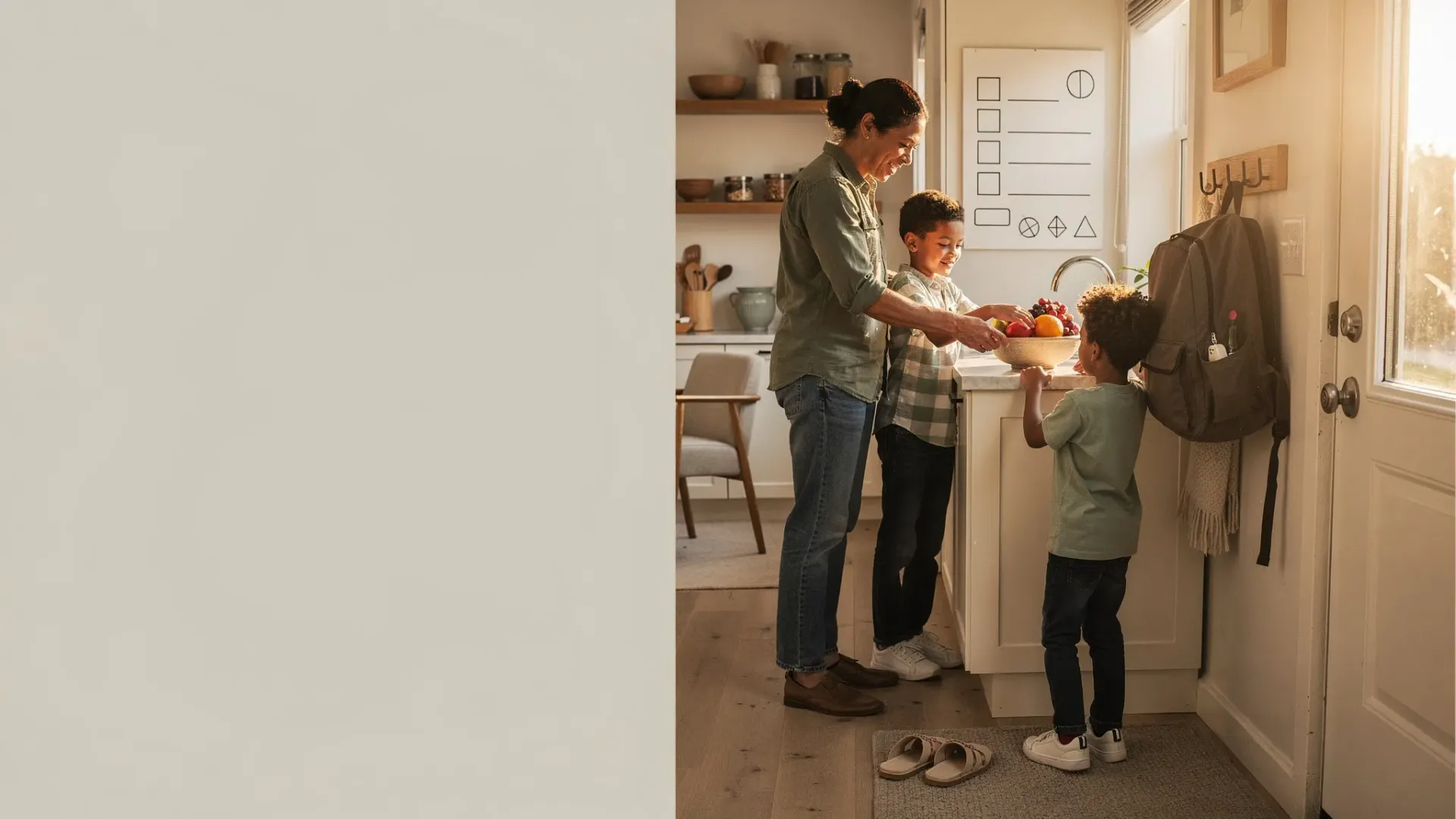
The hours between school pickup and bedtime can feel like a daily sprint: hungry kids, backpacks on the floor, homework questions, activities, and everyone carrying the energy of a long day. A calmer after-school routine is not about making every afternoon perfectly quiet or productive. It is about creating a flexible rhythm that gives children time to reconnect, refuel, reset, and get ready for what comes next.
For families, the most sustainable routine is usually simple, repeatable, and forgiving. The ideas below can help you build an after-school flow that supports connection, homework readiness, and age-appropriate family safety—without adding a long list of rules.
Start With a Soft Landing
Many children need a transition before they can talk about their day or focus on a task. Instead of leading with questions or homework reminders at the door, make room for a short decompression period. This might be a snack at the table, 15 minutes of quiet play, music in the car, or time outside.
Try a low-pressure invitation such as, “I’m glad you’re home. Do you want to talk now, or after you’ve had a snack?” This leaves the door open for connection while respecting that some children need time to shift gears.
- Keep an easy snack-and-water option available when possible.
- Choose one predictable place for backpacks, coats, lunch boxes, and permission slips.
- Use a visual checklist for the first few steps home, especially for younger children.
- Save big conversations for a calmer moment unless something needs immediate attention.
Build Connection Into the Ordinary Moments
Connection does not have to mean a long, serious conversation every day. Small moments of attention can help children feel seen: sitting nearby while they draw, sharing a snack, taking a short walk, or asking one specific question.
Questions with a narrow focus can be easier to answer than “How was school?” Consider trying:
- “What was one part of today that felt easy?”
- “Did anything make you laugh?”
- “Who did you spend time with at recess or lunch?”
- “What would make tonight feel a little better?”
If your child does not feel like talking, that is okay. Consistent warmth and availability often matter more than getting a full recap on demand.
Create a Homework-Ready, Not Homework-Perfect, Space
Homework is often smoother when the setup is predictable. Aim for a space with the supplies your child commonly needs, a comfortable seat, and fewer distractions where practical. The “right” spot may be the kitchen table for one child and a quieter corner for another.
Before work begins, help your child identify the first small step: opening the school portal, reading the assignment, or gathering materials. For longer tasks, a short work period followed by a brief movement or water break may feel more manageable. Older children may prefer more independence, while younger children often benefit from an adult staying nearby to help them get started.
Keep the goal realistic. On especially busy or difficult days, focus on communicating with the school when needed rather than turning the evening into a struggle. Families can adapt routines to their child’s needs, school expectations, and available support.
A Flexible Sample After-School Routine
Use this as a menu, not a strict schedule. Shift the timing to fit transportation, activities, work schedules, and your child’s energy.
- Arrive and reset (10–20 minutes): Put belongings in their home, wash hands if appropriate, and have water or a snack.
- Reconnect (5–15 minutes): Share a small check-in, play, listen to music, or simply be together.
- Move or decompress (10–30 minutes): Head outside, stretch, build, read, create, or enjoy quiet time.
- Review the plan (5 minutes): Check the calendar, homework, forms, and evening commitments.
- Homework or focused task time: Begin with one clear, achievable task. Build in short breaks as useful.
- Evening handoff: Pack what is needed for tomorrow, choose clothes if that helps, and transition toward dinner or the next activity.
Some days will not follow this order, and that is normal. A routine works best when it offers a familiar path back to calm rather than another standard to meet.
Keep Family Safety Practical and Age-Appropriate
After school is a good time for simple, ongoing safety habits. The details will vary by a child’s age, maturity, transportation plan, and local circumstances. Keep conversations clear, calm, and concrete.
- Arrival plans: Make sure children know where to go after school, who is allowed to pick them up, and what to do if plans change.
- Check-ins: For children who arrive home independently, agree on a reasonable way to check in with a trusted adult.
- Contacts and address: Help children learn or carry important contact information in a way that fits their age and family preferences.
- Online time: Place devices in shared spaces when feasible, revisit family expectations, and encourage children to tell an adult if an online interaction feels confusing or uncomfortable.
- Trusted adults: Regularly remind children which adults they can contact for help and that they can come to you with questions or worries.
These conversations do not need to be scary. Brief reminders woven into normal routines can help children understand what to do without making safety feel overwhelming.
Adjust the Routine as Children Grow
Early elementary years
Young children often benefit from visual cues, short directions, and plenty of play or movement before seated work. Keep routines concrete: snack, backpack spot, play, then one small school task. Offer choices within limits, such as choosing between drawing quietly or playing outside first.
Later elementary years
Children in this stage can begin taking ownership of checklists, packing bags, and reviewing assignments. A shared family calendar and a regular homework start window can be useful, while adults remain available for support and encouragement.
Middle school and beyond
Older children may need more privacy, autonomy, and time to socialize or recharge. Collaborate on expectations for homework, activities, devices, transportation, and check-ins. Rather than monitoring every step, focus on clear agreements and periodic conversations about what is working.
When the Routine Stops Working
Routines need adjustments. A new school year, changing homework load, sports season, tiredness, or family responsibilities can all change what an afternoon needs. Watch for friction points: perhaps the snack is too late, homework starts before your child has reset, or too many decisions are landing at the same time.
Choose one small experiment for a week. Move homework 20 minutes later, prepare snacks ahead, reduce the after-school checklist, or add a five-minute check-in. Then ask your child what felt easier. Collaborative tweaks can make children more willing to use the routine because they have a voice in it.
A Calmer Afternoon Is Built One Small Habit at a Time
A supportive after-school routine does not require a color-coded schedule or a flawless evening. It can begin with one reliable landing spot, one moment of connection, and one manageable next step. By keeping expectations flexible and safety conversations age-appropriate, families can create afternoons that feel a little more organized, connected, and calm.