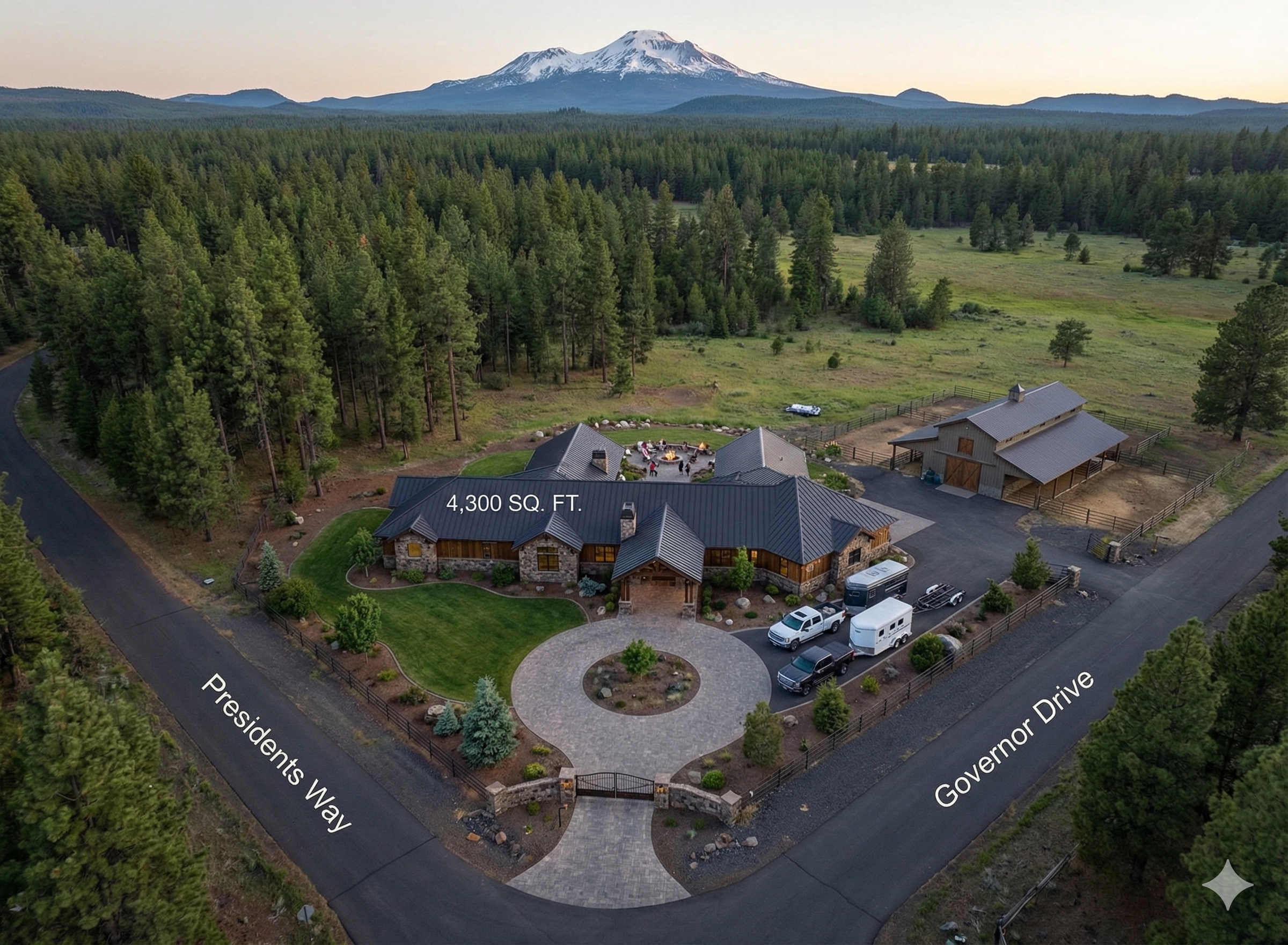
Imagine the moment: you've just sold your company, and over $10 million has landed in your account. The first call is to a wealth advisor, and the second is to a real estate agent to buy that sprawling dream property you've always wanted. The conventional wisdom is clear: secure the trophy asset, invest the rest, and let the professionals handle it. You’ve built a monument to your success.
But what if that monument, beautiful as it is, is engineered to consume your cash? What if the conventional path isn't wealth creation, but a slow, managed liquidation? There is a counter-intuitive approach—one that shifts the focus from accumulating assets to building an engine. It’s a choice between two entirely different mindsets: the conventional "asset accumulation" mindset versus the strategic "dynasty engineering" mindset. The results could not be more different.
In the typical "new money" scenario, a family with $10 million builds their monument: a $7 million ranch, financed with a 5.6 million mortgage. They invest the remaining ~8.6 million in the market. On paper, it looks like a solid foundation.
The reality, however, is a relentless financial drain. The monument demands feeding. The portfolio is immediately saddled with **~518,000 in annual costs**—a staggering combination of a ~403K mortgage, ~$70K in property taxes, plus insurance and maintenance. This cash burn, combined with advisor fees, erodes the investment portfolio. According to a direct comparison model:
Contrast this with the Legacy Anchor Partnership (LAP) model, an engine designed to produce fuel. Here, the family invests $5 million into a debt-free, income-producing real estate partnership. The results are stark:
The conventional ranch carries significant mortgage default risk, vulnerable to market shocks. The LAP is engineered to withstand recessions because it has no debt service and can break even at just 10% occupancy. As the source material states, in this model, "profits go to heirs, not the bank."
The LAP model’s financial architecture hinges on a powerful, and often underutilized, provision in the tax code: 100% Bonus Depreciation. Instead of a vague investment, this strategy is grounded in a tangible asset. The $5 million investment goes toward the construction of an 8-home private resort on a 41.48-acre equestrian estate.
Because the capital is used for the construction of short-term rental properties, it qualifies for this aggressive tax strategy. The impact is immediate and substantial:
This is a critical mechanism for de-risking an investment. Before the properties generate their first dollar of rental income, this tax benefit effectively returns a huge percentage of the initial capital in the very first year.
A core challenge of generational wealth is protecting a productive asset from being liquidated by a future heir. The LAP model addresses this with a brilliant piece of dynastic governance. The real estate is held within a family LLC, which can be structured in a state like Wyoming, known for its robust asset protection laws.
The key is a clever "poison pill" against liquidation found in the General Partner's operating agreement: if the family ever votes to sell the entire asset, the profits are directed to charity. This removes the "temptation for one selfish heir to end it all for all the future heirs." When you have a consistent stream of passive income and tax-free barter, why would you want to end it and pay all the capital gains taxes, realtor commissions, and legal fees?
This defies conventional real estate wisdom, which typically targets a 5-7 year exit. By engineering a "buy and hold forever" strategy, the partnership sidesteps the biggest wealth destroyers: capital gains taxes, realtor commissions, and—most importantly in California—the devastating property tax reassessment that often forces heirs to sell. The family LLC structure also ensures the legacy avoids the typical path of probate, legal fees ($100K+), estate taxes, and family fights over division.
The "new money" approach treats vacations as a pure expense—spending, for example, $79,000 in post-tax cash each year. The LAP model re-frames this lifestyle cost as an integrated, financially efficient benefit of ownership.
Partners receive several direct benefits:
This philosophy shifts a major family expense from a liability to a tax-advantaged component of an appreciating asset.
Turn five million into forever: debt-free ranch, tax-free vacations, K-1 cash flow that never stops, and a family legacy that outlives Wall Street crashes—because real dirt beats paper promises every damn time.
Ultimately, the two approaches represent two fundamentally different mindsets. One focuses on acquiring a "monument"—a beautiful asset that looks like wealth but constantly consumes cash to maintain. The other focuses on building an "engine"—a strategically structured asset designed from the ground up to produce cash flow, tax benefits, experiences, and a perpetual legacy.
Strategic wealth creation is less about maximizing market exposure and more about intelligent system design around taxes, debt, and generational transfer. It requires shifting focus from simply owning assets to owning systems that protect and grow wealth for the long term.
