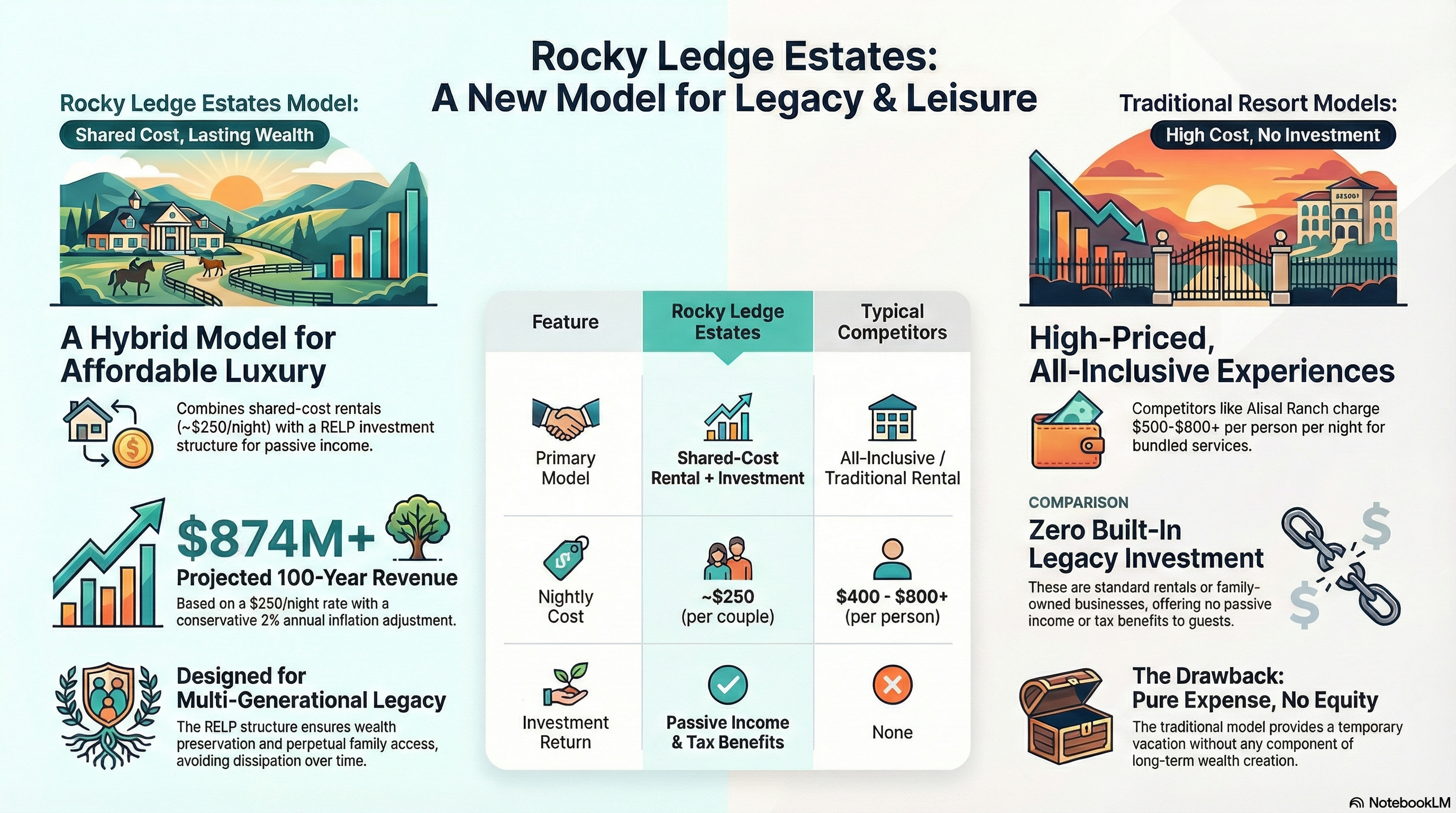
The LAP model’s financial architecture hinges on a powerful, and often underutilized, provision in the tax code: 100% Bonus Depreciation. Instead of a vague investment, this strategy is grounded in a tangible asset. The $5 million investment goes toward the construction of an 8-home private resort on a 41.48-acre equestrian estate.
Because the capital is used for the construction of short-term rental properties, it qualifies for this aggressive tax strategy. The impact is immediate and substantial:
This is a critical mechanism for de-risking an investment. Before the properties generate their first dollar of rental income, this tax benefit effectively returns a huge percentage of the initial capital in the very first year.
Why the IRS Feels Like an Early-Stage Angel Investor (Seriously)
Think of 100% Bonus Depreciation as the IRS handing you a shovelful of cash the moment you break ground—except they call it a “deduction” and you call it a celebratory spreadsheet. By accelerating depreciation to year one, the tax code lets investors claim the entire eligible basis of qualifying property immediately, which turns construction outlays into instant tax shelter. For projects built as short-term rental assets, that shelter can dwarf early operating cashflows—so much so that the tax code becomes the most significant immediate return generator in the deal.
How the Numbers Really Work (Plain-English Example) - You commit $5M to build eight homes. Under 100% Bonus Depreciation, the eligible portion of that spend can be deducted in year one. - At a 37% marginal tax rate, a $5M immediate deduction translates to ~ $1.85M in tax savings right away—meaning your net exposure drops dramatically before a single guest checks in. - On a scaled $10M structure, the partnership-level write-offs can sum to ~$7.3M over the construction schedule, creating roughly $3.7M of tangible cash-value from tax savings alone. That’s not magic. It’s timing and tax law.
The effect: your downside is materially lower, because a large chunk of capital is effectively returned via reduced tax liability long before operating profits stabilize.
Why This De-Risks the Deal - Faster capital recovery: Early tax savings mean investors have more liquidity sooner—useful for covering interest, property improvements, or follow-on investments. - Enhanced IRR: Early reductions in basis and taxable income boost internal rates of return, especially in the first few years when cashflows are otherwise thin. -
Downside protection: If market demand lags, the tax shelter still happened—reducing the severity of early-year losses. Yes, There Are Limits and Caveats (Don’t Skip the Fine Print) - Qualification rules: Not every cost qualifies. Land, certain soft costs, and non-depreciable items don’t get the bonus. Proper cost segregation and documentation are essential. -
Tax-rate sensitivity: The dollar value of the deduction scales with your marginal tax rate. Investors in lower brackets see smaller immediate savings.
Legislative risk: Tax law changes can alter future applicability. The current rules are generous, but they’re subject to political shifts. - Passive loss rules and AMT considerations: Partnerships and high-net-worth structures need careful planning to ensure the deduction delivers usable tax benefit in the year claimed.
Practical Steps for Investors (so you don’t end up guessing at a spreadsheet)
1. Run a pre-build tax model with a CPA experienced in cost segregation and bonus depreciation.
2. Structure eligible costs to maximize qualifying basis (without stretching legal boundaries).
3. Use a cost segregation study early—so you classify components correctly and capture short-life assets.
4. Coordinate financing and partnership agreements to allocate tax attributes where they’re most useful.
5. Stress-test scenarios: lower occupancy, delayed construction, and tax-rate changes—so you know your downside. A Real-World Mental Model Imagine two identical projects: one without bonus depreciation, one with. Year one for Project A shows big negative cashflow and anxiety. Year one for Project B shows a sizable tax refund or offset that reduces financing strain and lets management be proactive instead of panic-stricken.
Same market, different tax timing—and that timing changes investor behavior, optionality, and ultimately returns.
Final Thoughts — The Biggest Return Isn’t Always a Market Return When evaluating real estate deals, it’s tempting to fixate on rental yield, exit cap rates, and market comps. Those things matter. But for capital preservation and early return, tax mechanics like 100% Bonus Depreciation often deliver the largest immediate value. In the LAP model, that’s not an afterthought—it’s the engine that meaningfully reduces early risk and improves cash-on-cash outcomes from day one.
Learn more about our model and request a run of the numbers tailored to your tax profile.
